
- Your cart is empty
- Continue shopping
-
Beseha
- Posted on
- Categories:General Health
- 0 comments
The short answer
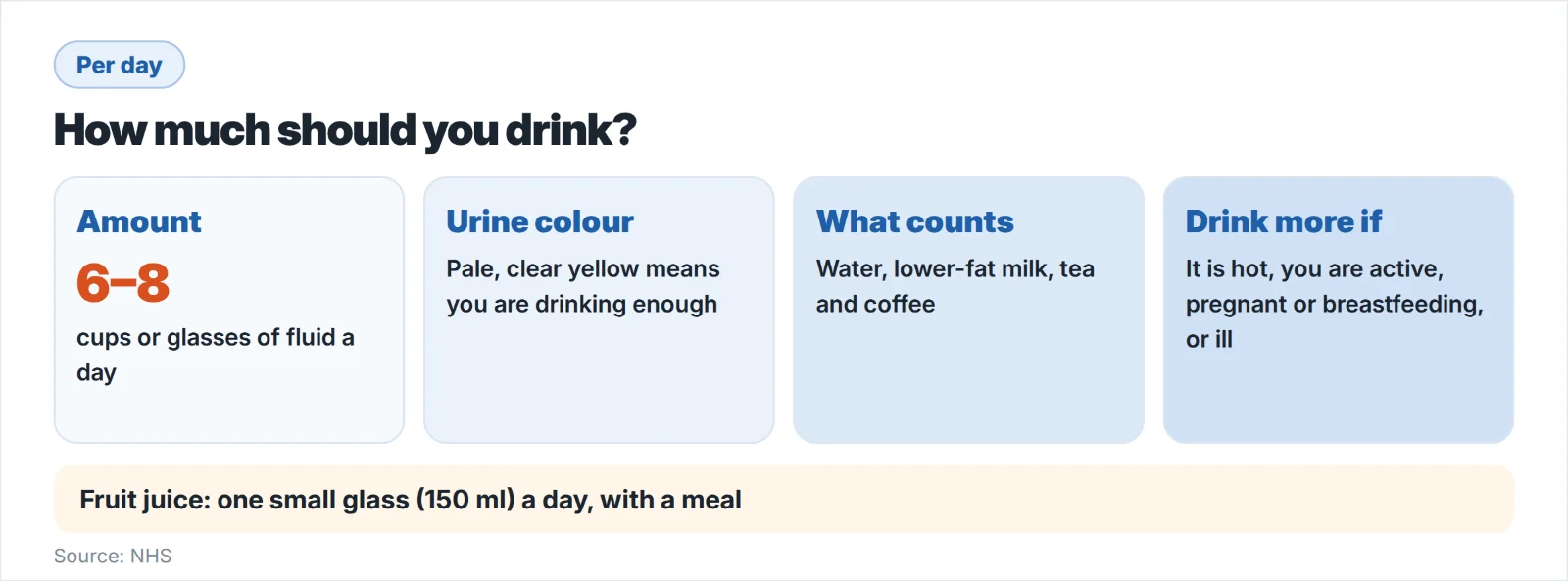
The NHS advises 6 to 8 cups or glasses of fluid a day, and water, lower-fat milk, tea and coffee all count. The easiest check is your urine: pale, clear yellow means you are drinking enough. You need more in hot weather, when active, when pregnant or breastfeeding, or when ill. The first signs of dehydration are thirst, headache, dizziness and dark urine.
How much should you drink a day?
- The amount: the NHS advises 6 to 8 cups or glasses of fluid a day, and some of your fluid also comes from food.
- What counts: water, lower-fat milk and lower-sugar drinks, including tea and coffee.
- Fruit juice: one small glass (150 ml) a day at most, with a meal, because it is high in sugar.
- You need more if: you are pregnant or breastfeeding, in a hot place, active for long periods, or ill or recovering.
- The check: drink enough that your urine is a pale, clear yellow.
Signs of dehydration
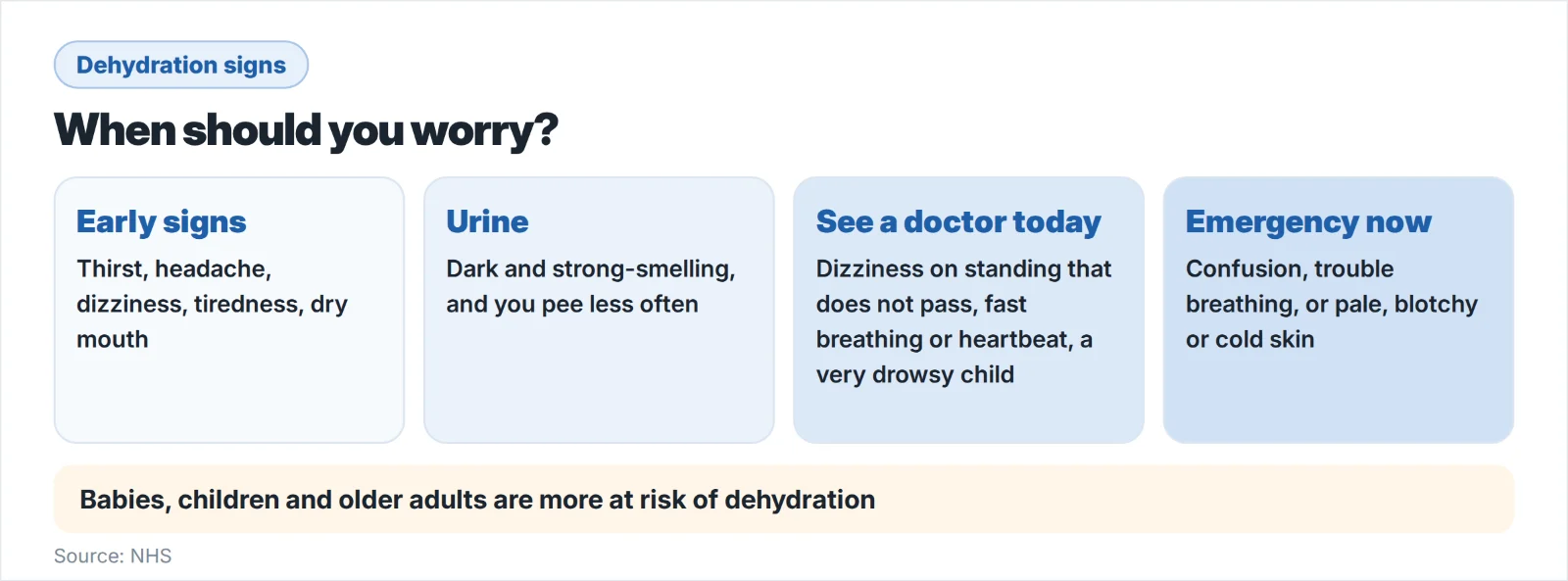
- In adults and children: the NHS lists thirst, headache and light-headedness, dizziness, tiredness, a dry mouth, lips or tongue, and sunken eyes.
- Urine: dark and strong-smelling, and you pee less often than usual.
- In babies: a sunken soft spot on the head, sunken eyes, few or no tears when crying, fewer wet nappies, and drowsiness or irritability.
- Who is at higher risk: babies, children and older adults, and anyone with diarrhoea, vomiting, fever, heavy sweating, diabetes or diuretic medicines.
- Treatment at home: drink fluids; if you feel sick, take small sips and build up, and avoid caffeine and alcohol, which make dehydration worse.
- With diarrhoea or vomiting: a pharmacist can recommend an oral rehydration solution, a powder you mix with water; ask which one suits you or your child.
Dehydration, heat exhaustion and heatstroke
- Heat exhaustion: the NHS lists tiredness, dizziness, headache, nausea, cramps, a high temperature, thirst, heavy sweating and pale, clammy skin.
- Cooling someone down: move them somewhere cool, remove extra clothing, give plenty of water, a sports drink or rehydration solution, and spray or sponge their skin with cool water and fan them.
- 30 minutes: they should cool down and feel better within 30 minutes; if not, treat it as heatstroke.
- Heatstroke is an emergency: a very high temperature, hot skin that is not sweating, fast breathing or heartbeat, confusion, a seizure or passing out; call an ambulance straight away.
- Prevention: drink more cold drinks, especially when active, wear light, loose clothing, and stay out of the sun between 11am and 3pm.
Do you need electrolytes, or is water enough?
For most people on a normal day, water is enough. The NHS mentions a sports drink or rehydration solution to replace salt lost through heavy sweating, and a pharmacy rehydration solution for diarrhoea or vomiting. These two drinks from Beseha are for hydration with exercise or work in the heat, not a treatment for medical dehydration:
#1
Zero sugarSodium + potassiumAmounts listed
Waterkind Original Electrolytes – 10 sachets
Electrolytes and vitamins in half a litre of water
EGP 325
EGP 32.5 per sachet · 10 sachets
- The page says each sachet has over 1,100 mg electrolytes, including 400 mg sodium and 200 mg potassium, plus B vitamins, C, D3 and zinc
- One sachet in 500 ml of cold water, sugar free and caffeine free
- EGP 325 for 10 sachets
Heads-up: This is a daily and sports hydration drink, not a medical rehydration solution for diarrhoea or vomiting; if you have high blood pressure or kidney disease, ask your doctor because of the sodium
#2
6 caloriesApple flavourCheapest
Limitless Hydrite Keto Apple – 6 sachets
Electrolytes for exercise and keto diets
EGP 174
EGP 29.0 per sachet · 6 sachets
- The page lists electrolytes, magnesium, MCT oil and L-carnitine
- The pack says 6 calories per 6 g sachet
- EGP 174 for 6 sachets
Heads-up: Electrolyte amounts are not on the page, and the pack says it is not vegan; the pack name is Hydrate
Common mistakes
- Waiting until you are thirsty: thirst is one of the first signs of dehydration, so drink through the day, especially in the heat.
- Juice and sugary drinks: they are high in calories and can damage teeth; the NHS says children should avoid sugary fizzy drinks completely, and water and milk are best for them.
- Tea and coffee when dehydrated: they count on a normal day, but avoid caffeine if you have signs of dehydration.
- Pregnancy and coffee: no more than 200 mg of caffeine a day, per the NHS.
- Electrolyte sachets instead of a rehydration solution: with diarrhoea or vomiting, especially in children, ask a pharmacist for the right oral rehydration solution.
When to see a doctor or go to emergency care
- See a doctor the same day if: a child is unusually tired or drowsy, you feel dizzy on standing and it does not pass, urine is very dark or you pee very little, breathing or heartbeat is fast, or a baby has few tears or a sunken soft spot.
- Call an ambulance straight away if dehydration comes with blue, grey, pale or blotchy skin, lips or tongue, cold skin, difficulty breathing, confusion, or unusual sleepiness or difficulty waking. Do not drive yourself to the emergency department.
- For babies: keep breastfeeding or formula feeding in smaller amounts more often, do not dilute formula, and avoid fruit juice and fizzy drinks, which can make diarrhoea worse.
Not sure?
Beseha pharmacists answer on WhatsApp. Tap the “Ask a pharmacist” button, share the age, symptoms and any medicines, and they will tell you whether you need a rehydration solution, an electrolyte drink or a doctor.
FAQ
How many glasses of water should I drink a day?
The NHS advises 6 to 8 cups or glasses of fluid a day, counting water, lower-fat milk and lower-sugar drinks, including tea and coffee.
How do I know I am drinking enough?
Check your urine: pale, clear yellow means you are drinking enough, while dark, strong-smelling urine is a sign of dehydration.
What are the signs of dehydration?
Thirst, headache and dizziness, tiredness, a dry mouth and lips, dark urine, peeing less often and sunken eyes, per the NHS.
Do tea and coffee count as fluid?
Yes on a normal day, per the NHS, but if you have signs of dehydration it is better to avoid caffeine, which makes it worse.
When do I need an oral rehydration solution?
With diarrhoea or vomiting; a pharmacist can recommend the right one for you or your child. Sports electrolyte drinks are not a substitute.
What is the difference between heat exhaustion and heatstroke?
Heat exhaustion usually improves within 30 minutes of cooling and fluids. Heatstroke is an emergency: a very high temperature, hot skin that is not sweating, and confusion or passing out.
Read next: water quality in Egypt and your health and the best deodorant for Egyptian summers and the best mouthwash in Egypt.
The bottom line
Drink 6 to 8 glasses of fluid a day, more in the heat and with exercise, and aim for pale yellow urine. If you are thirsty, dizzy and your urine is dark, drink straight away; with diarrhoea or vomiting ask a pharmacist for a rehydration solution, and see a doctor if the signs are severe.
Shop electrolyte drinks at Beseha →
Sources
This content is for information and is not a substitute for advice from a doctor or pharmacist. Prices and availability may change; the final price is on the product page.


