
- Your cart is empty
- Continue shopping
-
Beseha
- Posted on
- Categories:Women's Health and Pregnancy
- 0 comments
The 30-second answer
Herbana is a herbal supplement for breastfeeding mothers (fenugreek 250 mg, caraway 150 mg, dill 50 mg and fennel 50 mg per capsule), taken as one capsule 3 times a day after food under a doctor’s supervision, and not for pregnancy. A 2020 Cochrane review (41 trials, 3,005 mothers) said the evidence for any milk-boosting substance is low to very low certainty, so there is no guarantee of more milk. On weight: a review of 12 fenugreek trials found no significant change in adults’ weight (0.22 kg), so there is no evidence it adds weight.
What is Herbana?
#1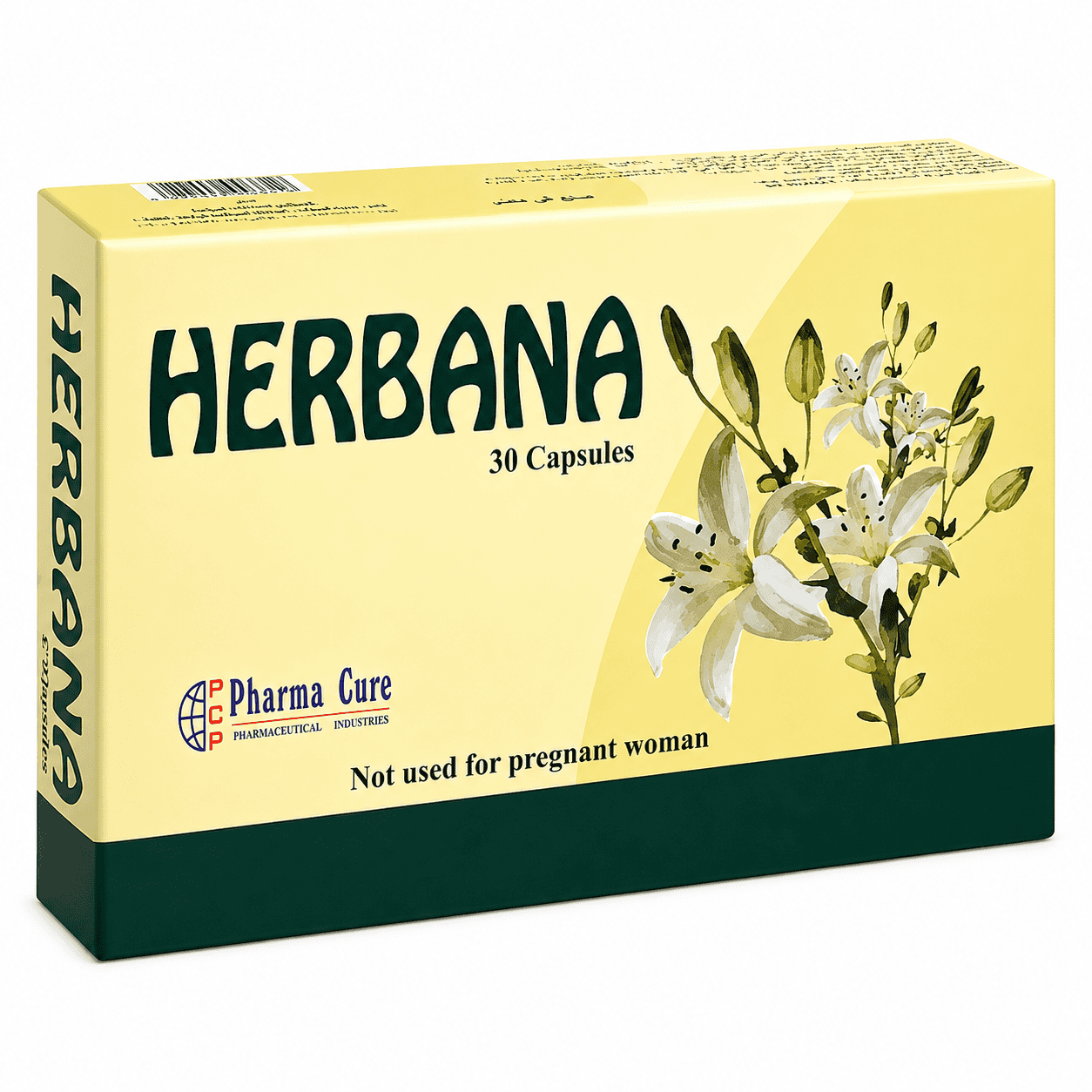
4 herbsFor breastfeeding mothers
Herbana – 30 Capsules
A herbal supplement with fenugreek, caraway, dill and fennel to support breastfeeding and digestive comfort
EGP 150
30 capsules · current price from the product page
- The page: fenugreek 250 mg, caraway 150 mg, dill 50 mg and fennel 50 mg per capsule
- The page: one capsule 3 times a day after food
- The page: for breastfeeding under a doctor’s supervision and not used in pregnancy
Heads-up: The page says a supplement, not a drug, and if you have diabetes or high iron or take medicines, consult the doctor
Does it increase milk? What the research says
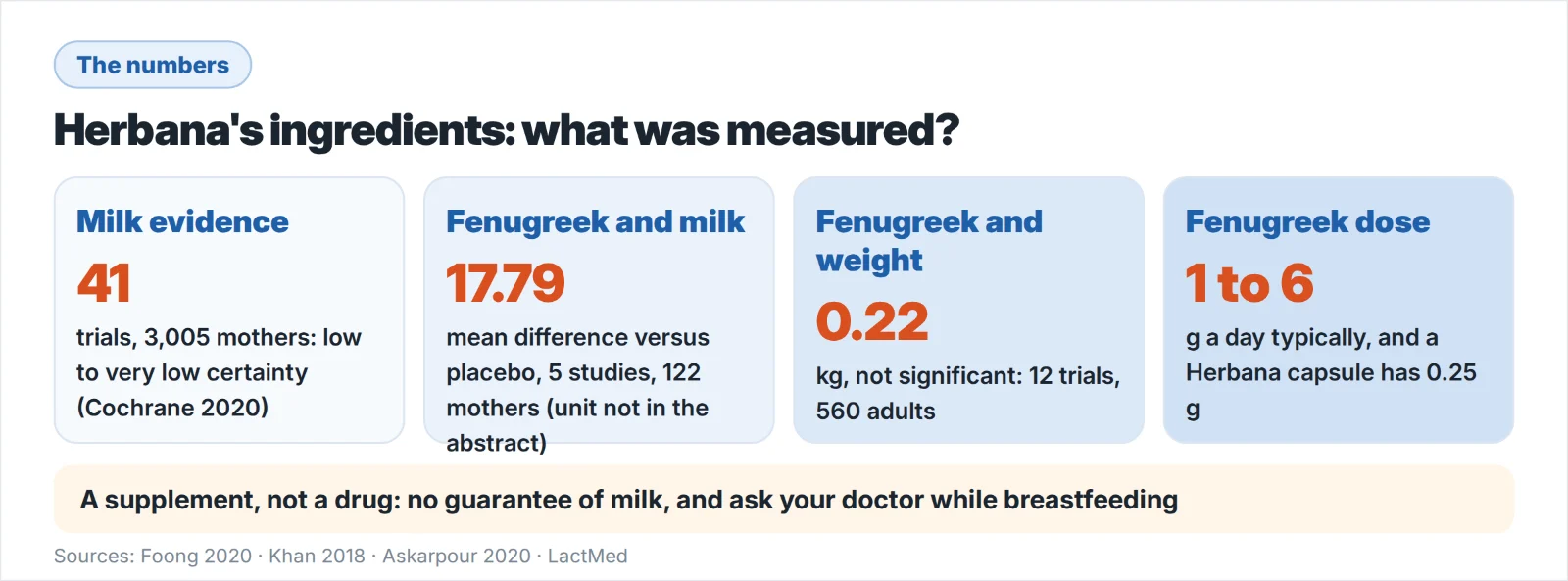
The 2020 Cochrane review (Foong) pooled 41 trials in 3,005 mothers. Drugs increased milk volume in 3 studies (a difference of 63.82 mL) with low certainty. For natural galactagogues (including fennel and fenugreek) certainty is very low, and no pooled difference could be calculated because the trials varied greatly; the authors said they are uncertain about the size of the effect or whether one is better than another, and that the effects recorded were minor. The 2018 Khan review (5 studies, 122 mothers) found fenugreek increased milk versus placebo (mean difference 17.79), but much less than Coleus and palm dates. And LactMed says fenugreek’s effect may be primarily psychological, that one meta-analysis found a mild effect and another found no good evidence, and it stresses that galactagogues do not replace evaluating latch, suckling and feeding frequency.
- First: check latch, feeding frequency and the health of baby and mother with the doctor or a lactation consultant.
- The dose: LactMed states that usual fenugreek doses for milk are 1 to 6 g a day; a Herbana capsule has 0.25 g of fenugreek, so 0.75 g across 3 capsules, below that range. So no study applies to its dose.
- No guarantee: the page itself says the response varies and does not guarantee a milk amount.
Does it add weight?
The 2020 Askarpour review (12 trials, 560 adults) found fenugreek lowered total cholesterol (−9.37 mg/dL), triglycerides and LDL and raised HDL, but weight did not change significantly (a difference of 0.22 kg, −0.51 to 0.96), nor did BMI. So there is no evidence fenugreek adds weight in adults. That review is on fenugreek supplements in adults, not breastfeeding mothers, and we opened no studies on the weight effect of caraway, dill and fennel. And a mother’s postpartum weight gain has many causes, so ask your doctor if the worry persists.
Side effects and warnings
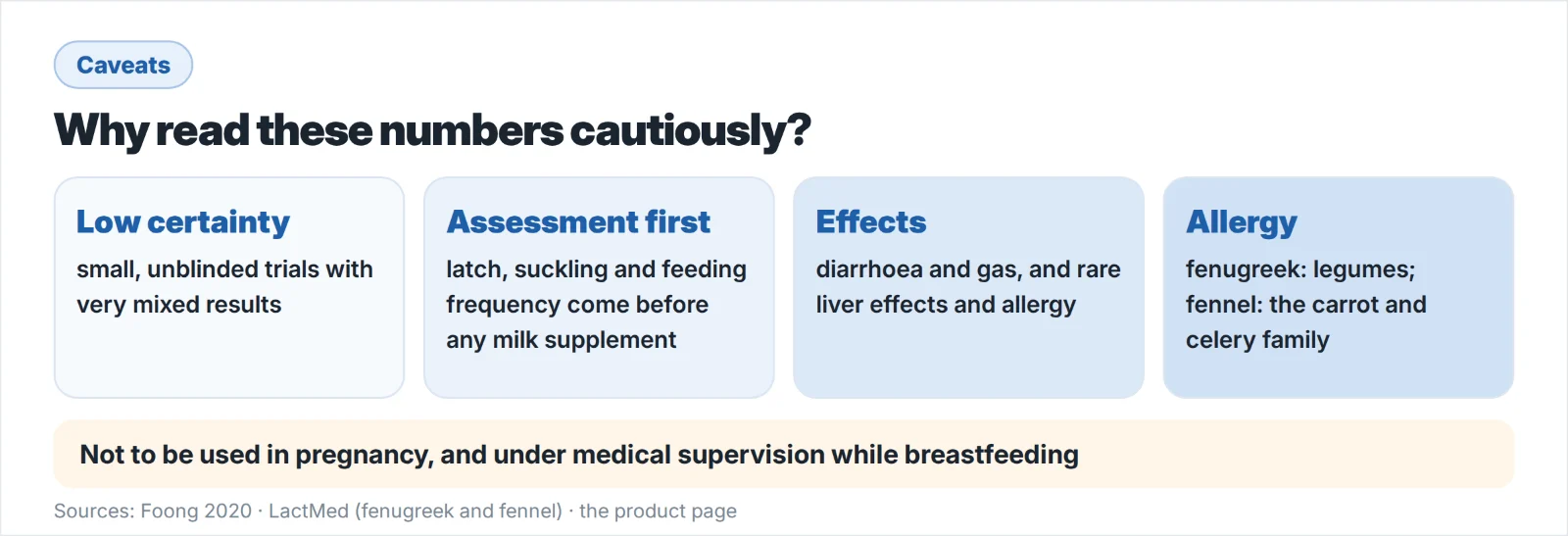
- Fenugreek (LactMed): generally tolerated, but diarrhoea, gas, nausea and vomiting may occur; with reports of liver effects, allergy and worsened asthma, a report of a 14% fall in serum potassium, and a rare case of severe skin peeling; and possible cross-reaction with chickpeas, peanuts and other legumes.
- Fennel (LactMed): generally tolerated, but anethole is excreted in milk; there was a toxicity report in two newborns after excessive use of an herbal tea containing fennel and anise; and allergy and sun sensitivity; avoid it if you or the baby are allergic to carrots or celery.
- Diarrhoea and an enlarged liver: occurred in a woman taking fennel, fenugreek and goat’s rue as galactagogues.
- Caraway and dill: we opened no source on them in breastfeeding.
- From the page: not used in pregnancy, and with diabetes or high iron consult the doctor.
Ask a doctor or pharmacist first if
- You are breastfeeding (the page itself says under a doctor’s supervision), or pregnant (not to be used).
- You have diabetes or take diabetes medicine, or high iron.
- You are allergic to chickpeas, peanuts, carrots or celery, or have asthma.
- You take regular medicines or have a liver problem.
- Severe diarrhoea, a rash, yellowing or shortness of breath appeared in you or the baby: stop and ask immediately.
- You are worried about low milk: that needs an assessment of feeding and latch, not just a supplement.
Want to ask?
Beseha pharmacists answer on WhatsApp. Tap the “Ask a pharmacist” button and tell them your medicines and condition before you start.
FAQ
Does Herbana increase milk?
The 2020 Cochrane review (41 trials) found the evidence for natural galactagogues very low certainty, and the fenugreek review (5 studies) found an increase versus placebo, but there is no guarantee, and the capsule’s dose is below the usual in LactMed.
Does it add weight?
A review of 12 fenugreek trials found no significant change in weight (0.22 kg); so there is no evidence of weight gain, and it is in adults, not breastfeeding mothers.
How do I use it?
According to the product page one capsule 3 times a day after food, under a doctor’s supervision, without exceeding the dose.
Is it fine in pregnancy?
No; the product data states it is not used in pregnancy.
Does it have side effects?
Diarrhoea, gas and allergy are possible according to LactMed for fenugreek and fennel, and rare liver effects; if anything appears stop and ask the doctor.
Is it a drug?
No; a herbal food supplement, not a drug, according to the page.
Read next: black seed for women and breastfeeding and pregnancy and lactation supplements.
The bottom line
Herbana is a herbal supplement for breastfeeding, the evidence for any milk-boosting substance is weak, its fenugreek dose is below the usual, and there is no evidence that it adds weight. Use it as on its page under your doctor’s supervision, do not use it in pregnancy, and assess the feeding first.
Sources
- Foong et al. 2020 (Cochrane): oral galactagogues for breast milk production
- Khan et al. 2018: effectiveness of fenugreek as a galactagogue, network meta-analysis
- Askarpour et al. 2020: fenugreek, blood lipids and body weight, meta-analysis
- LactMed: fenugreek and breastfeeding
- LactMed: fennel and breastfeeding
- Herbana product page at Beseha
This content is for information and is not a substitute for advice from a doctor or pharmacist. Prices and availability may change; the final price is on the product page.


