
- Your cart is empty
- Continue shopping
-
Beseha
- Posted on
- Categories:Supplements and Vitamins
- 0 comments
The 30-second answer
Most adults need about 15 mg of vitamin E a day (per the product page) and mostly get it from food, and there is no strong evidence that high doses protect the heart or reduce prostate cancer. A review of 16 trials found vitamin E with other antioxidants lowered ischemic stroke but raised hemorrhagic stroke (risk ratio 1.22). A high dose is not for everyone, and the Puritan page warns about blood thinners and surgery. There is no study on the two products.
Two products: 400 IU or 1000 IU?
#1
400 IU (268 mg) natural100 softgels
NOW Vitamin E 400 IU – 100 softgels
The lower dose in the natural form
EGP 1500
100 softgels · 400 IU · current price from the product page
- The page: natural vitamin E (d-alpha tocopheryl), one softgel daily with a meal that contains fat
- The page: says it makes no exaggerated health claims
Heads-up: Its page gives no blood-thinner or surgery warning in the part we read, and the same risk applies at a lower dose, so ask a pharmacist if you take any medicine
#2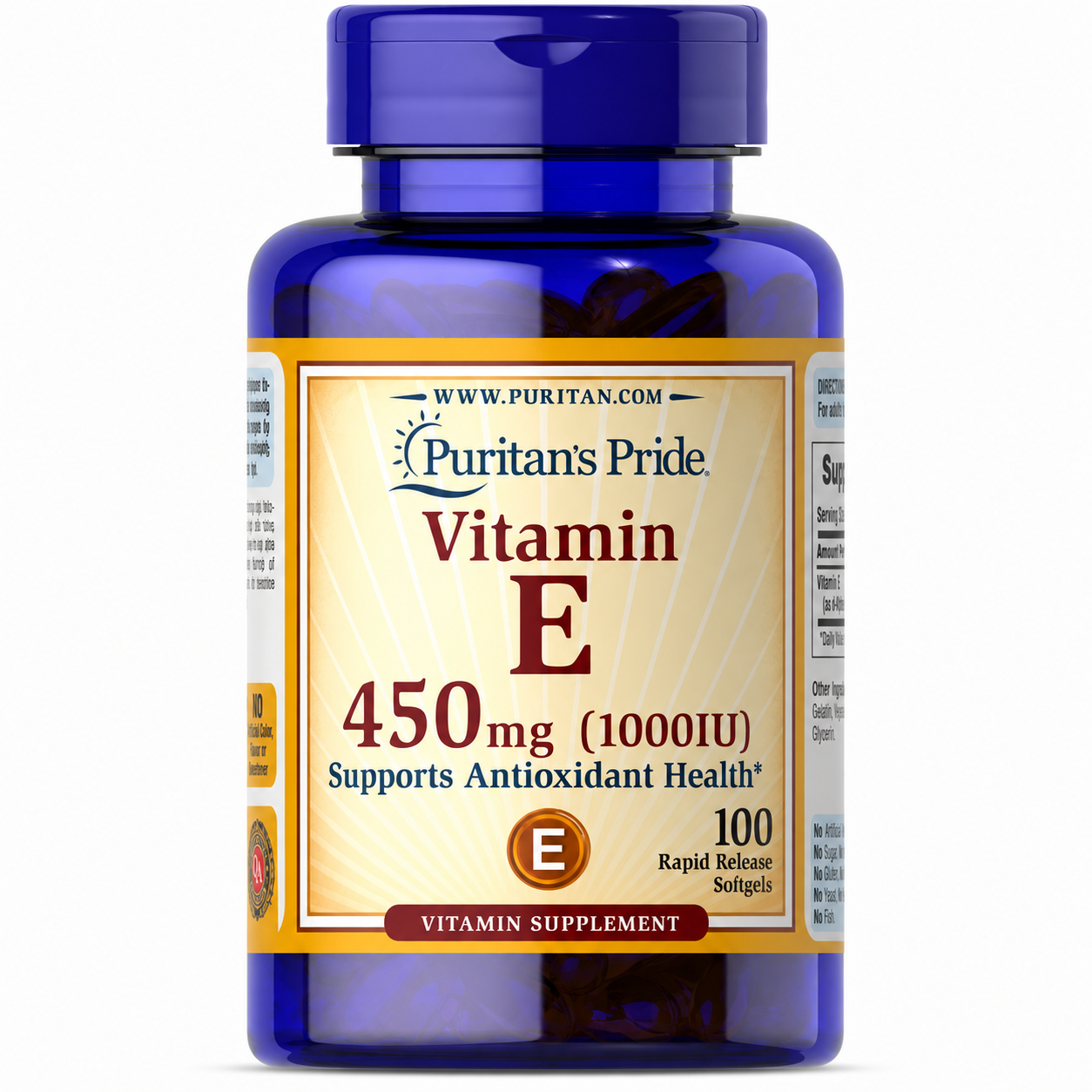
1000 IU synthetic3000 percent of the daily value
Puritan’s Pride Vitamin E 1000 IU (450 mg) – softgels
A very high dose, with explicit warnings
EGP 1300
softgels · 1000 IU · current price from the product page
- The page: each softgel is 450 mg dl-alpha tocopheryl acetate (synthetic), one daily with food
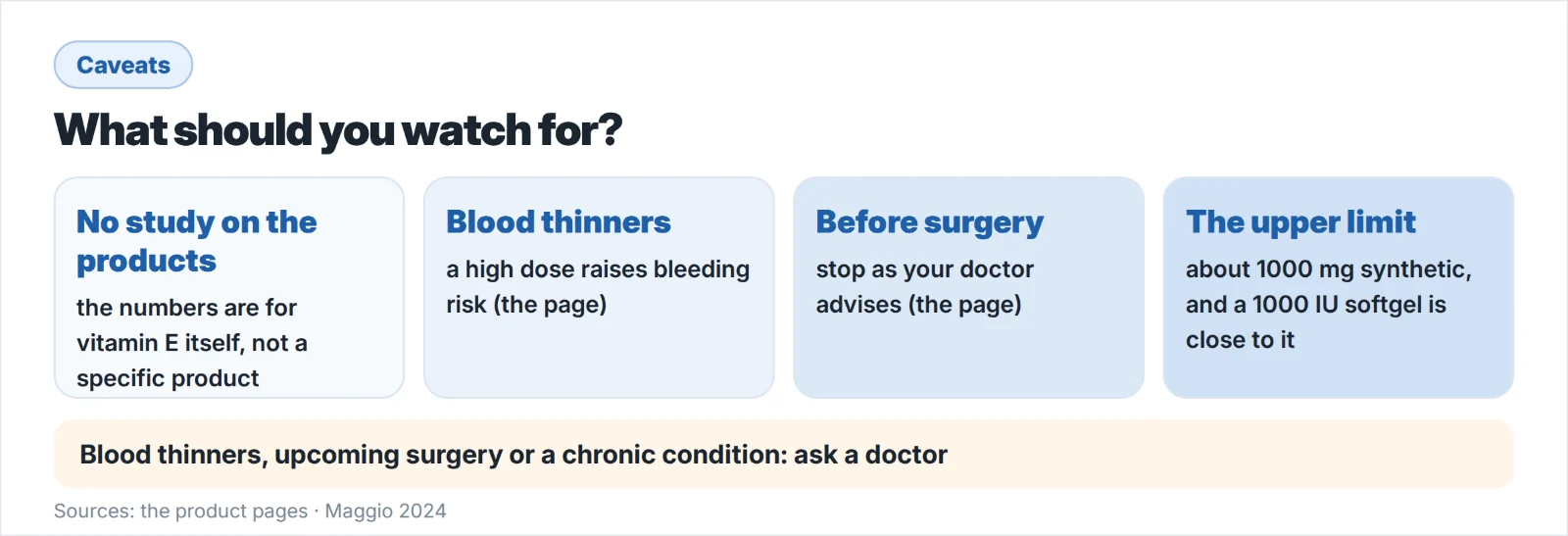
- The page: the adult upper limit is about 1000 mg for synthetic, and one softgel is close to it
Heads-up: The page says: not for long-term use without a doctor; avoid with blood thinners and before surgery; ask if pregnant, breastfeeding or in chemotherapy or radiotherapy. It gives no softgel count, so we calculated no cost
What does the research say?
| Study | Type | Result |
|---|---|---|
| Sharifi 2026 | A systematic review of 58 papers: vitamin E and heart disease | Some observational studies showed a benefit, but almost all randomized trials found no benefit on cardiovascular outcomes |
| Maggio 2024 | 16 trials, doses 33 to 800 IU, vitamin E and stroke | Vitamin E alone did not reduce stroke; with other antioxidants it lowered ischemic stroke (risk ratio 0.91) and raised hemorrhagic stroke (1.22); the review says it is not recommended for stroke prevention |
| Loh 2022 | An analysis of observational studies and trials on the prostate | Dietary (0.97) or supplemental (0.99) vitamin E was not significantly linked to prostate cancer risk; a protective link appeared in European studies only |
| Karimi 2026 | 12 trials in fatty liver patients | Triglycerides 12.74 mg/dL lower, with no significant change in cholesterol or BMI; the effect was clearer with lower doses, longer durations and overweight |
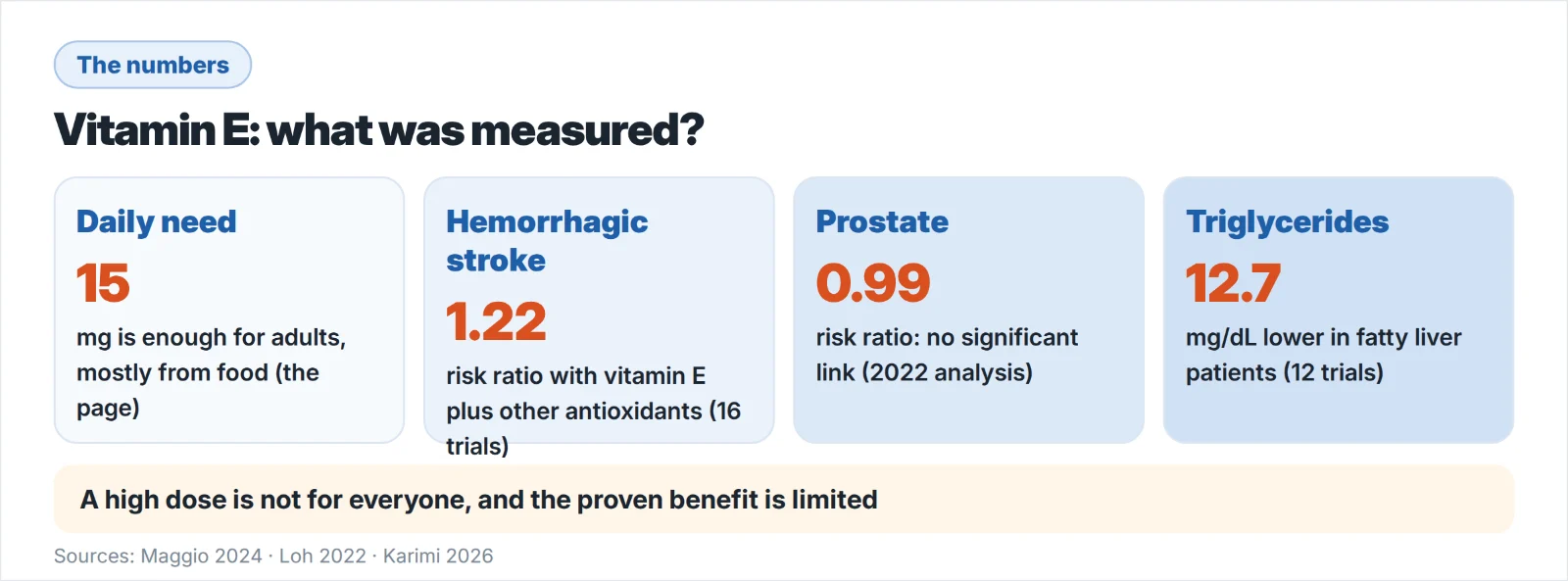
- No study on the two products; the numbers are for vitamin E itself.
- The need: the Puritan page says adults need 15 mg a day, mostly from oils, nuts and seeds, and deficiency is rare.
- Heart and prostate: high doses were not shown to protect, and the Puritan page points to the SELECT trial (a small rise in prostate risk at 400 IU); we did not open SELECT itself, and the analysis we opened found no significant link.
- Fatty liver: a limited benefit for triglycerides in patients, under a doctor.
- We opened no source on vitamin E for skin, hair or fertility, so we say nothing about them.
Dose and cost
Our calculation from the current prices and the page data (not from a study). 15 mg a day is the need per the Puritan page:
| Product | Dose | Cost |
|---|---|---|
| NOW Vitamin E 400 IU | 400 IU = 268 mg natural, about 18 times the need | about 15 EGP per softgel (100 softgels) |
| Puritan’s Pride 1000 IU | 1000 IU = 450 mg synthetic, about 30 times the need | not calculated (count not stated) |
How to use it
- With a meal that contains fat: both pages say so because it dissolves in fat.
- One softgel a day only: and do not combine more than one supplement that has vitamin E.
- Not without a reason: the Puritan page says the high dose is not an everyday supplement for everyone, and should be taken when a doctor sees a reason.
- Duration: not for long-term use without a doctor (the Puritan page).
- Before surgery: stop as your doctor advises.
Ask a doctor or pharmacist first if
- You take blood thinners (warfarin, aspirin or others): a high dose raises bleeding risk.
- You have surgery coming up.
- You are pregnant or breastfeeding, or in chemotherapy or radiotherapy.
- You take regular medicines or have a chronic condition.
- Unexplained bleeding or bruising appears: stop and ask a doctor.
Want to ask?
Beseha pharmacists answer on WhatsApp. Tap the “Ask a pharmacist” button and tell them your medicines before you start.
FAQ
Should I take 400 IU or 1000 IU?
The need is about 15 mg a day, and both doses are far above it. There is no strong evidence for high doses, so the lower one is safer if you and your doctor decide on a supplement.
Does vitamin E protect the heart?
A 2026 review found that almost all randomized trials found no benefit on cardiovascular outcomes.
Does it raise stroke risk?
An analysis of 16 trials found that with other antioxidants it lowered ischemic stroke and raised hemorrhagic stroke (1.22), and vitamin E alone did not change it.
Does it cause prostate cancer?
A 2022 analysis found no significant link, but the Puritan page points to the SELECT trial which found a small rise, and we did not open it.
Can I take it with blood thinners?
No, unless your doctor agrees; the page says a high dose raises bleeding risk.
Which product should I choose?
There is no study on either. NOW 400 IU is the lower dose in a natural form, and Puritan 1000 IU is close to the upper limit with clear warnings.
Read next: omega-3: 1000 mg fish oil is not 1000 mg omega-3, CoQ10 for the heart and statin muscle pain and calcium with vitamin D3: bone supplements.
The bottom line
The body needs vitamin E in a small amount (about 15 mg) and gets it from food, and high doses were not shown to help the heart or the prostate, and may raise bleeding with blood thinners. If you and your doctor decide on a supplement, the lower dose is safer, and there is no study on the two products.
NOW Vitamin E 400 IU at Beseha → Puritan’s Vitamin E 1000 IU at Beseha →
Sources
- Sharifi et al. 2026: vitamin E and heart disease, a systematic review
- Maggio et al. 2024: vitamin E supplementation and stroke, a meta-analysis
- Loh et al. 2022: vitamin E intake and prostate cancer risk
- Karimi et al. 2026: vitamin E and lipid profile in MASLD
- NOW Vitamin E 400 IU product page at Beseha
- Puritan’s Vitamin E 1000 IU product page at Beseha
This content is for information and is not a substitute for advice from a doctor or pharmacist. Prices and availability may change; the final price is on the product page.


