
- Your cart is empty
- Continue shopping
-
Beseha
- Posted on
- Categories:Skin and Beauty
- 0 comments
The 30-second answer
Urea is a moisturiser up to 10%, and above 10% it acts as a keratolytic for thick skin (a 2018 review). A 2026 review of 12 trials in diabetic foot dryness found urea creams beat the base cream after 4 weeks with high certainty, and a small trial found improvement in 19 of 20 feet with a 10% cream whatever its price. We found no head-to-head of 10, 20 and 40 percent in the abstracts. On our shelf: 10% from about 1.3 EGP a gram, a 20% lotion, and 40% at about 3.4 EGP a gram. There is no study on any product, and do not apply it on broken skin.
Six urea products: what do their pages say?
#1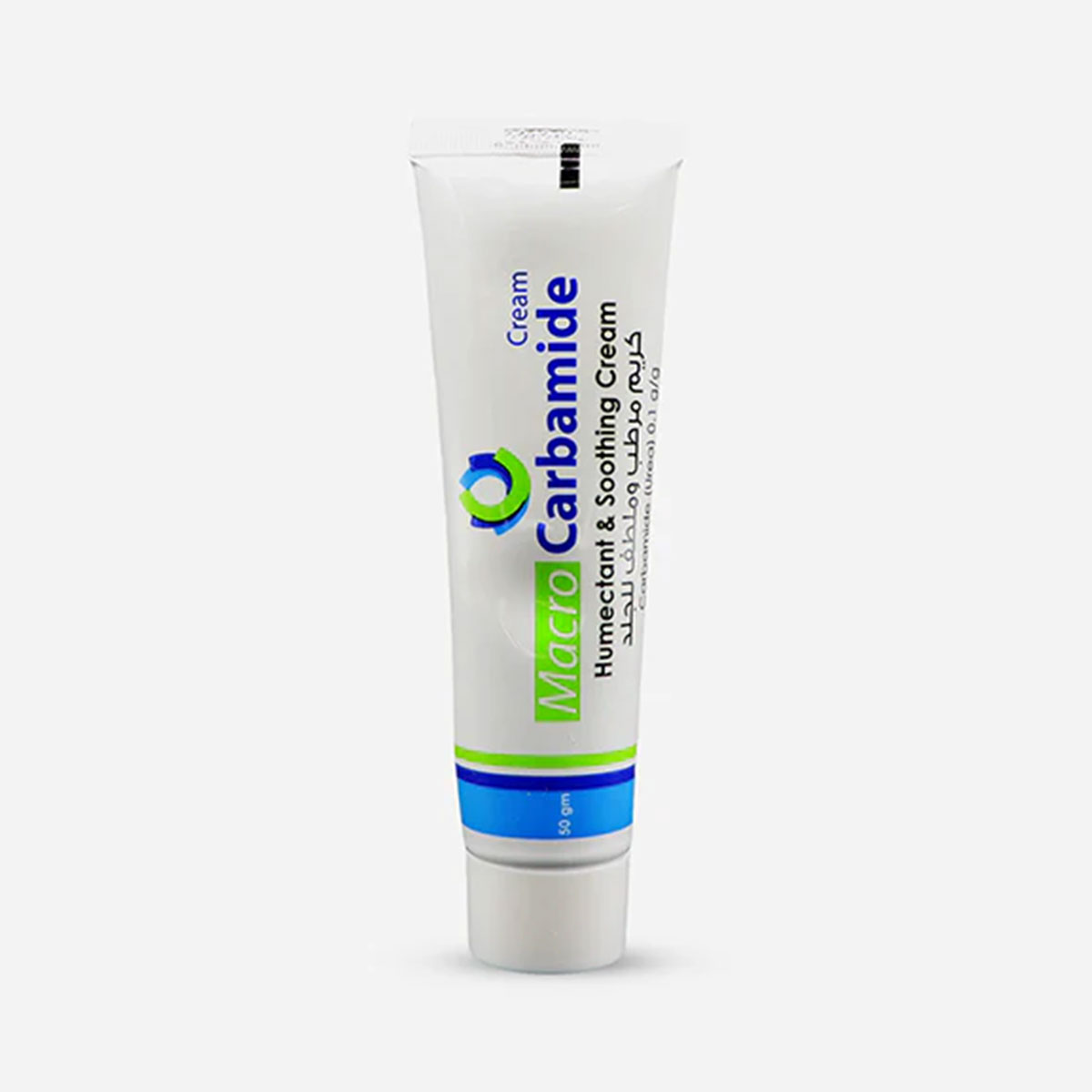
Urea 10%Cheapest per gram
Macro Carbamide Cream – 50 g
Urea 10% at the lowest cost
EGP 65
50 g · current price from the product page
- The pack: Carbamide (Urea) 0.1 g per g, i.e. 10%
- The page: a thin layer on clean skin once or twice a day for heels, elbows and knees
Heads-up: It may sting on broken or badly cracked skin, and on the face with care. There is no study on the product. The cost is about 1.3 EGP per gram
#2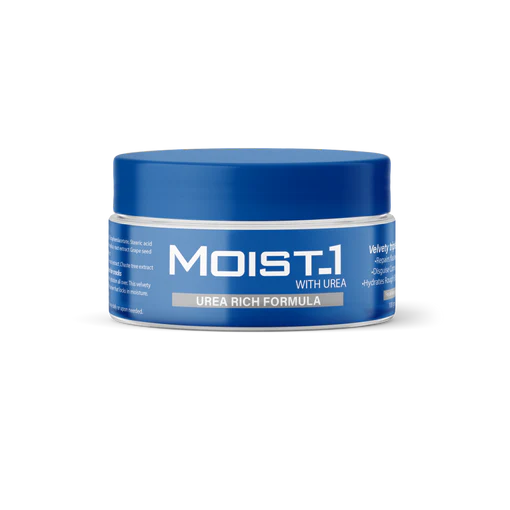
Urea Rich FormulaStrength not stated
Moist-1 Urea Cream – 100 g
Urea-rich with no percentage
EGP 139
100 g · current price from the product page
- The pack: Moist.1 With Urea, Urea Rich Formula, 100 g, by Purex
- The page: for cracked heels, a layer at bedtime under cotton socks
Heads-up: The page does not state the urea percentage, so we cannot place it among 10, 20 and 40. There is no study on it. The cost is about 1.4 EGP per gram
#3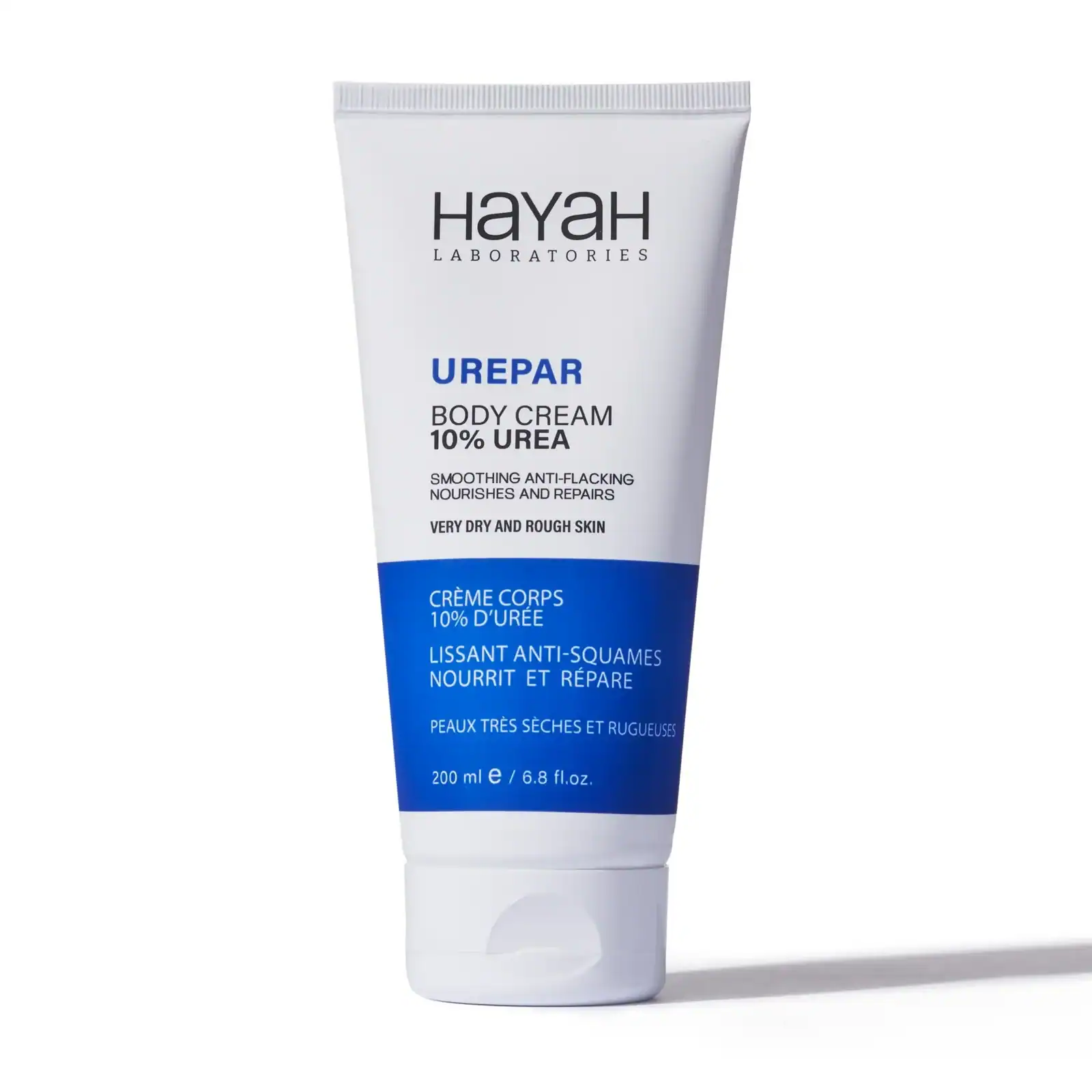
Urea 10%Large pack
Hayah Urepar Body Cream 10% – 200 ml
A full-body cream for severe dryness
EGP 357
200 ml · current price from the product page
- The pack: smoothing, anti-flaking, nourishes and repairs, for very dry and rough skin
- The page: once or twice a day, and for heels a thick layer at night under cotton socks
Heads-up: The page says cracked or wounded diabetic feet should ask a doctor. There is no study on the product. The cost is about 1.8 EGP per ml
#4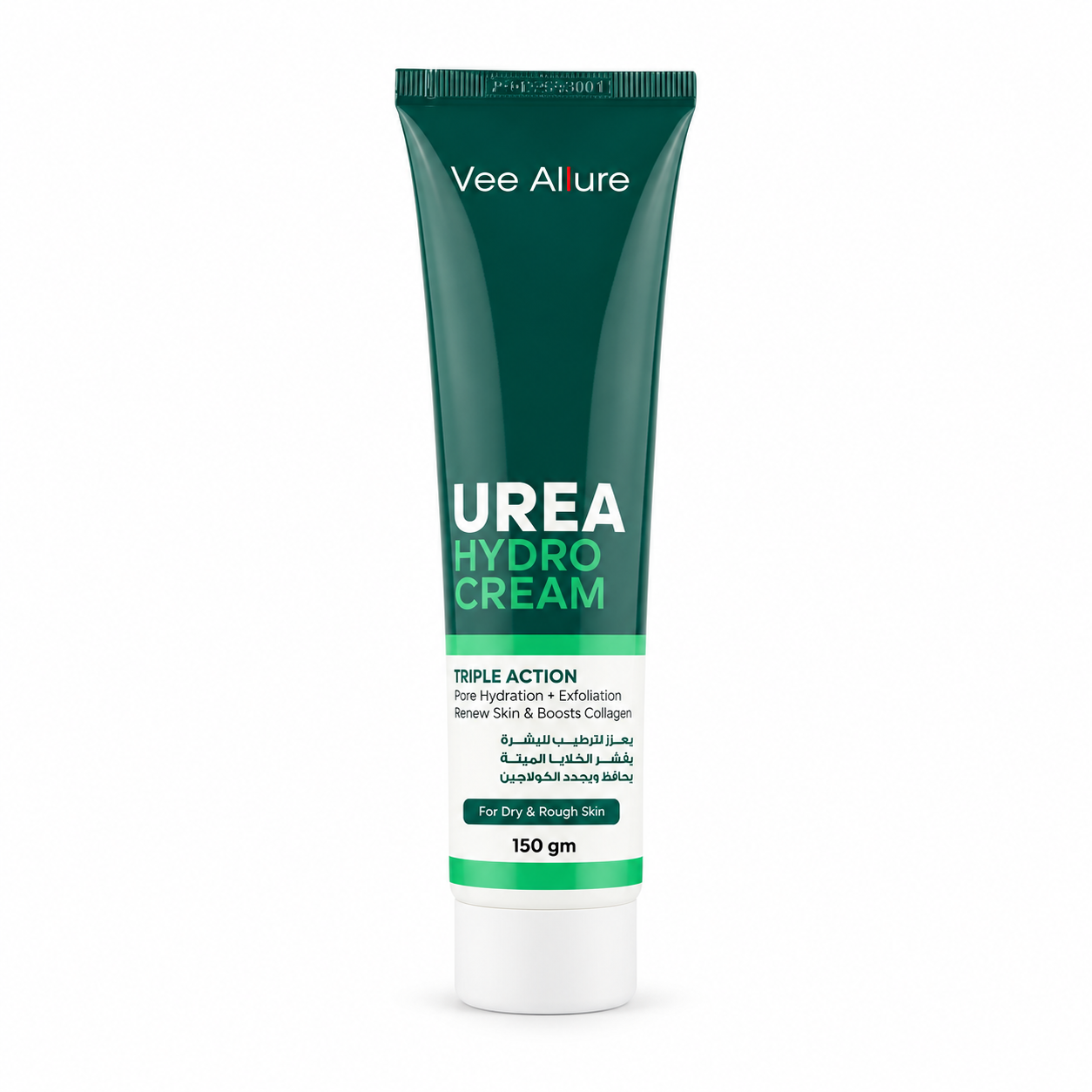
Urea 10%With exfoliating acids
Vee Allure Urea Hydro Cream 10% – 150 g
Urea with salicylic, glycolic and lactic acids
EGP 280
150 g · current price from the product page
- The page: urea 10% with niacinamide, salicylic, glycolic and lactic acids, shea butter and panthenol
- The page: twice a day for 4 weeks to judge the result
Heads-up: The acids add exfoliation, so temporary tingling is possible (the page). There is no study on the product. The cost is about 1.9 EGP per gram
#5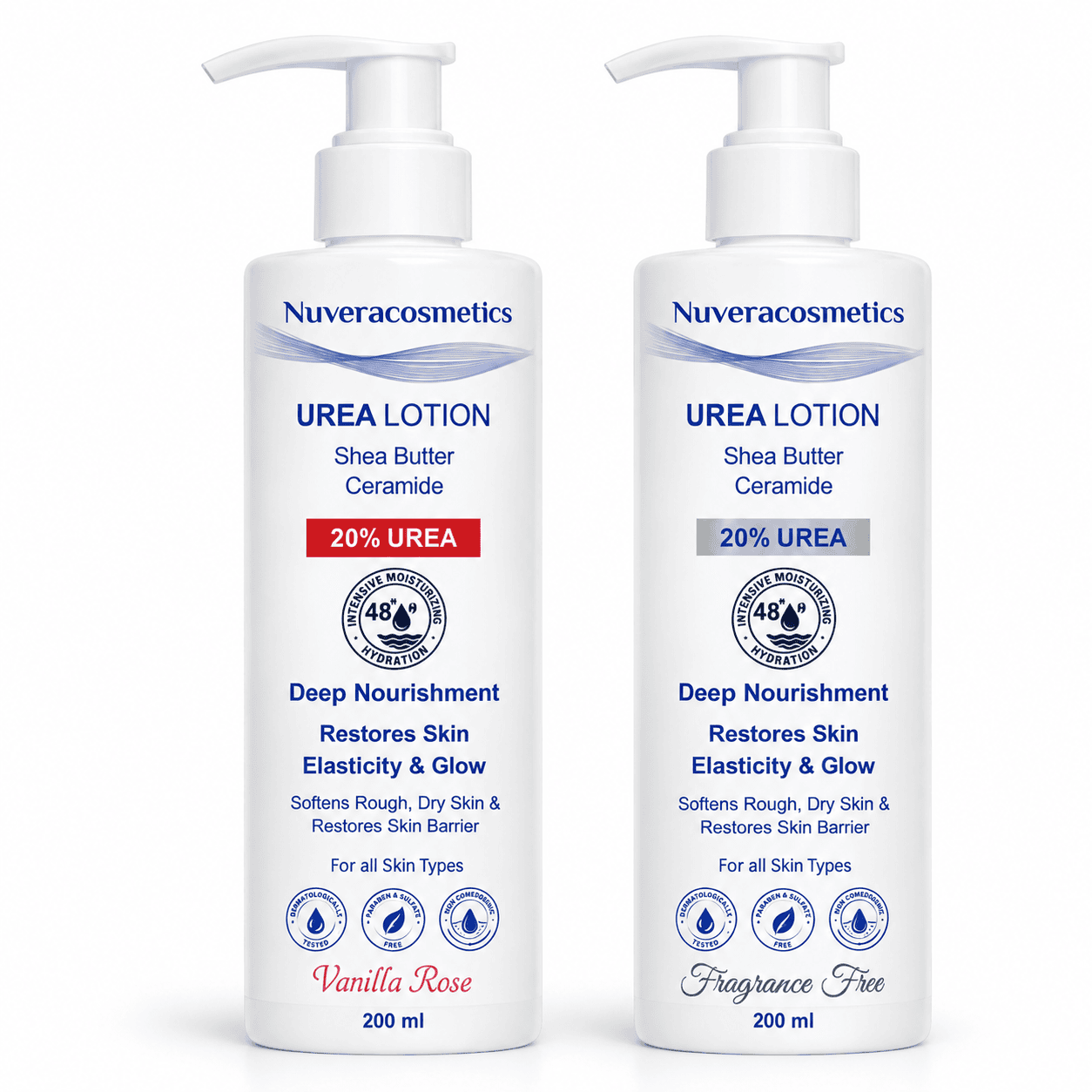
Urea 20%Two versions: scented and fragrance-free
Nuvera Urea Lotion 20% – 200 ml
A lotion at a higher strength
EGP 350
200 ml · current price from the product page
- The page: urea 20% with shea butter and ceramide, 200 ml, and moisturising up to 48 hours
- The page: two versions, Vanilla Rose and Fragrance Free
Heads-up: Above 10% means a keratolytic effect, so test a small area first. There is no study on the product. The price is for one version, and the cost is about 1.8 EGP per ml
#6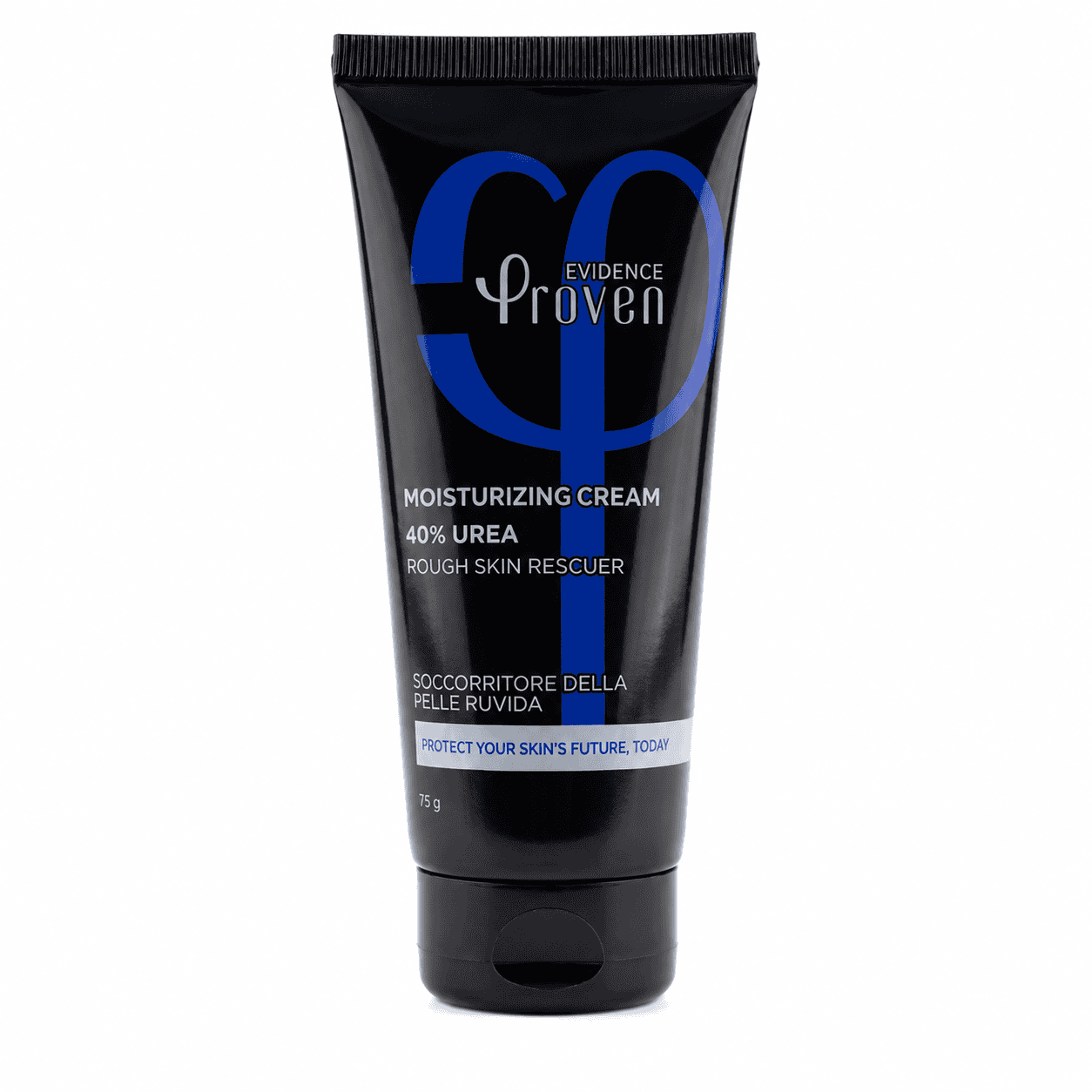
Urea 40%With salicylic and lactic acids
Proven Moist Cream Urea 40% – 75 g
The highest strength we sell
EGP 255
75 g · current price from the product page
- The page: urea 40% with niacinamide, ceramides, salicylic and lactic acids, a 75 g tube
- The page: for dry, rough and thickened skin, on clean dry skin per the pack
Heads-up: A high strength with acids: it may sting or irritate, so test a small area and never on broken skin. There is no study on the product. The cost is about 3.4 EGP per gram
Strength, size and cost
| Product | Urea (the page) | Size | Cost |
|---|---|---|---|
| Macro Carbamide | 10% | 50 g | about 1.3 EGP per gram |
| Moist-1 | not stated | 100 g | about 1.4 EGP per gram |
| Hayah Urepar | 10% | 200 ml | about 1.8 EGP per ml |
| Nuvera Urea Lotion | 20% | 200 ml | about 1.8 EGP per ml |
| Vee Allure Hydro | 10% with acids | 150 g | about 1.9 EGP per gram |
| Proven Moist | 40% with acids | 75 g | about 3.4 EGP per gram |
If you want something for heels specifically, the Bionnex Perfederm 10% urea page calls it a cracked heel cream. For keratosis pilaris, the Hepta Panthenol Plus Carbamide Body Lotion page says urea 10% with panthenol 2% and that it suits a keratosis pilaris routine (there is no study on either).
What does the research say?
| Study | Type | Result |
|---|---|---|
| Celleno 2018 | A review: topical urea in skincare | At 10% or below it acts as a moisturiser, and above 10% as a keratolytic; it also helps other drugs penetrate |
| Piquero-Casals 2021 | A review: urea in dermatology | Many trials show improvement in dry, scaly skin (eczema, thickened skin, dryness and others); well tolerated, with mild side effects more frequent at higher strengths |
| Borgström 2026 | A review and meta-analysis: 12 randomised trials of diabetic foot dryness (no ulcers) | Urea creams beat the base cream after 4 weeks (SMD -0.36; interval -0.55 to -0.17) with high certainty; adverse events rare and mild |
| Tejeda Ramírez 2024 | A double-blind trial: two 10% urea creams on 20 feet of 10 diabetic patients | Skin quality improved in 19 feet (95%) whatever the cream and price; a very small trial |
| Alamri 2025 | A review of 7 trials, 268 people with acanthosis nigricans: urea 10 to 20% among other treatments | Urea reduced redness, particularly at 20%, with mild effects (stinging or irritation); tretinoin was stronger for pigmentation |
| Pan 2013 | A review: 81 publications on urea in dermatology | Helpful in conditions including dryness, eczema, psoriasis and thickened skin; mild irritation was the commonest event, with no systemic toxicity |
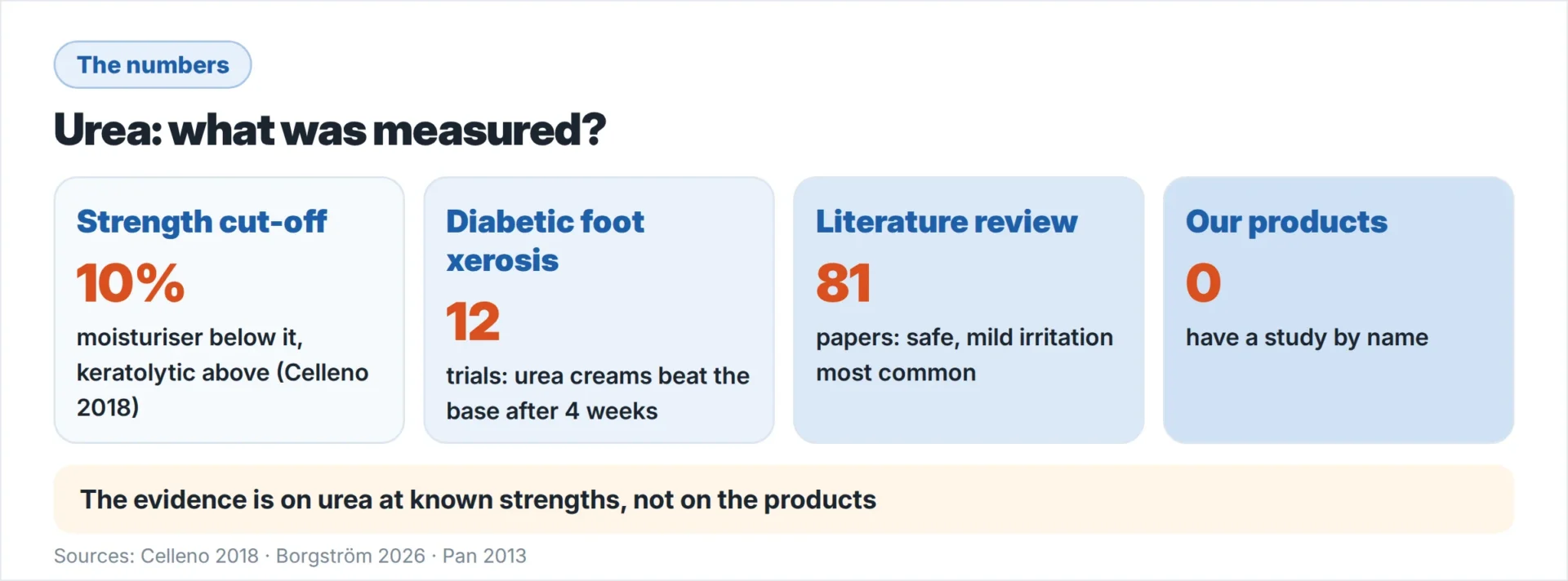
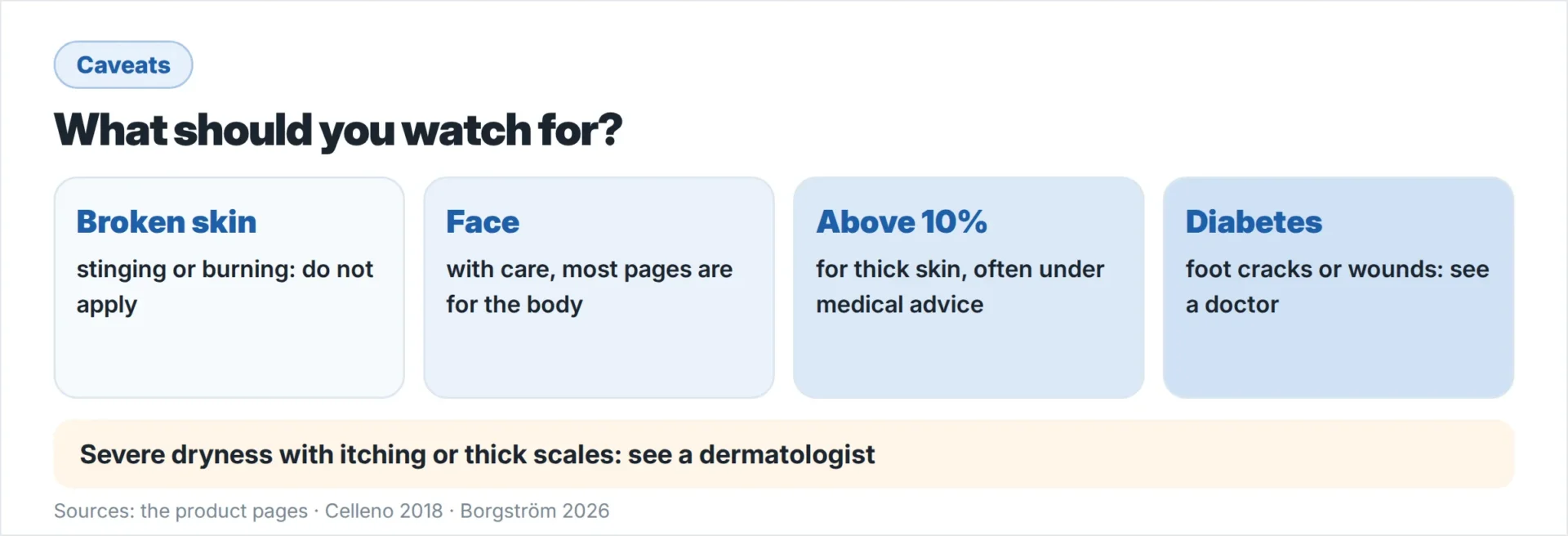
- 10% is enough for ordinary dryness: it moisturises and softens, and the diabetes and dryness trials we opened support urea in general.
- No head-to-head: we found no trial comparing 10, 20 and 40 percent in the abstracts, so a higher strength is not proven better for ordinary dryness.
- Above 10% is for thick skin: the effect is keratolytic, with more stinging or irritation.
- The acids in the cream: Vee Allure and Proven contain extra exfoliating acids, so they are stronger on the skin than urea alone.
- No study on any of the six products themselves.
How to use it
- On clean, slightly damp skin: after a shower, a thin layer rubbed in until absorbed (the Macro and Hayah pages).
- Once or twice a day: regularity matters more than amount.
- For heels: a thick layer at night under cotton socks (the Moist-1 and Hayah pages).
- Start with the weakest: 10% first, and move to 20 or 40 only if the skin is truly thick, testing a small area.
- 4 weeks to judge the result: as the Vee Allure page says.
Who should ask the doctor first?
- You have diabetes and cracks, wounds or skin changes on your feet (the Hayah page).
- The skin is broken, inflamed or badly cracked, or stinging, burning and redness appear.
- Severe eczema or psoriasis, or dryness with itching and thick scales.
- Use on a child (the pages: ask a doctor) or on the face.
- You want to use 20% or 40% and are not sure it suits your skin.
Want to ask?
Beseha pharmacists answer on WhatsApp. Tap the “Ask a pharmacist” button and tell them the area and the type of dryness before choosing a strength.
FAQ
Urea cream 10%, 20% or 40%?
For ordinary dryness 10% is enough, and above 10% it acts as a keratolytic for thick skin (a 2018 review). We found no head-to-head of the three, and we start with the weakest.
Does urea cream help cracked heels?
The Moist-1 and Hayah pages advise a layer at night under cotton socks for heels, and a 2026 review found urea creams beat the base cream in diabetic foot dryness.
Is it suitable for people with diabetes?
A 2026 review of 12 trials found urea creams improve foot dryness without ulcers, but with cracks or wounds ask a doctor.
Can it go on the face?
Most pages are for the body. The Macro page says with care on the face and others say not for the face, so ask a pharmacist.
Why does it sting?
It can sting on broken or cracked skin, and more with a higher strength and acids. The effects were mild in the research, and if it continues, stop.
Which is the cheapest?
Macro Carbamide 10% is the cheapest per gram on our shelf, and Proven 40% the most per gram. The current price is on each product page.
Read next: the best body lotion for dry skin in winter, the dry skin winter routine and Hayah vs Dermactive moisturiser.
The bottom line
Urea 10% moisturises and softens, and above that it exfoliates thick skin. The research supports urea in general (diabetic foot dryness), with no comparison of 10, 20 and 40 percent and no study on the six products. Start with 10%, test a small area, and never apply it on broken skin.
Macro Carbamide 10% at Beseha → Hayah Urepar at Beseha →
Sources
- Celleno 2018: topical urea in skincare, a review
- Piquero-Casals et al. 2021: urea in dermatology
- Borgström et al. 2026: moisturizer formulations for diabetic foot xerosis, systematic review and meta-analysis
- Tejeda Ramírez et al. 2024: two 10% urea creams in diabetic foot syndrome
- Alamri et al. 2025: topical treatments for acanthosis nigricans, systematic review
- Pan et al. 2013: urea, a comprehensive review of the clinical literature
- Product page at Beseha
- Product page at Beseha
- Product page at Beseha
- Product page at Beseha
- Product page at Beseha
- Product page at Beseha
This content is for information and is not a substitute for advice from a doctor or pharmacist. Prices and availability may change; the final price is on the product page.


