
- Your cart is empty
- Continue shopping
-
Beseha
- Posted on
- Categories:Healthy Food
- 0 comments
The 30-second answer
Flaxseed has fibre and plant omega-3 (ALA), and it is best eaten ground because it is absorbed better. Research found a drop in blood pressure (about 4.3 mmHg in systolic across 18 trials, with big differences between studies), and flaxseed oil lowered triglycerides by about 8 mg/dL (36 trials). But your body converts little ALA to EPA plus DHA, so it is not a substitute for fish oil. The Dr. Foods page says 1 to 2 tablespoons ground, and a tablespoon costs about 3 EGP. And there is no study on the products themselves.
Three Dr. Foods products: what do the pages say?
#1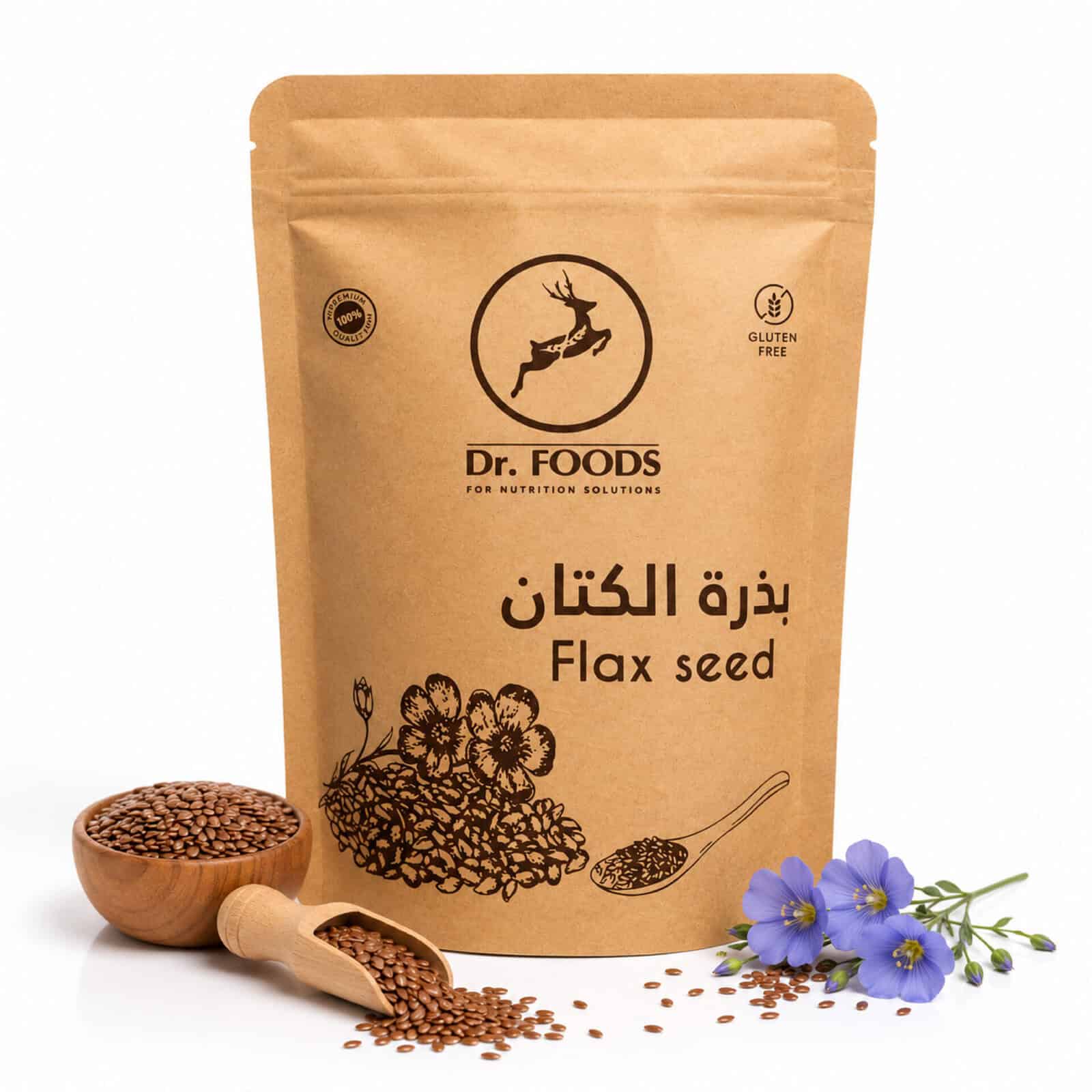
1 tbsp ground ≈ 7 gThe cheapest
Dr. Foods Flax Seed – 200 g
Whole natural seeds, grind before eating
EGP 89
200 g · current price from the product page
- The page: per ground tablespoon (about 7 g): 37 kcal, fibre 1.9 g, protein 1.3 g and omega-3 (ALA) 1.6 g
- The page: 1 to 2 tablespoons on yoghurt or oats, and as an egg replacer: 1 tablespoon ground with 3 of water
Heads-up: The page says drink plenty of water, start small, and take medicines 1 to 2 hours apart. This is a food, not a treatment
#2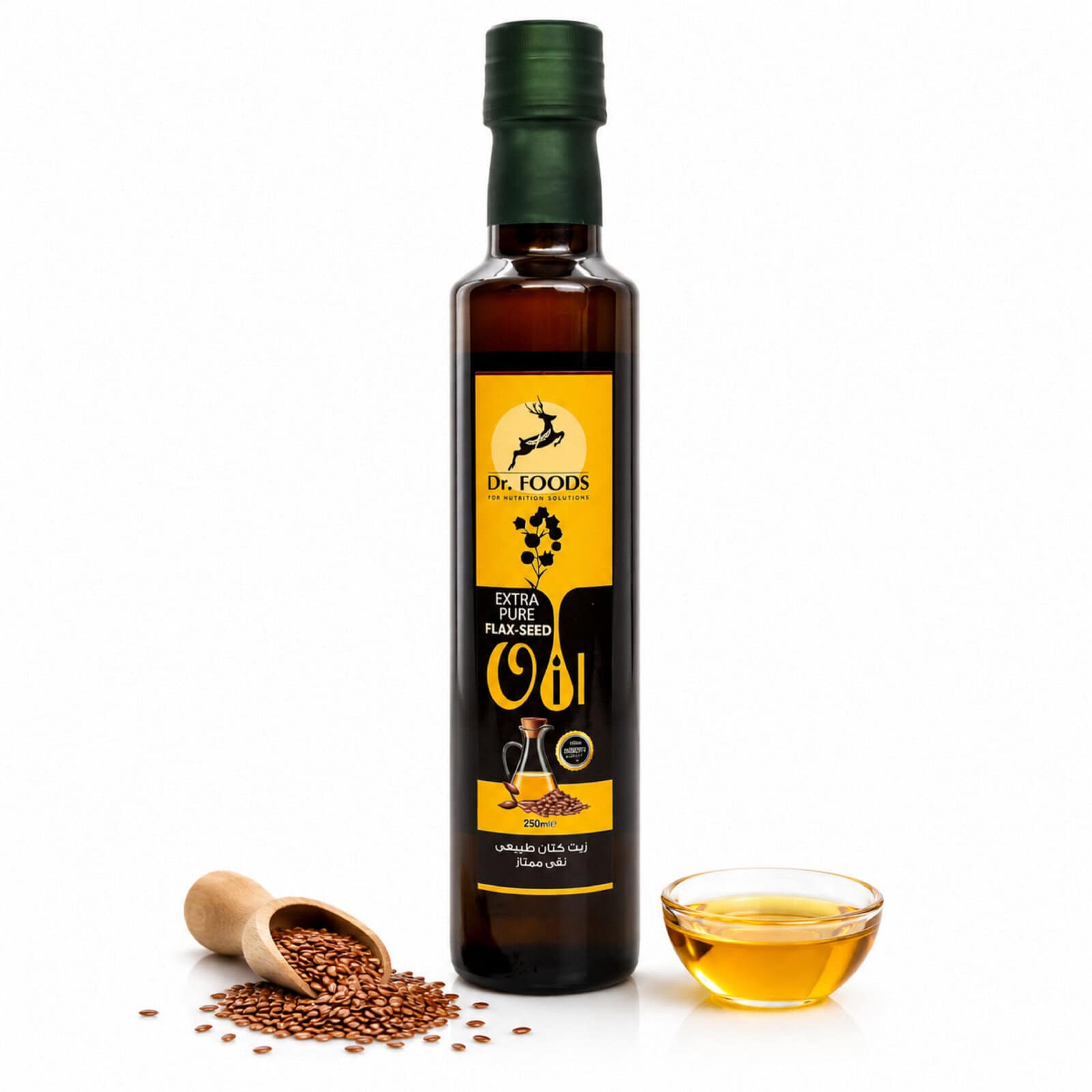
Cold pressedNot for cooking
Dr. Foods Flaxseed Oil – 250 ml
Oil in a dark bottle
EGP 195
250 ml · current price from the product page
- The page: a tablespoon has about 7 g ALA, above the daily need (1.1 to 1.6 g)
- The page: on salads and cold dishes, never heated, kept in the fridge after opening and used within 6 to 8 weeks
Heads-up: The page warns that large amounts may add to the effect of blood thinners, so ask your doctor if you take them. And the oil oxidises quickly: if it smells sharp or tastes bitter, discard it
#3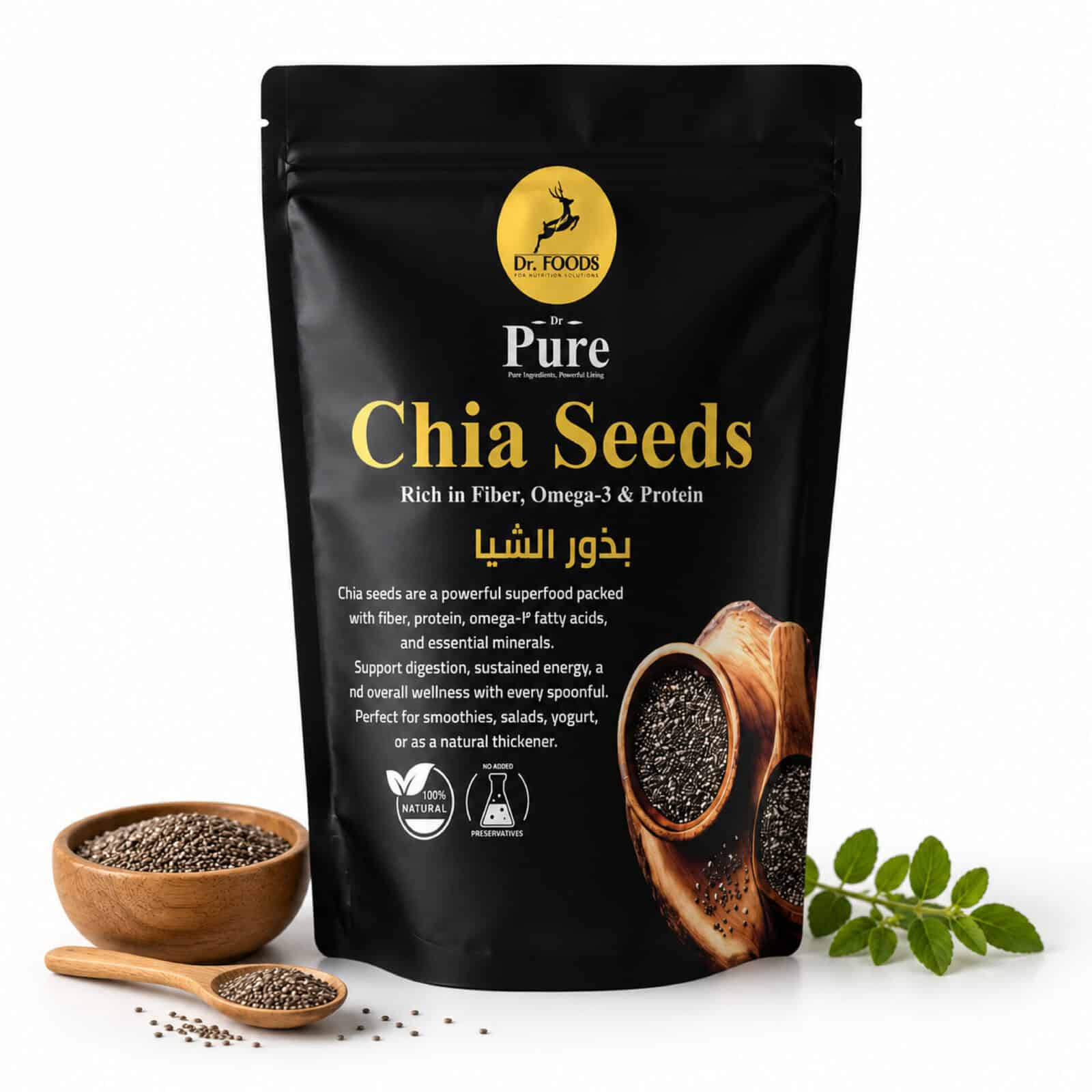
2 tbsp ≈ 28 gFibre 10 g a serving
Dr. Foods Chia Seeds – 200 g
An alternative or companion, no grinding
EGP 115
200 g · current price from the product page
- The page: per 2 tablespoons (about 28 g): 138 kcal, fibre 10 g, protein 4.7 g, omega-3 (ALA) 5 g and calcium 177 mg (USDA)
- The page: 1 to 2 tablespoons on yoghurt or oats, or chia pudding in milk for 2 to 4 hours
Heads-up: The page warns: never swallow it dry, eat it with moist food, start small and drink water. And this article has no head-to-head research comparing it with flaxseed
What does the research say?
| Study | Type | Result |
|---|---|---|
| Musazadeh 2025 | An analysis of 18 trials, 1,209 participants with metabolic disease: blood pressure | Systolic fell 4.30 mmHg and diastolic 2.50; clearest with whole seed and in people with hypertension; but the differences between studies are very high (95 percent) |
| Hasan 2025 | An analysis of 18 trials, people with heart-disease risk factors | Systolic fell 4.75 and diastolic 3.09 mmHg; the authors say to read it with care because of the large differences |
| Musazadeh 2025 (diabetes) | An analysis of 16 trials, 1,136 patients with diabetes | Better weight, waist and triglycerides, but not blood pressure or cholesterol; and the differences between studies are high |
| Ahmadi-Khorram 2026 | An analysis of 36 trials, 1,959 participants: flaxseed oil and lipids | Triglycerides fell 8.04 mg/dL; no clear effect on total or LDL cholesterol; clearest in trials under 12 weeks and in people with obesity |
| Ma 2022 | A trial of 60 older adults with chronic constipation: 50 g of seeds a day for a month | Bowel movements rose and bloating fell; no comparison group, and the dose is far above one or two tablespoons |
| Lane 2022 | A review of 13 studies: plant omega-3 and conversion | High-dose flaxseed oil did not raise the omega-3 index (EPA plus DHA) and some studies showed a fall, while algal oil raised it |
| Outzen 2024 | A risk-benefit assessment: raising linseed intake up to 45 g a day in Denmark | The fibre benefit outweighed the expected cadmium harm in every scenario; with data uncertainty, and the authors ask for more research |
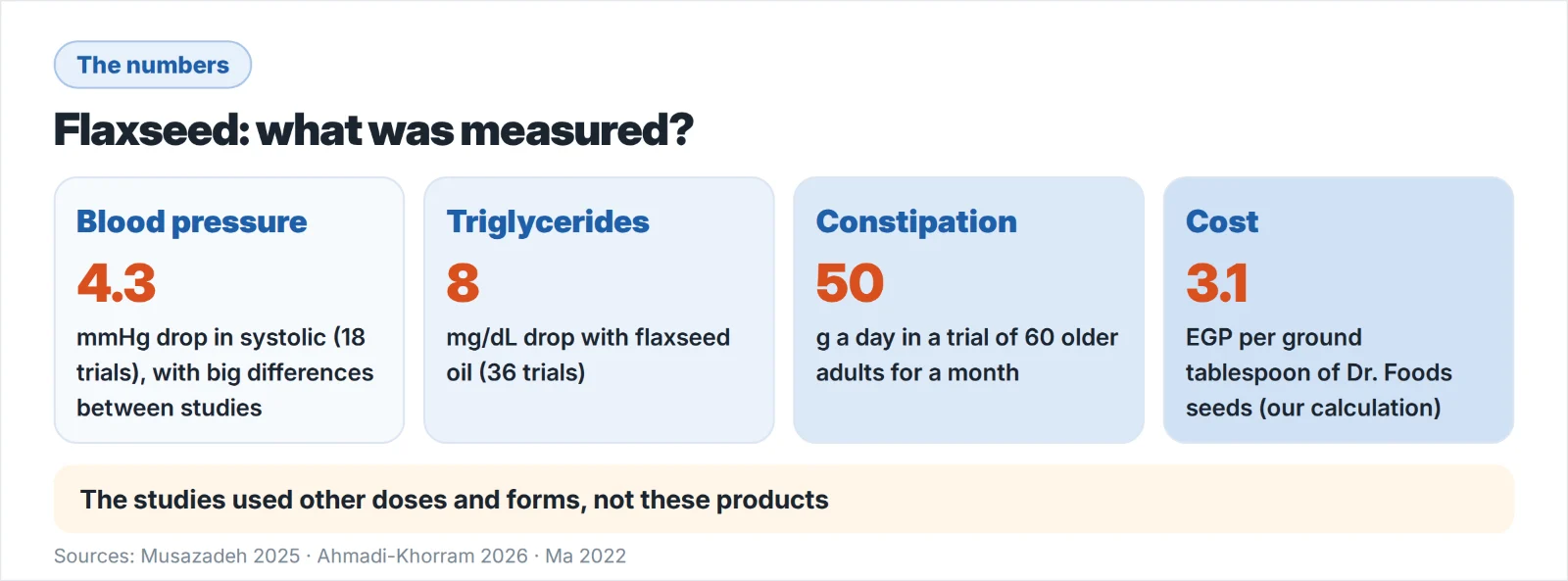
- No study on the three products; the numbers are for flaxseed and its oil at different doses and forms.
- Blood pressure: a small drop (about 4 to 5 mmHg) but the studies differ a lot, and it is not a substitute for hypertension treatment.
- Triglycerides: a small fall with the oil, and cholesterol was not clearly affected.
- Constipation: the evidence is one small trial without a comparison group at 50 g, not built on one or two tablespoons.
- Omega-3: flax has ALA, which does not replace the EPA and DHA of fish or algae.
- We opened no source on flaxseed in pregnancy or hormone-sensitive conditions, so ask a doctor.
How much, and what it costs
Our calculation from the current prices and the page data (not from a study):
| Product | Dose on the page | Cost |
|---|---|---|
| Flax seed 200 g | 1 to 2 tablespoons ground (about 7 g each) | about 3 EGP a tablespoon (about 28 tablespoons a pack), so 3 to 6 EGP a day, and about 2 EGP per gram of ALA |
| Chia seeds 200 g | 1 to 2 tablespoons (28 g per 2) | about 16 EGP per 28 g, and about 3 EGP per gram of ALA |
| Flaxseed oil 250 ml | a tablespoon (about 15 ml) | about 12 EGP a tablespoon (about 17 tablespoons a bottle) |
Fibre costs about the same in the two seeds (about 1.6 EGP per gram of fibre), but flax is cheaper for ALA.
How to eat it
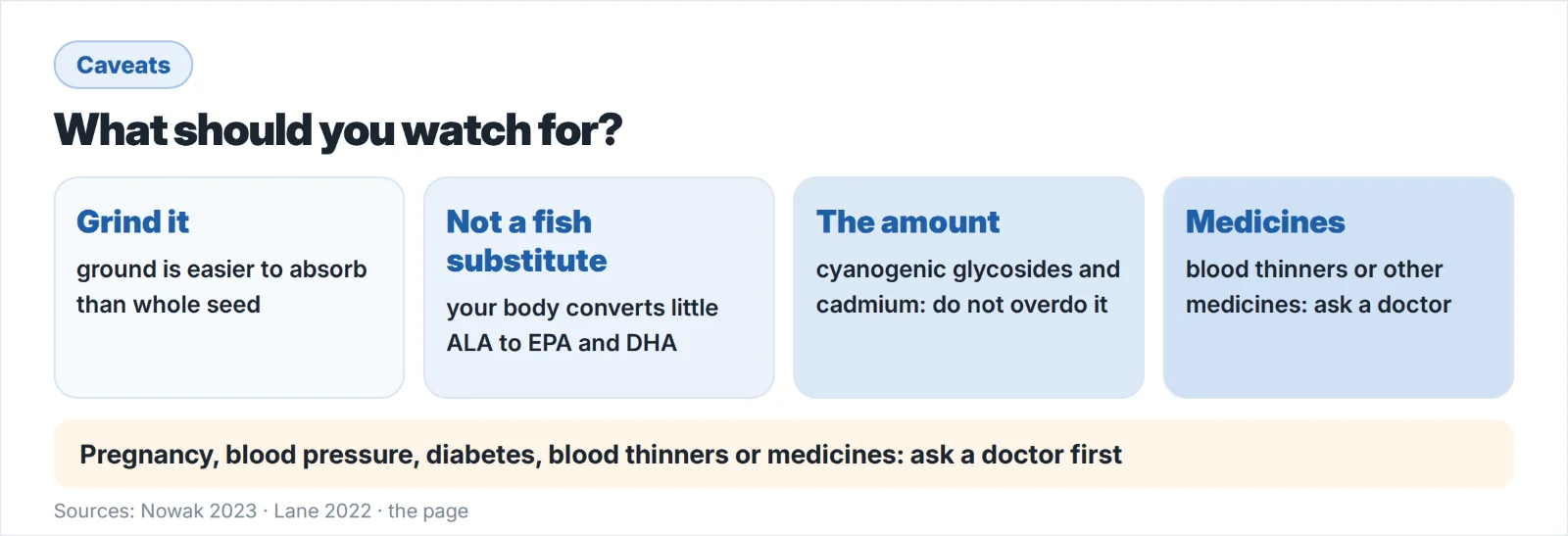
- Grind it: a 2023 review says ground is best for absorption (Nowak). Grind a small amount that lasts a few days.
- The amount: 1 to 2 tablespoons on yoghurt, oats or salad (the page), and start with a small spoon.
- Water: drink plenty with the fibre (the page).
- Medicines: take them 1 to 2 hours before or after the seeds (the page).
- The oil: cold only, in the fridge after opening, and finished within 6 to 8 weeks (the page).
- Chia: never swallow it dry, eat it with liquid or moist food (the page).
Ask a doctor or pharmacist first if
- You take blood thinners or blood pressure or diabetes medicines (the page warns about the oil with blood thinners).
- You are pregnant or breastfeeding, or have a hormone-sensitive condition.
- You have a bowel obstruction or narrowing, or difficulty swallowing.
- You are allergic to seeds.
- Severe belly pain, persistent bloating, a rash or difficulty breathing or swallowing appears: stop and see a doctor at once.
Want to ask?
Beseha pharmacists answer on WhatsApp. Tap the “Ask a pharmacist” button and tell them your medicines before you start.
FAQ
What does flaxseed do?
It has fibre and plant omega-3 (ALA), and research found a small drop in blood pressure and, with the oil, in triglycerides, at doses and forms different from these products.
How do I eat flaxseed?
Ground: 1 to 2 tablespoons on yoghurt, oats or salad, with plenty of water, per the Dr. Foods page.
Do I have to grind it?
Yes, a 2023 review says ground is better absorbed than whole.
Flax or chia?
Both have fibre and plant omega-3; flax is cheaper for ALA and needs grinding, and chia does not. No research here compares them directly.
Does it treat constipation?
A small trial of 60 older adults at 50 g a day found improvement, with no comparison group. Ask a doctor if constipation is chronic.
Does it replace fish oil?
No: your body converts little ALA to EPA plus DHA, and a 2022 review found high-dose flax did not raise the omega-3 index.
Read next: psyllium or glucomannan?, how to read an omega-3 label (EPA and DHA) and omega-3 for triglycerides.
The bottom line
Ground flaxseed is a food with fibre and plant omega-3, and its effect on blood pressure and triglycerides is small and varied. It is not a substitute for fish oil or blood pressure treatment, and ask a doctor if you take medicines or are pregnant. And there is no study on the three products.
Flax Seed at Beseha → Flaxseed Oil at Beseha →
Sources
- Musazadeh et al. 2025: flaxseed and blood pressure, a meta-analysis
- Hasan et al. 2025: flaxseed and blood pressure in people with cardiovascular risk factors
- Musazadeh et al. 2025: flaxseed in people with diabetes
- Ahmadi-Khorram et al. 2026: flaxseed oil and the lipid profile
- Ma et al. 2022: flax seeds and constipation in older adults
- Lane et al. 2022: bioavailability and conversion of plant omega-3
- Nowak and Jeziorek 2023: the role of flaxseed in improving human health
- Outzen et al. 2024: health impact of increased linseed consumption
- Dr. Foods Flax Seed product page at Beseha
- Dr. Foods Flaxseed Oil product page at Beseha
- Dr. Foods Chia Seeds product page at Beseha
This content is for information and is not a substitute for advice from a doctor or pharmacist. Prices and availability may change; the final price is on the product page.


