
- Your cart is empty
- Continue shopping
-
admin
- Posted on
- Categories:Body and Skin Care
- 0 comments
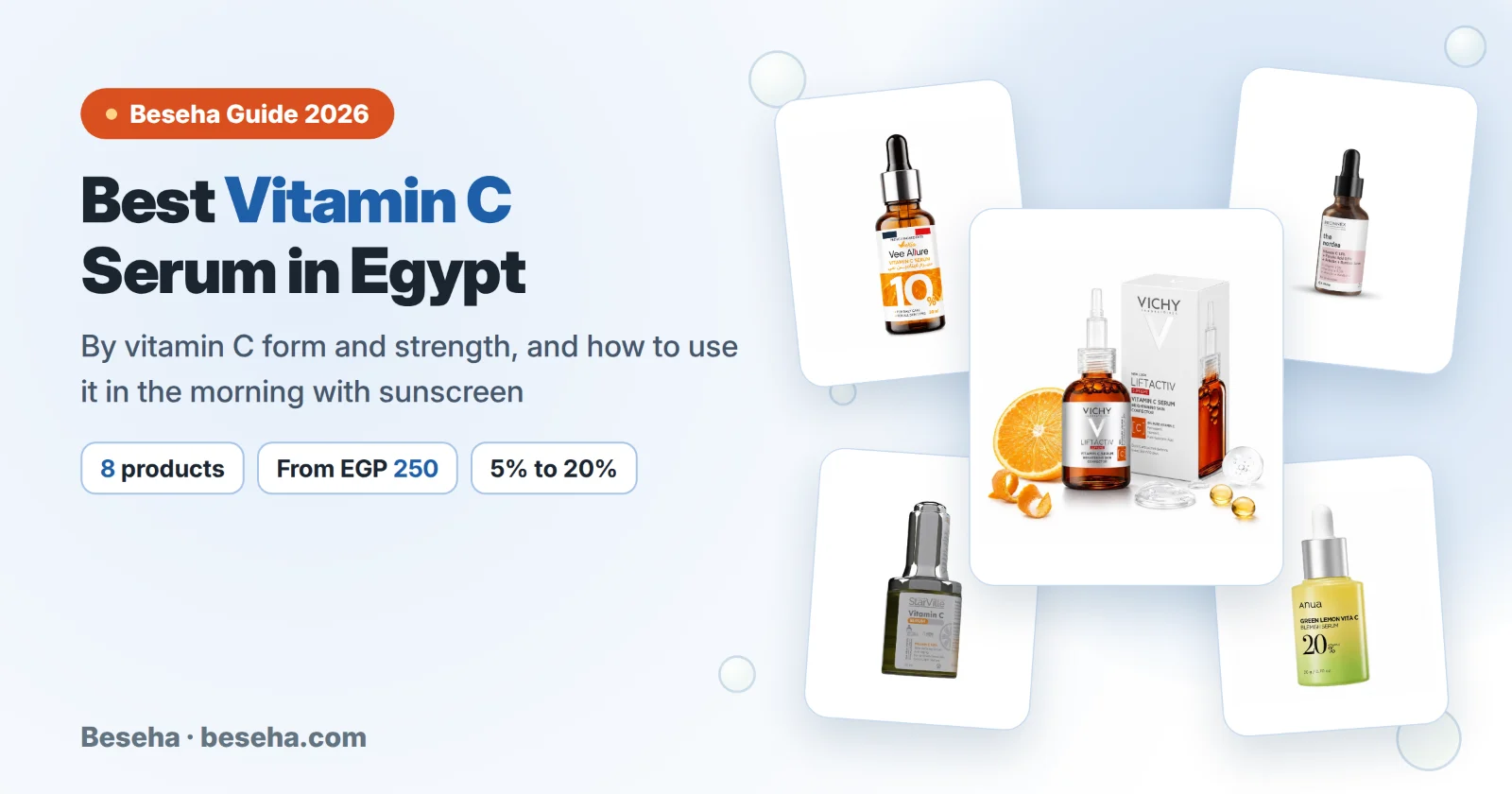
The 30-second answer
Harvard says the studied form is L-ascorbic acid at 10% to 20%, and Cleveland Clinic says under 10% is likely too weak while over 20% may irritate. Use it in the morning before moisturiser and sunscreen; results take about 3 months. The cheapest option is See Lit 10% at EGP 250, and for pure vitamin C, Vichy Liftactiv at EGP 1,615.
What does vitamin C serum actually do?
- An antioxidant: Cleveland Clinic says topical vitamin C can mean less cell damage, and it may help protect and increase collagen.
- Wrinkles: Harvard says one study found daily use for at least 3 months improved the look of fine and coarse wrinkles.
- Dark spots: it may reduce them, but Harvard says more studies are needed, and Cleveland Clinic says the improvement may be temporary.
- Not a sunscreen replacement: Harvard says vitamin C does not replace sunscreen, and Cleveland Clinic says the two work together; see our best sunscreen in Egypt.
How to choose: form, strength and packaging
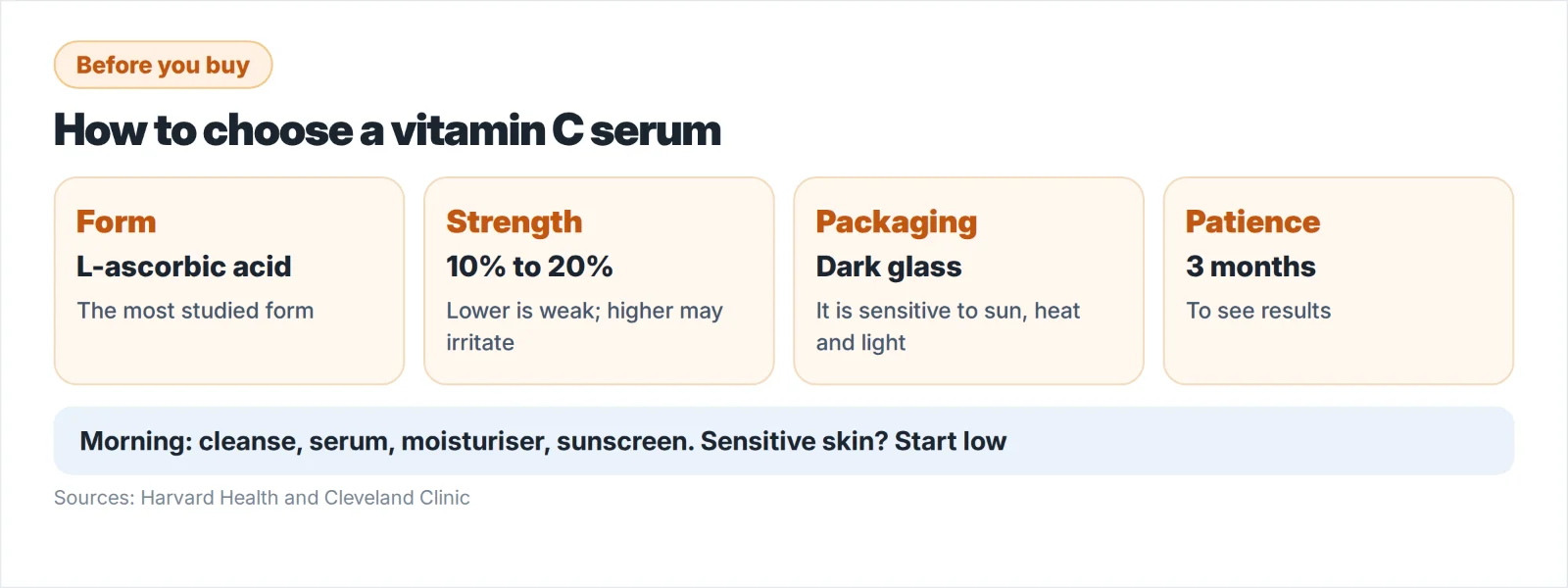
- Form: Harvard says the studied formulation is L-ascorbic acid at 10% to 20% with a pH below 3.5. Many products use derivatives such as sodium ascorbyl phosphate or ascorbyl glucoside.
- Strength: Cleveland Clinic says under 10% is likely too weak, and over 20% risks seriously irritating the skin.
- Sensitive skin: start with a low strength, per Cleveland Clinic, and patch test first, per Harvard.
- Packaging: vitamin C is sensitive to sun, heat and light, so look for dark glass.
10% serums at a low price
#1
10%LiposomalCheapest
See Lit Liposomal Vitamin C Serum – 30 ml
The cheapest serum here, on sale
EGP 250479
EGP 8.3 per ml · 30 ml
- The page says a 10% liposomal formula
- Dropper serum in a dark bottle, per the photo
- EGP 250, down from 479, for 30 ml
Heads-up: The vitamin C form is not on the page; a second listing of the same product is hidden on the site
#2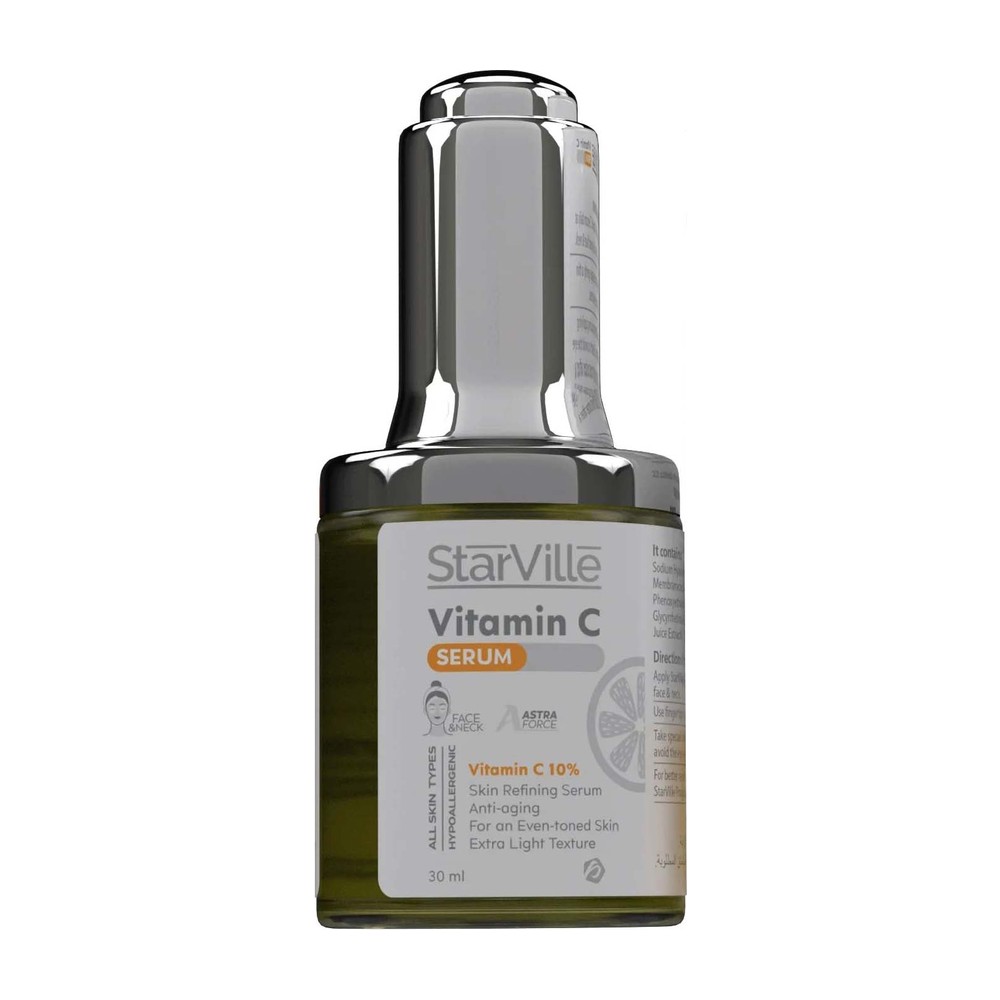
10%Made in Egypt
Starville Vitamin C Serum – 30 ml
A 10% serum at a low price
EGP 285
EGP 9.5 per ml · 30 ml
- The pack says vitamin C 10% with an extra-light texture
- For face and neck, per the pack
- EGP 285 for 30 ml
Heads-up: The vitamin C form is not on the page, so ask a pharmacist if your skin is sensitive
#3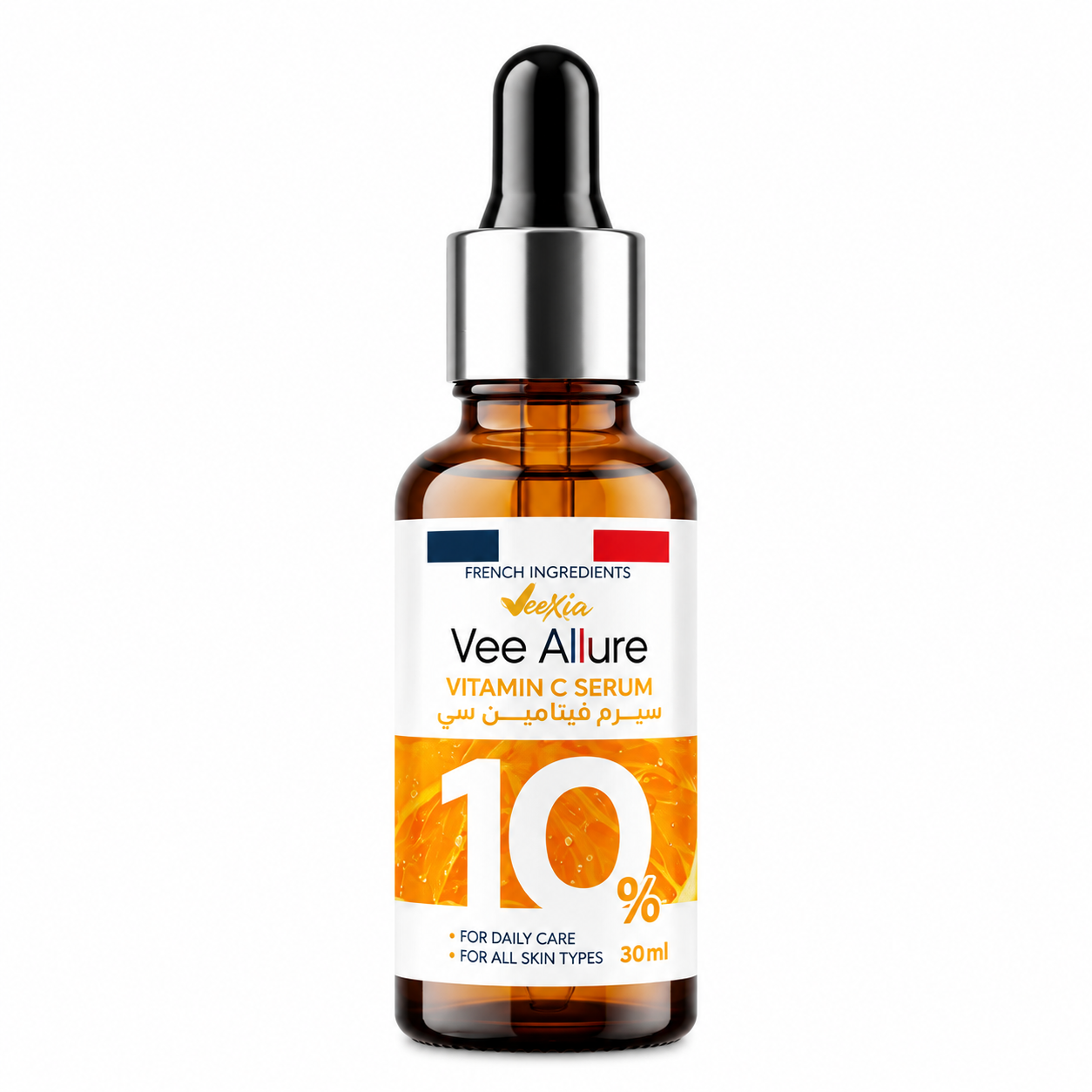
10%Sensitive skin
Vee Allure Vitamin C Serum 10% – 30 ml
A stable vitamin C derivative
EGP 395
EGP 13.2 per ml · 30 ml
- The page says 10% sodium ascorbyl phosphate, a stable vitamin C derivative
- The page says it suits all skin types, including oily and sensitive
- EGP 395 for 30 ml
Heads-up: This is a derivative, not the L-ascorbic acid Harvard says has been studied at 10% to 20%
#4
10%Hayah
Melatex Vitamin C Serum – 30 ml
From Hayah Laboratories
EGP 480
EGP 16.0 per ml · 30 ml
- The pack says vitamin C 10%
- By Hayah Laboratories, per the page; the pack says all skin types
- EGP 480 for 30 ml
Heads-up: The vitamin C form is not stated, and the bottle is white, not dark
For sensitive skin: a lower strength
#5
5%Sensitive skin
Matriskin Vitamin C 5% Serum – 30 ml
A low strength to start with
EGP 560629
EGP 18.7 per ml · 30 ml
- The page and pack say 5% vitamin C with stabilised technology
- The page says it suits sensitive skin, and Cleveland Clinic advises sensitive skin to start low
- EGP 560, down from 629, for 30 ml
Heads-up: 5% is below the 10% that Cleveland Clinic says is likely too weak
15% to 20% strength
#6
15%0.5% ferulic
Bionnex The Nordea Vitamin C Serum – 30 ml
15% with ferulic acid
EGP 619
EGP 20.6 per ml · 30 ml
- The page and pack list 15% ascorbyl glucoside with 0.5% ferulic acid and arbutin
- Harvard says studies combined vitamin C with ferulic acid and vitamin E
- EGP 619 for 30 ml
Heads-up: Ascorbyl glucoside is a derivative, not L-ascorbic acid itself
#7
20%With ferulicHighest strength
Anua Green Lemon Vita C Serum – 20%
The highest strength here
EGP 1,1901,400
See size on product page
- The pack says 20%, and the product photos say 20% pure vitamin C
- The page says it contains hyaluronic acid and ferulic acid
- EGP 1,190, down from 1,400
Heads-up: The page says 30 ml while the pack says 20 g; 20% is the level Cleveland Clinic says not to exceed, so start every other day
#8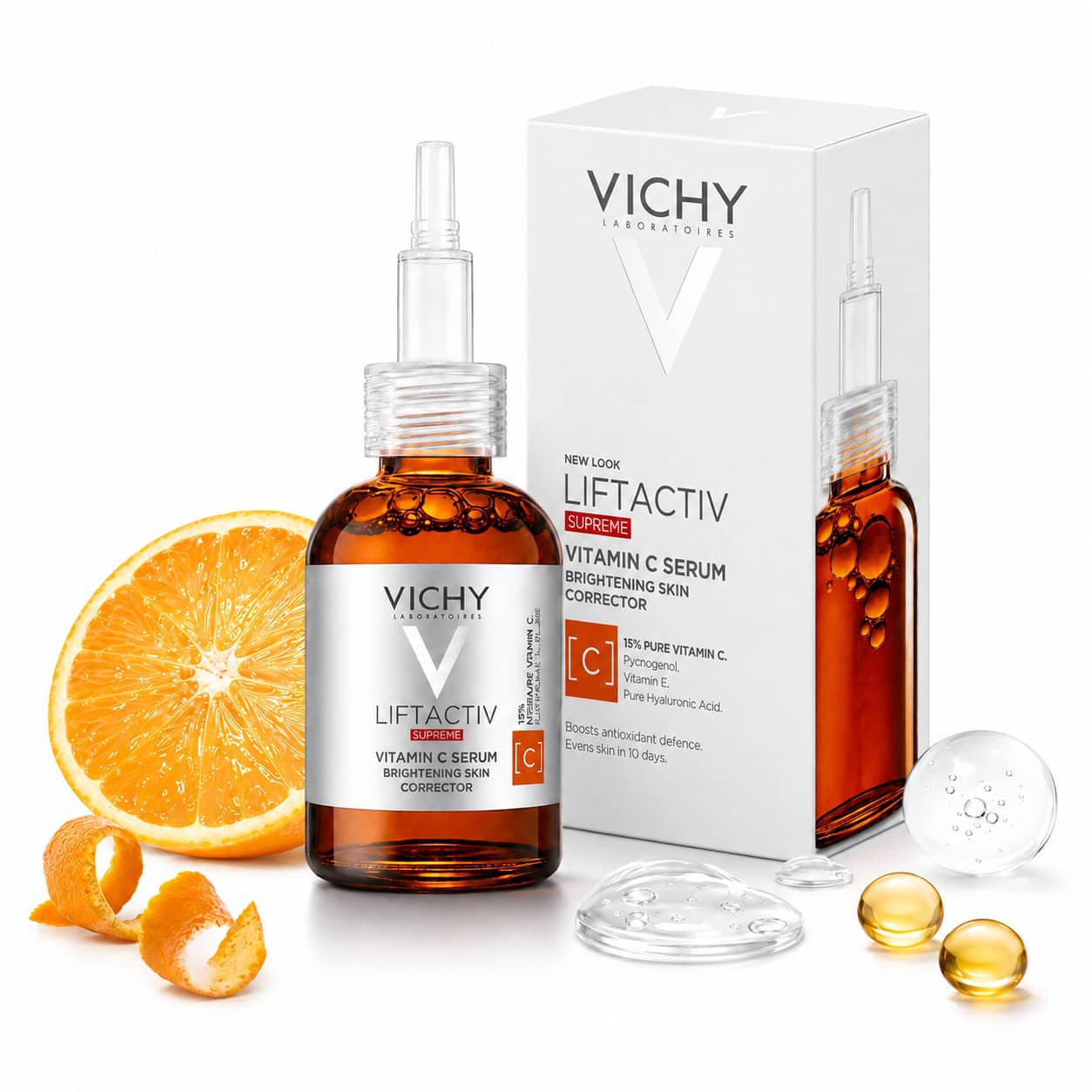
Pure vitamin CWith vitamin E
Vichy Liftactiv Vitamin C Serum – 20 ml
A pharmacy brand with pure vitamin C
EGP 1,6151,700
EGP 80.8 per ml · 20 ml
- The page says 16% pure vitamin C; the new pack says 15%
- The page says it has hyaluronic acid and vitamin E, and suits sensitive skin
- EGP 1,615, down from 1,700, for 20 ml
Heads-up: The priciest per ml here, and the strength on the page differs from the pack
Comparison table: price per ml
| Product | Strength | Vitamin C form | Price | Per ml |
|---|---|---|---|---|
| See Lit Liposomal Vitamin C Serum – 30 ml | 10% | Liposomal (form not stated) | EGP 250 | EGP 8.3 |
| Starville Vitamin C Serum – 30 ml | 10% | Not stated | EGP 285 | EGP 9.5 |
| Vee Allure Vitamin C Serum 10% – 30 ml | 10% | Sodium ascorbyl phosphate | EGP 395 | EGP 13.2 |
| Melatex Vitamin C Serum – 30 ml | 10% | Not stated | EGP 480 | EGP 16.0 |
| Matriskin Vitamin C 5% Serum – 30 ml | 5% | Stabilised (form not stated) | EGP 560 | EGP 18.7 |
| Bionnex The Nordea Vitamin C Serum – 30 ml | 15% | Ascorbyl glucoside | EGP 619 | EGP 20.6 |
| Vichy Liftactiv Vitamin C Serum – 20 ml | 15–16% | Pure vitamin C | EGP 1,615 | EGP 80.8 |
| Anua Green Lemon Vita C Serum – 20% | 20% | Pure vitamin C | EGP 1,190 | — |
How to use it
- Morning: after cleansing, a few drops on the face and neck, then moisturiser and sunscreen, per Harvard.
- Build up slowly: Harvard says you can start every other day and move to daily if your skin tolerates it.
- Mild tingling: normal, per Harvard; if there is significant irritation, stop and ask a doctor.
- Retinol: if you use retinol, see our retinol for beginners; Harvard advises caution when combining vitamin C with other acidic products.
- Patience: Cleveland Clinic says results take about 3 months.
Common mistakes
- Buying the highest strength: Cleveland Clinic says over 20% risks seriously irritating the skin.
- Leaving it in the sun or the bathroom: vitamin C is sensitive to heat and light; keep it somewhere cool and dark.
- Skipping sunscreen: vitamin C does not replace it.
- Judging it after two weeks: results take about 3 months.
- Giving it to children: Harvard says topical vitamin C has only been studied in adults and is not recommended for children.
Important safety notes
- Cleveland Clinic says most people have no side effects, but dryness, itching or redness can happen.
- If you have allergies or sensitive skin, patch test first or ask a doctor, per Harvard.
- Do not use it if you are allergic to any of its ingredients.
- If you have dark spots that grow or change, see a dermatologist before trying any serum.
Not sure which one?
Beseha pharmacists answer on WhatsApp. Tap the “Ask a pharmacist” button, tell them your skin type and current routine, and they will help you choose.
FAQ
What is the best strength for vitamin C serum?
Harvard and Cleveland Clinic cite 10% to 20% L-ascorbic acid; under 10% is likely too weak and over 20% may irritate.
When should I use vitamin C serum?
In the morning after cleansing, followed by moisturiser and sunscreen, per Harvard.
Does vitamin C serum replace sunscreen?
No. Harvard says vitamin C does not replace sunscreen, and Cleveland Clinic says the two work together.
How long does vitamin C serum take to work?
Cleveland Clinic says it takes about 3 months to see results.
Is vitamin C serum good for sensitive skin?
Cleveland Clinic advises sensitive skin to start with a low strength, and Harvard suggests a patch test first.
Does vitamin C remove dark spots?
It may reduce them, but Harvard says more studies are needed and Cleveland Clinic says the improvement may be temporary.
How should I store vitamin C serum?
Vitamin C is sensitive to sun, heat and light, so choose dark glass and keep it somewhere cool and dark.
Read next: our best sunscreen in Egypt and retinol for beginners.
The bottom line
Look for 10% to 20%, ideally L-ascorbic acid, in dark packaging. Use it in the morning before sunscreen, start every other day if your skin is sensitive, and give it 3 months. A 10% serum at about EGP 250 to 400 is the cheapest place to start.
Sources
- Harvard Health: Why is topical vitamin C important for skin health?
- Cleveland Clinic: What can vitamin C serum do for your face?
This content is for information and is not a substitute for advice from a doctor or pharmacist. Prices and availability may change; the final price is on the product page.


