
- Your cart is empty
- Continue shopping
-
admin
- Posted on
- Categories:Body and Skin Care
- 0 comments
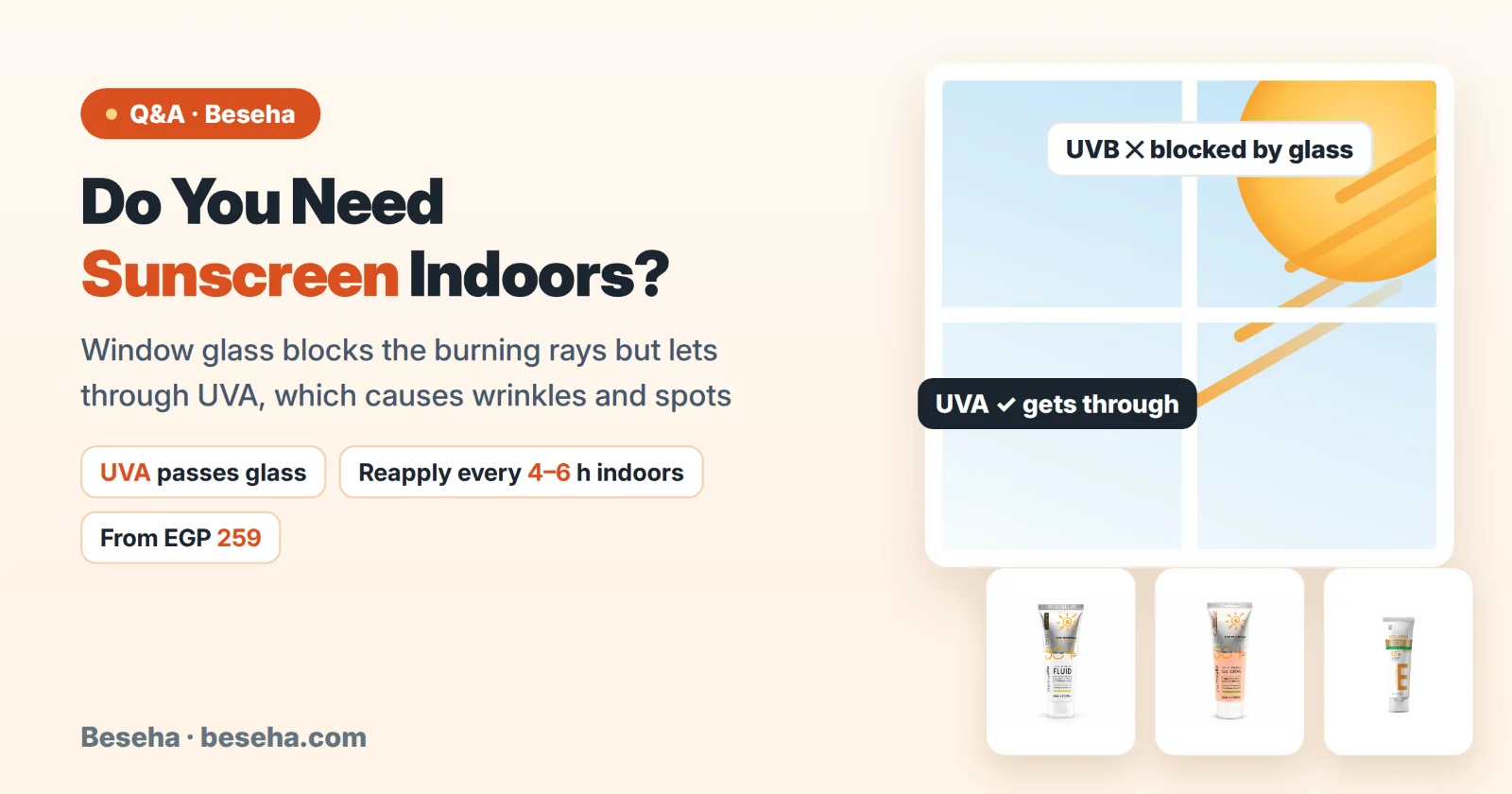
The 30-second answer
Yes, if you sit near a window or balcony. Window glass blocks the UVB rays that burn, but lets through UVA rays, which cause wrinkles and age spots (per the American Academy of Dermatology). If you are indoors all day away from windows, a morning layer is good and reapplying every 4 to 6 hours is enough. With melasma, a tinted sunscreen matters even at home, such as Kolagra Tinted (EGP 259) or Dermaelle Light Tint (EGP 425).
Why can the sun affect you indoors?
Two kinds of sun rays reach your skin:
- UVB: the main cause of sunburn, and window glass blocks it.
- UVA: ages skin early, causing wrinkles and age spots, and passes through window glass.
- Too much of either can lead to skin cancer (per the AAD).
That is why you may not burn by a window while the rays that cause spots and wrinkles still reach you. Even on cloudy days, up to 80% of harmful UV rays get through the clouds.
When you need it, and when you can ease off
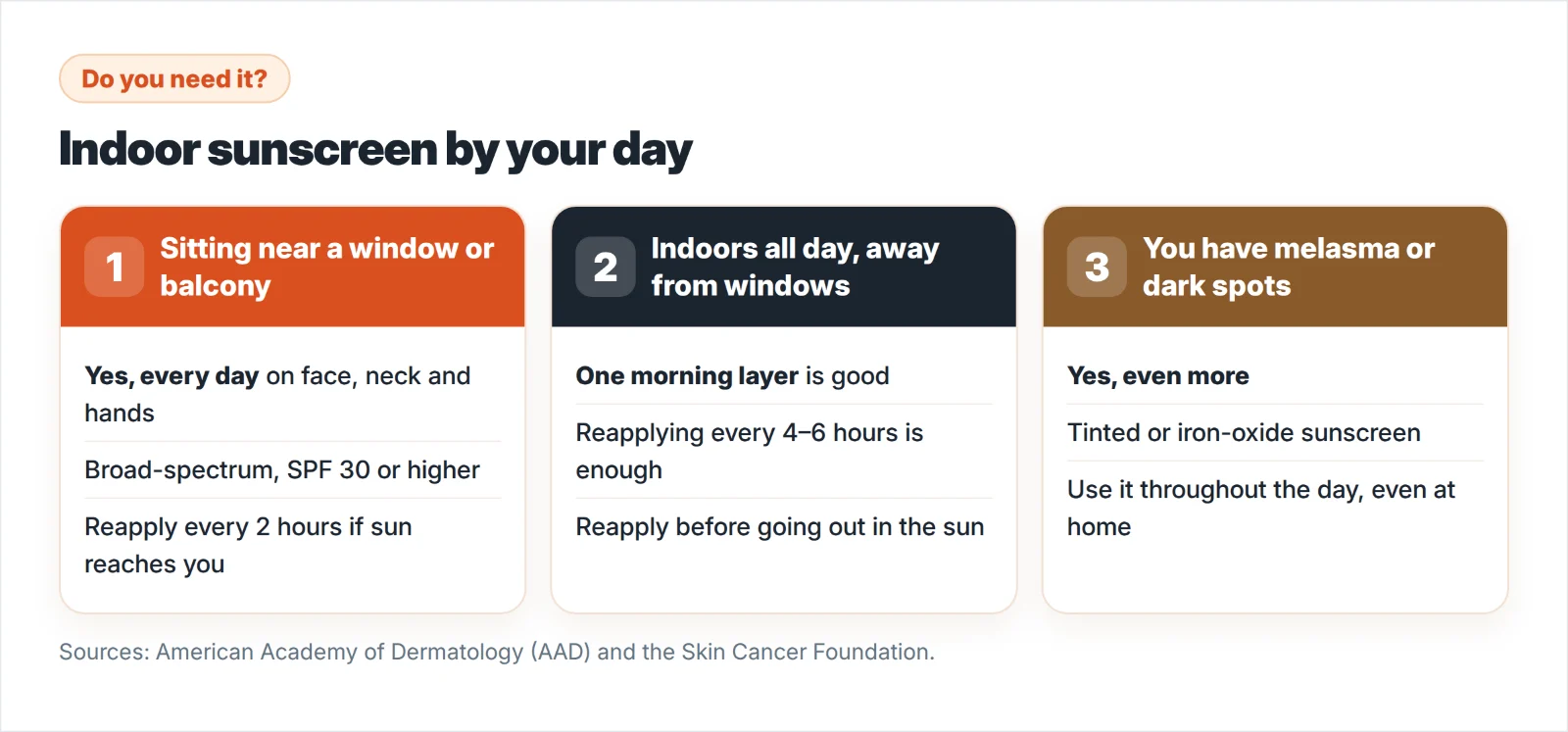
- Working or sitting near a window: apply it every day to face, neck and hands. The Skin Cancer Foundation says most UV rays penetrate glass, so sitting by a window is sun exposure.
- Indoors all day, away from windows: still apply it to exposed skin, but you do not need to reapply every two hours; every 4 to 6 hours is enough (per the Skin Cancer Foundation).
- Heading out or sitting in the sun: reapply before, then about every two hours or after sweating (per the AAD).
What about the car and the office?
A car windshield is laminated and blocks some UVA, but side and rear windows and sunroofs do not block UVA well (per the Skin Cancer Foundation). If you drive a lot, your arm and the side of your face get sun. UV window film on home, office or car windows can block more than 99% of UVA and UVB.
With melasma, staying home is not enough protection
The AAD says sunlight makes skin produce more pigment, darkening existing melasma and causing new patches. It advises a broad-spectrum SPF 30+ sunscreen used throughout the day; dermatologists often suggest sunscreens with zinc oxide, titanium dioxide or iron oxide. If a white cast puts you off, try a tinted sunscreen.
Which sunscreen suits indoor use?
What matters most is broad-spectrum, SPF 30 or higher, and a texture comfortable enough to wear every day. These are available at Beseha:
Light, for every day
#1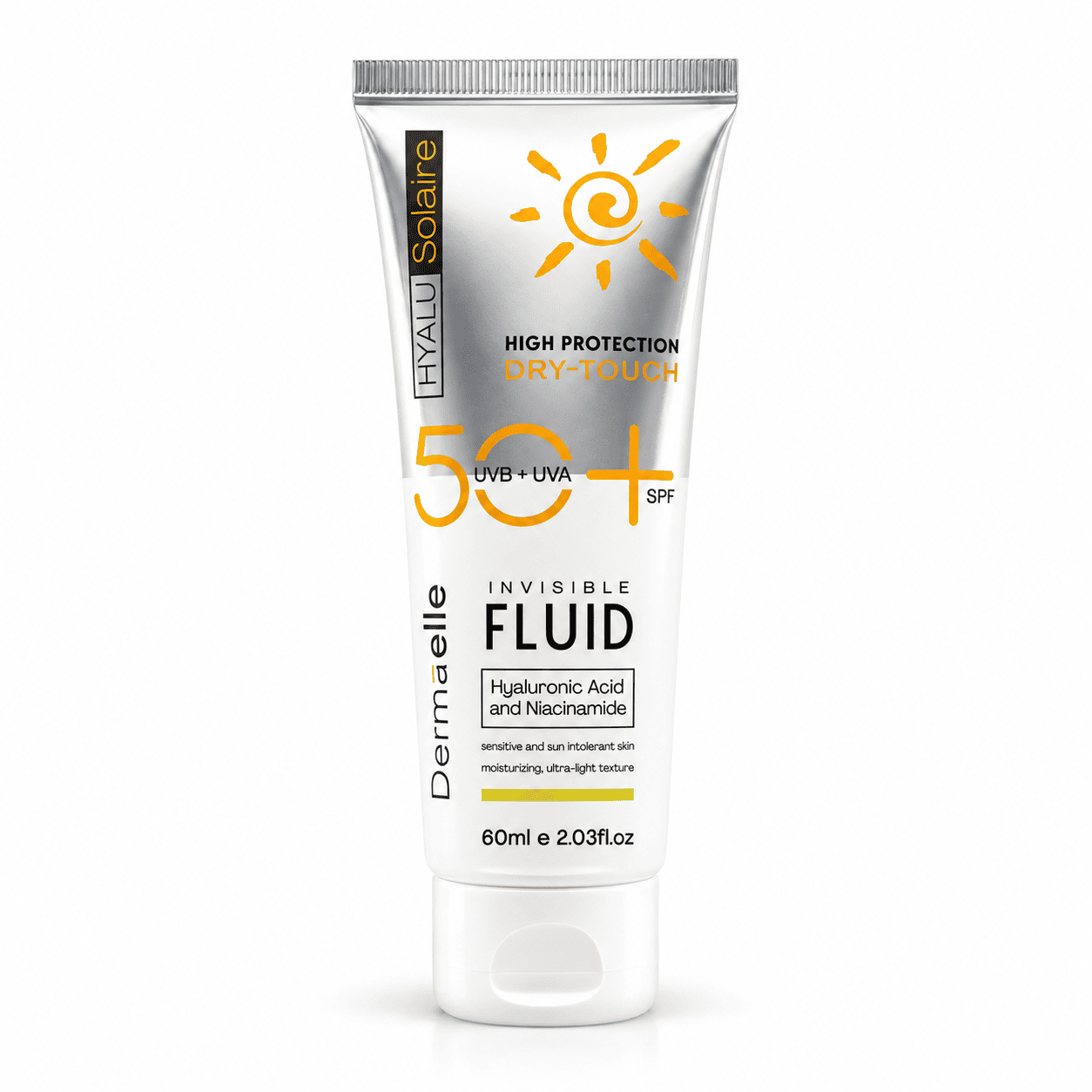
SPF 50Ultra-lightEgyptianBest value
Dermaelle UV Defense Invisible Fluid
The lightest texture here for daily use
EGP 395
EGP 6.6 per ml · 60 ml
- 5 UV filters, broad-spectrum protection
- 4% niacinamide and hyaluronic acid
- Dry-touch matte finish, no white cast, non-comedogenic
Heads-up: Not tinted, so with melasma you may want a tinted version
#2
SPF 50HydratingUnder make-up
Neutrogena Hydro Boost Fluid
For skin that dries out in air conditioning
EGP 559650
EGP 11.2 per ml · 50 ml
- Hyaluronic acid, provitamin B5 and 2% niacinamide
- Light, non-sticky fluid
- Comfortable under make-up; on sale at EGP 559 instead of 650
Heads-up: Higher price per ml than the Egyptian options
Tinted or for spots (melasma, redness)
#3
SPF 50+TintedLowest price
Kolagra Tinted Sunscreen Gel-Cream
The cheapest tinted sunscreen here
EGP 259
See size on product page
- Broad-spectrum protection
- Natural-looking tinted coverage
- Helps even out skin tone
Heads-up: Size and ingredients are not listed on the product page
#4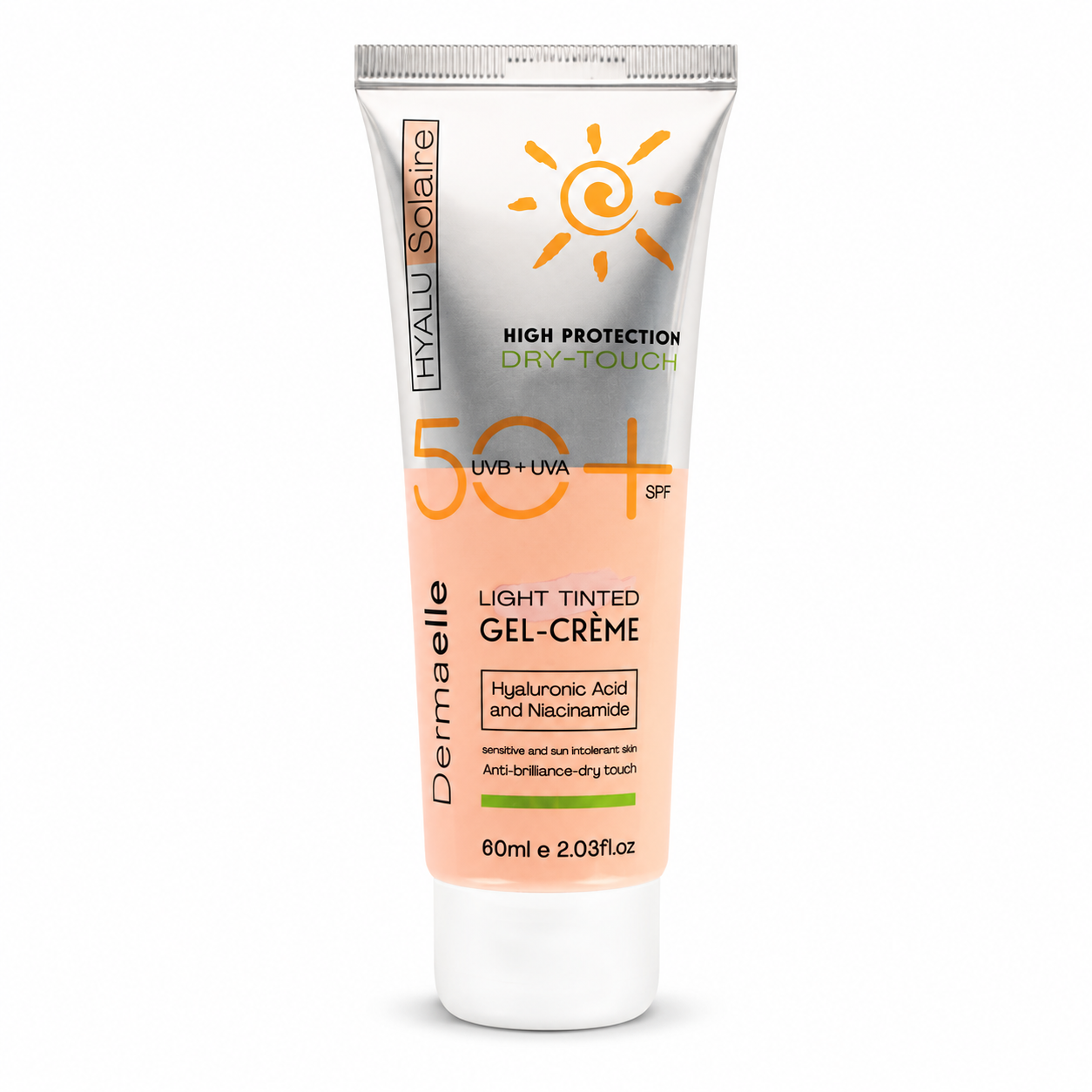
SPF 50TintedMatte
Dermaelle UV Defense Light Tint
A light tint that evens fair skin while you are at home
EGP 425
EGP 7.1 per ml · 60 ml
- Broad-spectrum protection with a natural light tint
- 4% niacinamide and mattifying powder
- Dry-touch matte finish
Heads-up: The shade suits fair skin; there is a dark-tint version for deeper tones
#5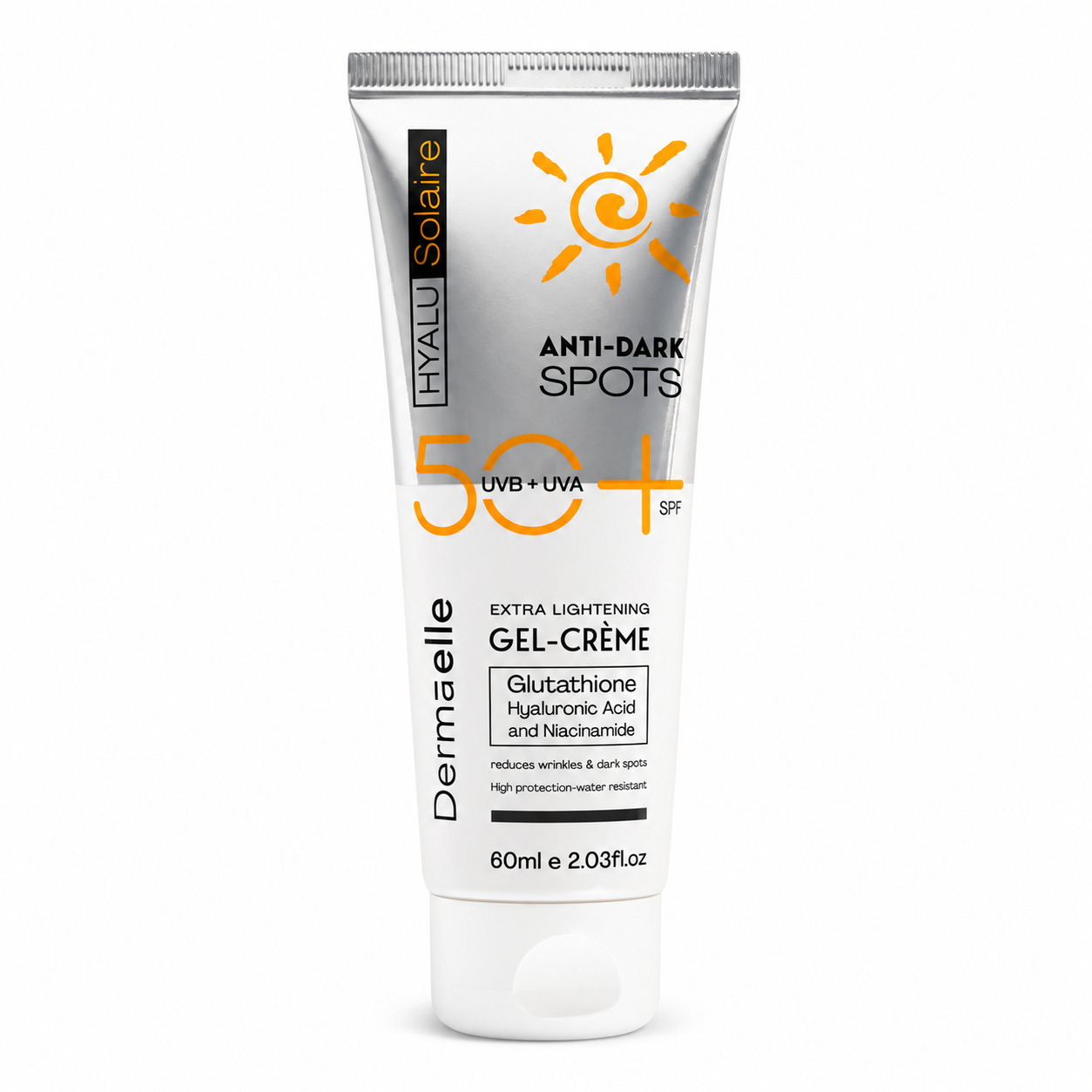
SPF 50For spotsMatte
Dermaelle UV Defense Anti-Dark Spots
Sun protection plus ingredients aimed at dark spots
EGP 425
EGP 7.1 per ml · 60 ml
- 4% niacinamide, glutathione, alpha arbutin and glabridin
- Broad-spectrum protection
- Dry-touch matte finish for all skin types
Heads-up: Not tinted; spot ingredients do not replace melasma treatment from a doctor
#6
SPF 50+TintedFor redness
Bioderma Photoderm AR (tinted)
For sensitive skin that reddens easily
EGP 950
See size on product page
- Very high UV protection
- A tint that tones down the look of redness
- Made for sensitive skin
Heads-up: The most expensive here, and size is not listed on the product page
Want a wider comparison by skin type? See our best sunscreen in Egypt guide, and for oily skin, Bioderma vs La Roche-Posay.
Important notes
- Sunscreen is one part of protection; outdoors also use shade and a wide-brimmed hat (per the AAD).
- If a new spot appears or a mole changes shape or colour, see a dermatologist.
- If any sunscreen irritates your skin, stop and ask a pharmacist.
Not sure which one?
Beseha pharmacists answer on WhatsApp. Tap the “Ask a pharmacist” button, tell them your skin type, and they will point you to the right sunscreen.
FAQ
Do I need to wear sunscreen indoors?
Yes, if you sit near a window or balcony, because UVA rays pass through glass and cause wrinkles and spots. If you are away from windows all day, a morning layer is good and reapplying every 4 to 6 hours is enough.
Does window glass protect you from the sun?
Partly. It blocks UVB rays that burn, but lets through UVA rays that age skin and cause spots (per the American Academy of Dermatology).
How often should I reapply sunscreen at home?
Away from windows, every 4 to 6 hours (per the Skin Cancer Foundation). In the sun or outdoors, about every two hours and after sweating.
Do I need sunscreen for phone or laptop screens?
The sources we relied on discuss sunlight coming through windows; they give no recommendation to wear sunscreen because of screens. Windows are the main reason to wear it indoors.
Should I wear sunscreen on cloudy days?
Yes. Up to 80% of harmful UV rays can get through clouds (per the AAD).
I have melasma. Which sunscreen should I wear at home?
A broad-spectrum SPF 30+ sunscreen all day, ideally tinted or with iron oxide or zinc oxide. Options include Kolagra Tinted (EGP 259), Dermaelle Light Tint (EGP 425) and Bioderma Photoderm AR (EGP 950).
The bottom line
Near a window: sunscreen every day. Away from windows: a morning layer and reapplying every 4 to 6 hours. With melasma: a tinted sunscreen all day, even at home. Pick a light texture so you actually keep using it.
Shop all sunscreens at Beseha →
Sources
- American Academy of Dermatology: Sunscreen FAQs
- Skin Cancer Foundation: Reapplying sunscreen if you are indoors all day
- Skin Cancer Foundation: UV window film
- AAD: Melasma treatment and sun protection
This content is for information and is not a substitute for advice from a doctor or pharmacist. Prices and availability may change; the final price is on the product page.


