
- Your cart is empty
- Continue shopping
-
admin
- Posted on
- Categories:Vitamins & Minerals
- 0 comments
The 30-second answer
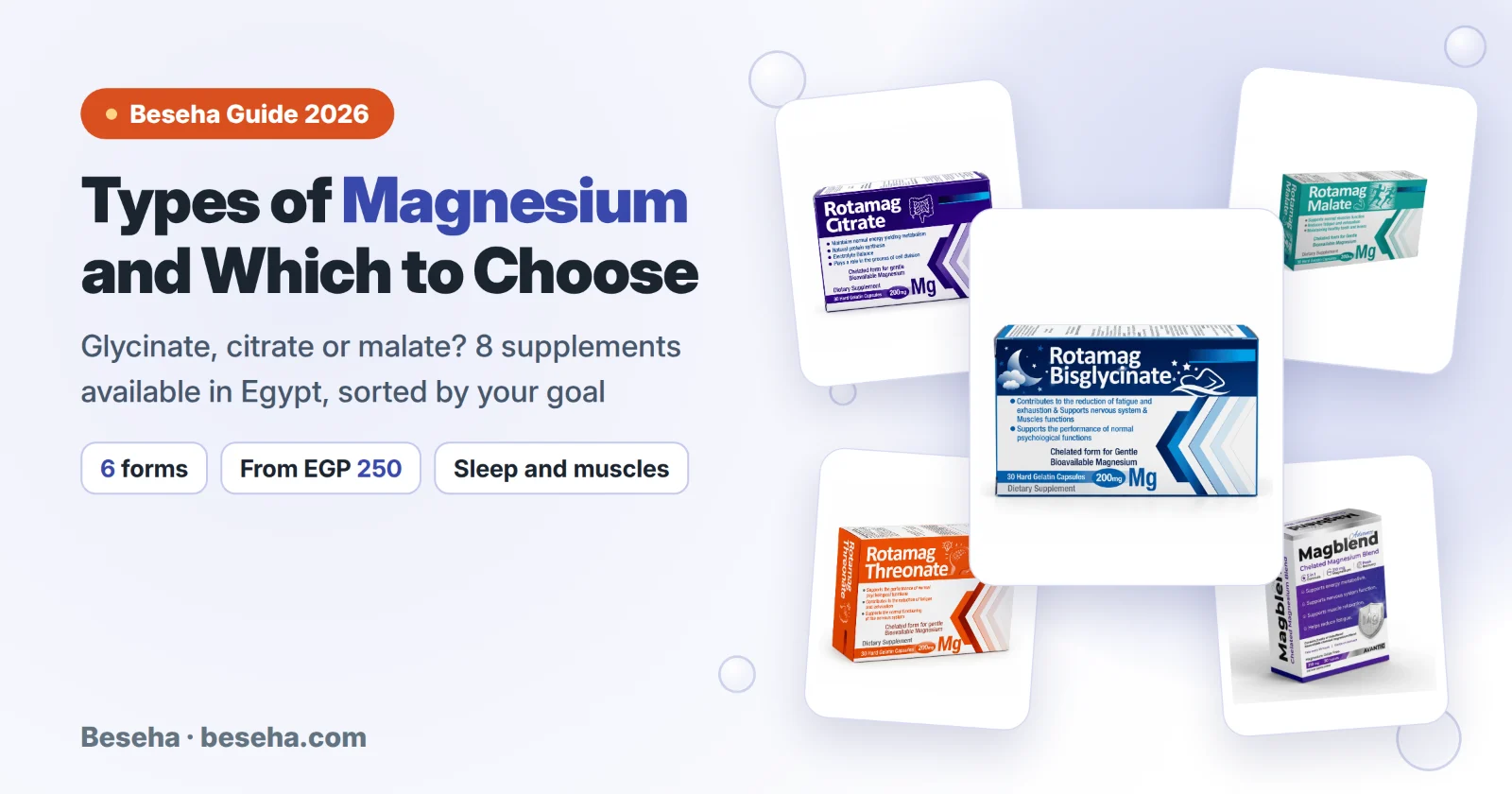
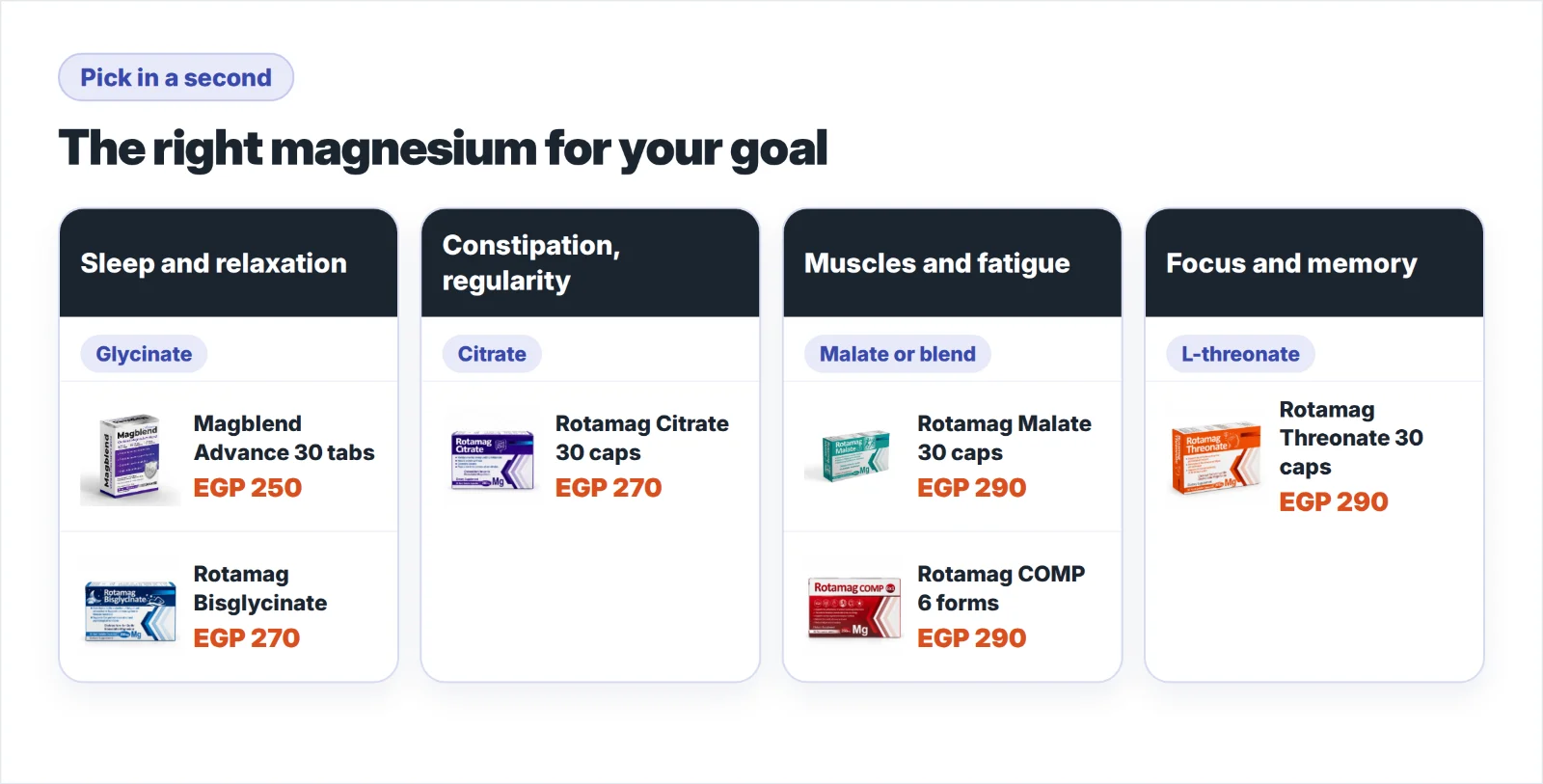
The best type of magnesium depends on your goal. For sleep and relaxation: glycinate, such as Magblend Advance (EGP 250) or Rotamag Bisglycinate (EGP 270). For constipation: citrate, such as Rotamag Citrate (EGP 270). For muscles and fatigue: malate (EGP 290). Do not go above 350 mg a day from supplements without a doctor. Evidence for sleep is still thin, so magnesium is a helper, not an insomnia cure.
For sleep and relaxation
Alternative: Rotamag Bisglycinate
For constipation
EGP 270
For focus
Rotamag Threonate – 30 capsules
EGP 290
What does magnesium do, and how much do you need?
According to the NHS, magnesium helps turn food into energy and keeps the parathyroid glands, which make hormones important for bone health, working normally. Men aged 19 to 64 need about 300 mg a day and women about 270 mg, mostly from foods such as spinach, nuts and wholemeal bread.
- Safe limit from supplements: Cleveland Clinic and Harvard Health say under 350 mg a day from supplements for adults; the NHS says 400 mg or less is unlikely to cause harm.
- Signs of too much: diarrhoea, nausea and stomach cramps.
- Reading the label: tell the weight of the whole compound (e.g. “magnesium citrate 200 mg”) from the actual elemental magnesium. Magblend, for example, states 210 mg elemental.
Types of magnesium: which form for which goal
| Form | Commonly used for | Note |
|---|---|---|
| Glycinate / bisglycinate | Sleep, relaxation, daily use | Easy to absorb and gentle on the stomach (per Cleveland Clinic) |
| Citrate | Constipation | Has a laxative effect, so not ideal for sleep |
| Malate | Muscles, energy, fatigue | Brand claims; evidence is limited |
| Taurate | Nerves and heart | Brand claims; ask your doctor if you take heart medicines |
| L-threonate | Memory and focus | Studied mostly for brain function; elemental amount may be lower than labelled |
| Oxide | Constipation, indigestion | Tends to be taken for constipation or indigestion (per Harvard Health); not ideal for sleep |
For sleep and relaxation: magnesium glycinate
#1
Glycinate210 mg elementalBest value
Magblend Advance 5-in-1 – 30 tablets
The best-value pick for sleep and relaxation, with a clearly stated elemental dose
EGP 250
EGP 8.3 per tablet · 30 tablets
- 210 mg elemental magnesium per tablet from a chelated, glycinate-based blend
- Magnesium-oxide free and gentle on the stomach, per the brand
- EGP 250 for 30 tablets (EGP 8.3 per tablet)
Heads-up: The blend also contains citrate, so if your stomach is sensitive, start with one tablet and watch digestion
#2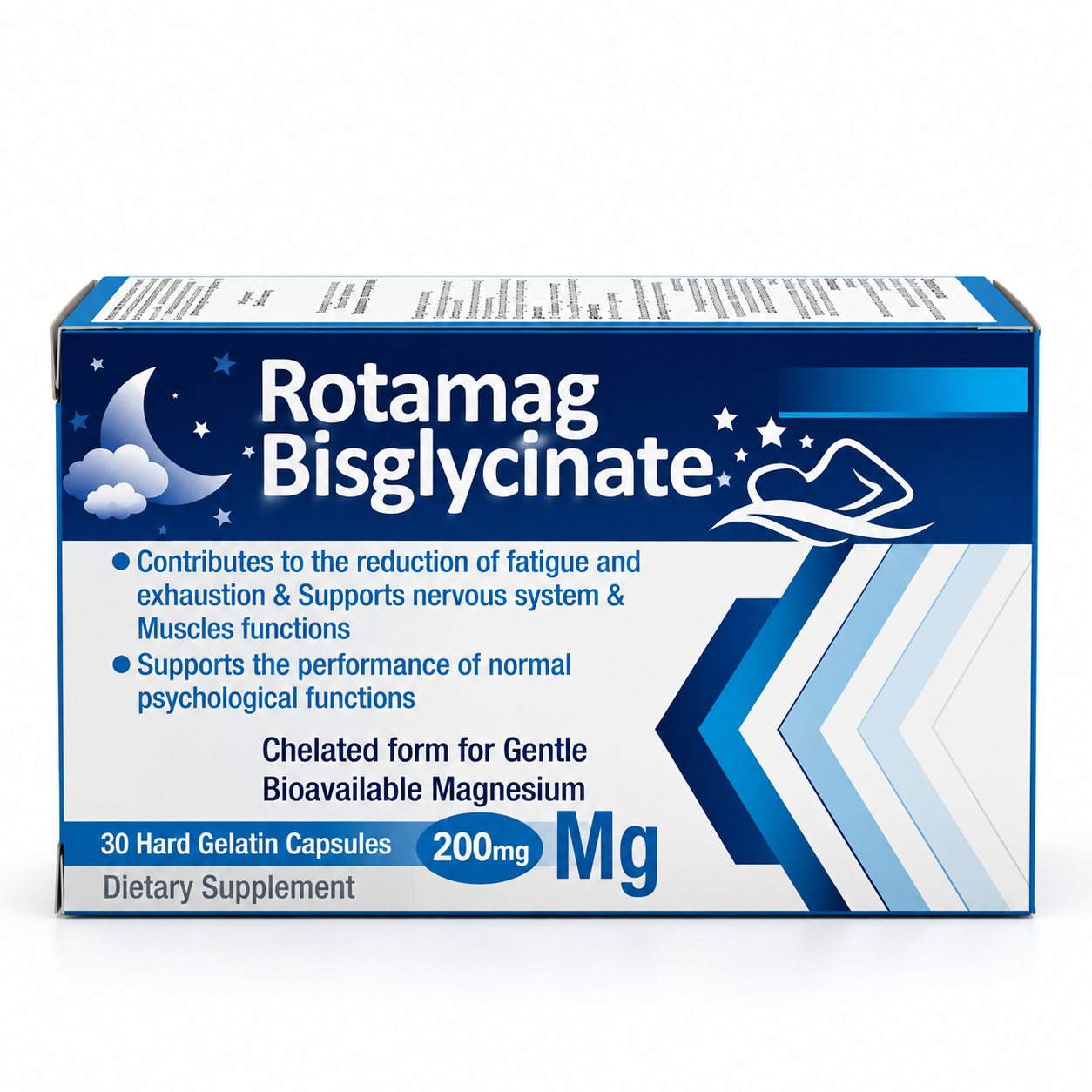
GlycinateEgyptian
Rotamag Bisglycinate – 30 capsules
An Egyptian glycinate for relaxation and muscles
EGP 270
EGP 9.0 per capsule · 30 capsules
- Magnesium bisglycinate with BioPerine (black pepper extract)
- Supports nerves, muscles and relaxation, per the brand
- From Egypt’s Hefny Pharma Group
Heads-up: The product title says 250 mg, while the pack image shows 200 mg; check the box or ask a pharmacist
#3
GlycinateImported
Natrol Magnesium Glycinate – 60 tablets
An imported glycinate if you prefer a global brand
EGP 1,690
EGP 28.2 per tablet · 60 tablets
- High-absorption magnesium glycinate, per the brand
- Supports relaxation, muscles and nerves
- 60-tablet bottle
Heads-up: By far the priciest here (EGP 28.2 per tablet), and the dose per tablet is not in the product title
Does magnesium really help sleep?
Cleveland Clinic says the evidence for magnesium as a sleep aid is thin: small studies hint at slightly faster sleep and better quality, and more research is needed. If you try it, glycinate is the preferred form; start with 100 to 200 mg about 30 minutes before bed. If insomnia continues, see a doctor.
For constipation: magnesium citrate
#4
CitrateDigestion
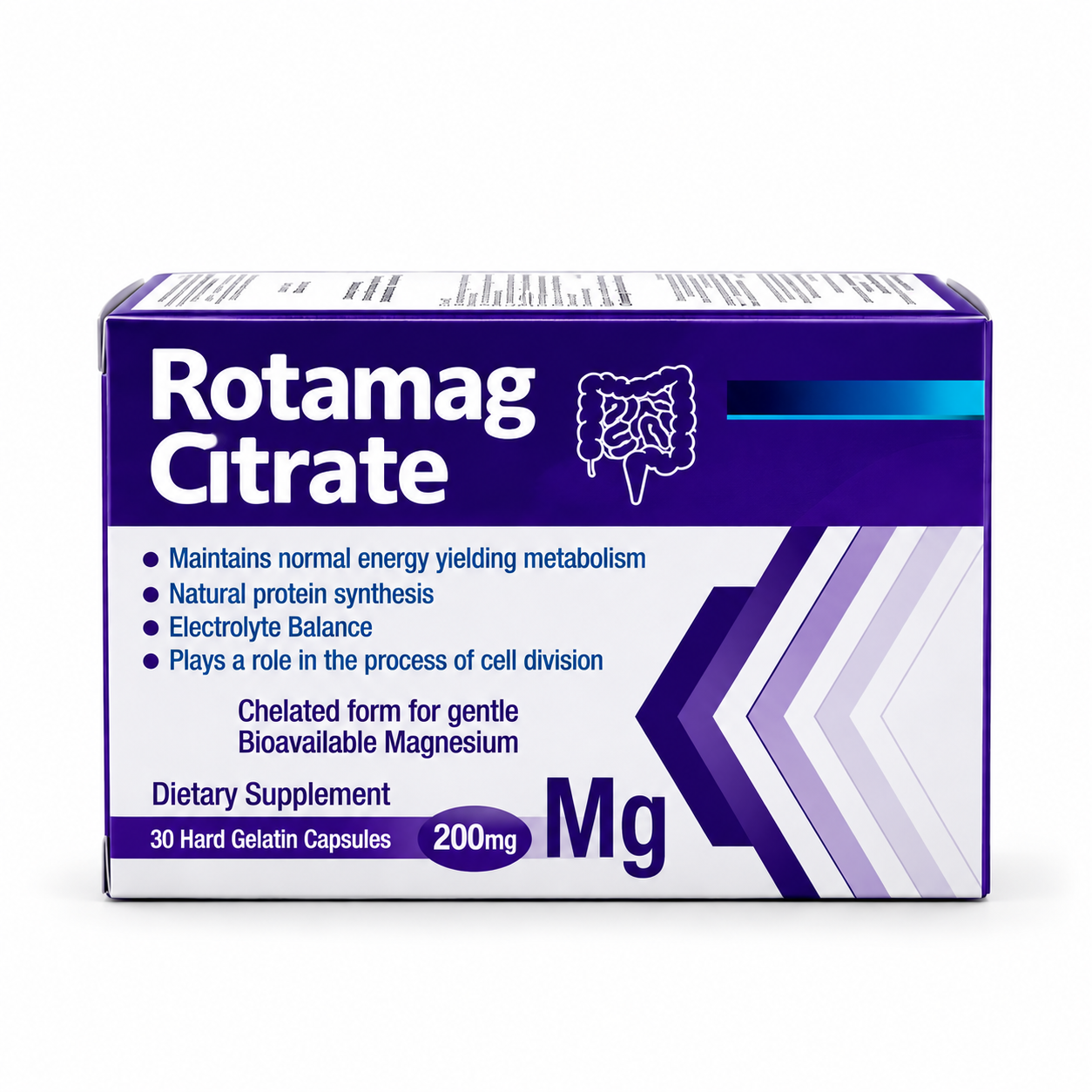
Rotamag Citrate – 30 capsules
The usual pick for constipation and regularity
EGP 270
EGP 9.0 per capsule · 30 capsules
- 200 mg magnesium citrate per capsule, per the product page
- Supports digestion and bowel regularity
- Harvard Health notes citrate is often taken as a laxative
Heads-up: Not the right pick for sleep, because it has a laxative effect (per Cleveland Clinic)
For muscles and fatigue: malate or a blend
#5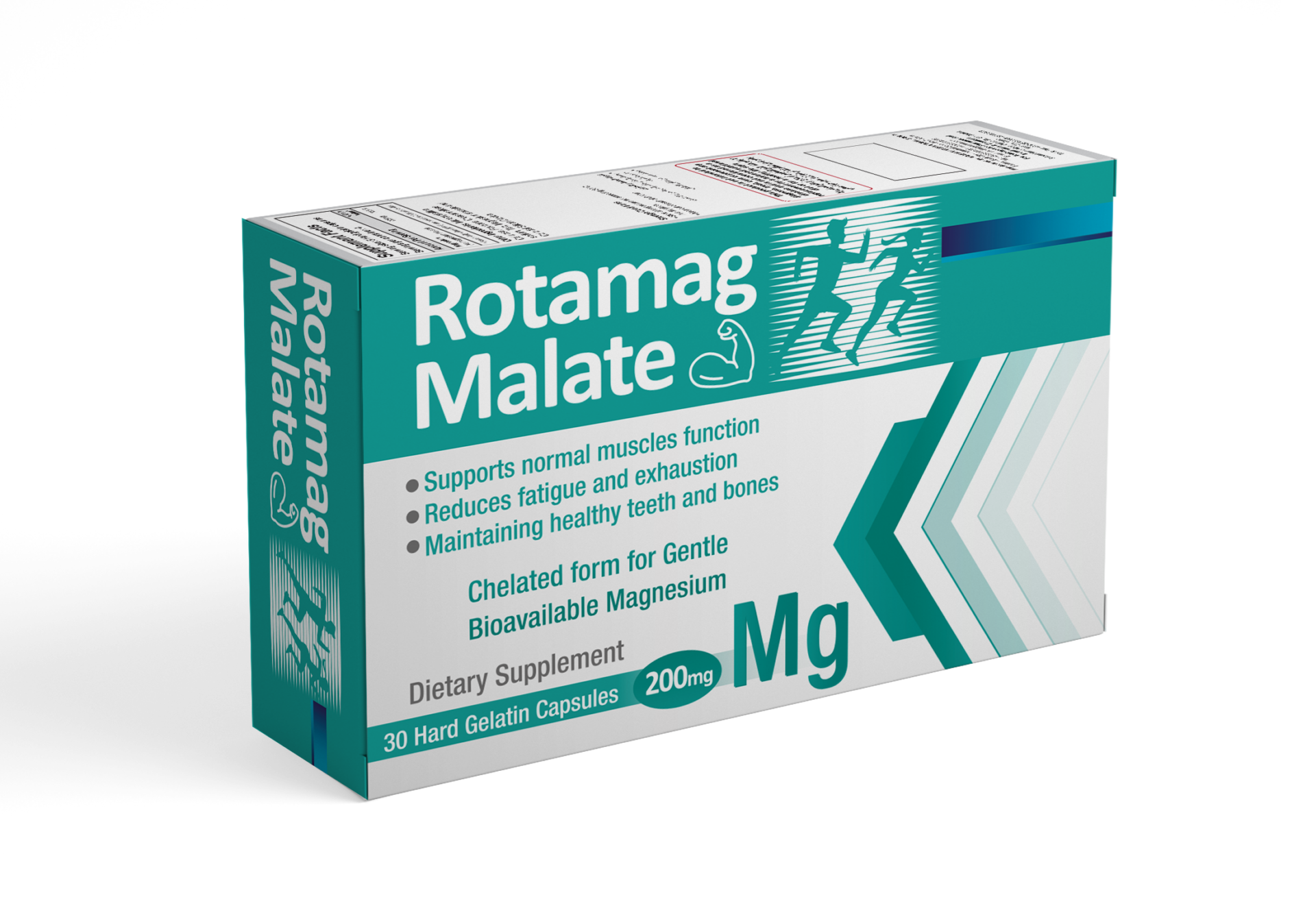
MalateMuscles
Rotamag Malate – 30 capsules
For tiredness, fatigue and muscle function
EGP 290
EGP 9.7 per capsule · 30 capsules
- Magnesium malate to support muscles and energy production, per the brand
- Helps reduce tiredness and fatigue, per the brand
- EGP 290 for 30 capsules
Heads-up: The dose per capsule is not in the product page summary
#6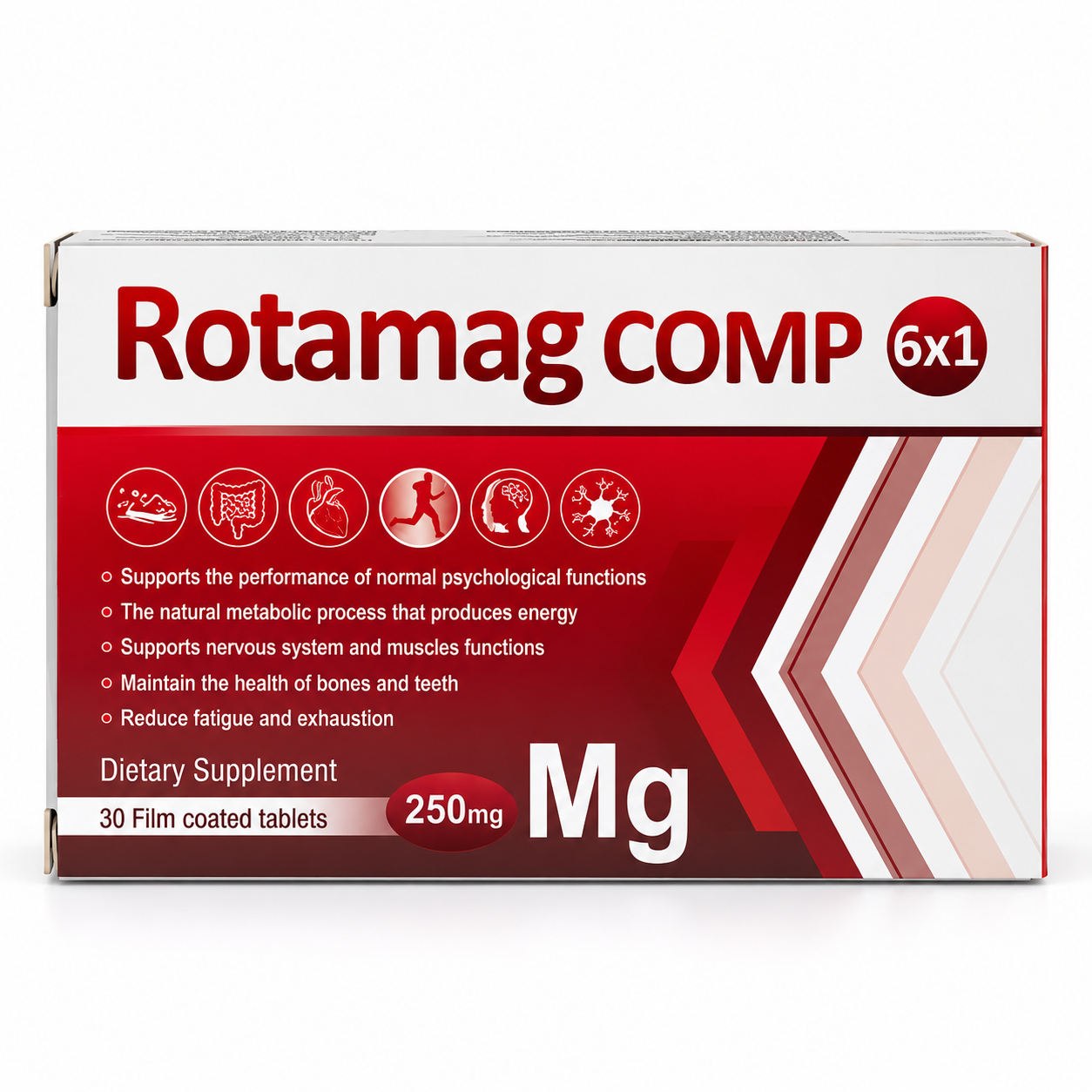
6 formsBlend
Rotamag COMP 6×1 – 250 mg
If you cannot decide on a single form
EGP 290
See size on product page
- 250 mg magnesium from 6 different forms, per the product page
- For muscles, nerves, energy and heart, per the brand
- EGP 290
Heads-up: The tablet count is not in the product title; check the page
Other forms: taurate and threonate
#7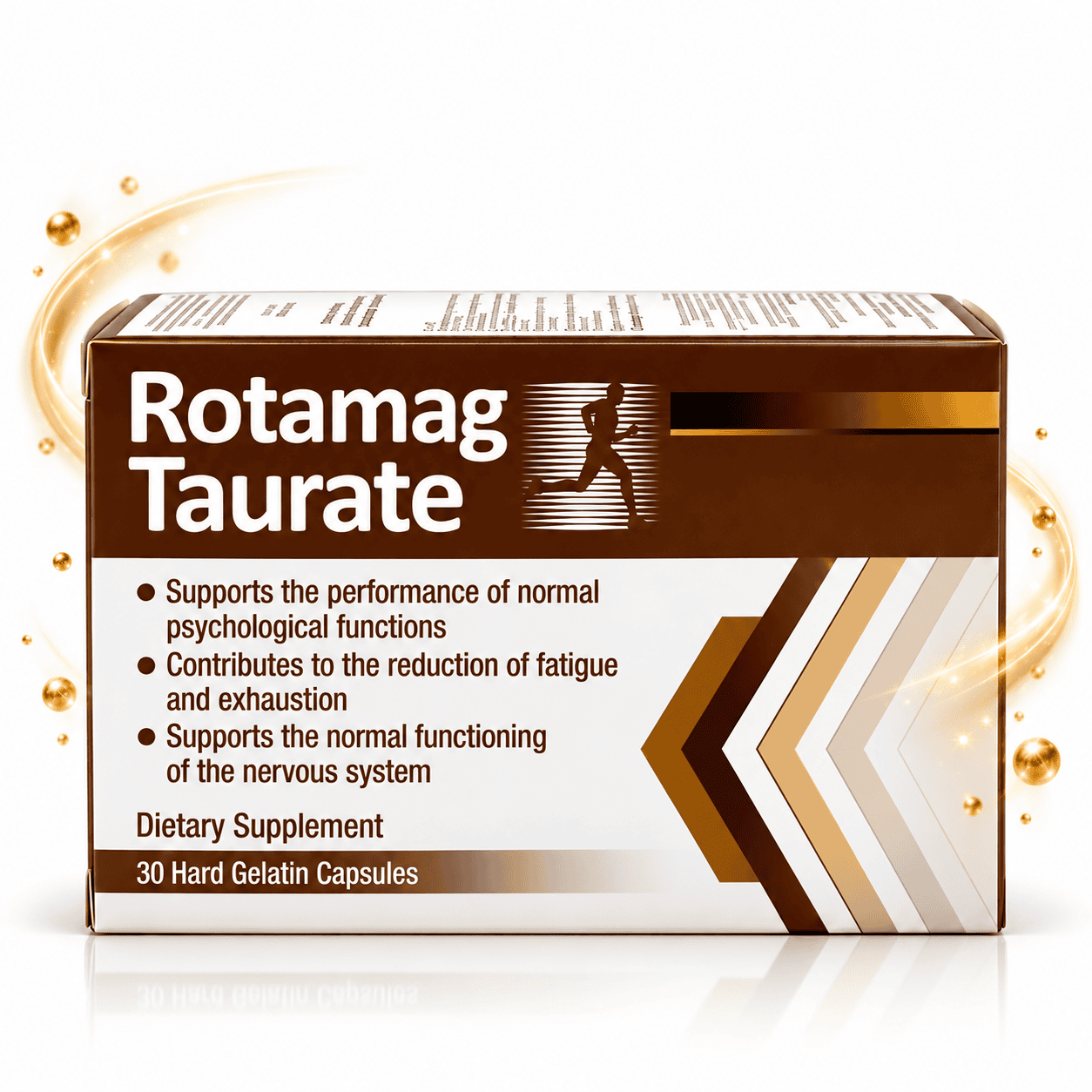
TaurateNerves
Rotamag Taurate – 30 capsules
Magnesium bound to taurine, for nerves and heart
EGP 270
EGP 9.0 per capsule · 30 capsules
- Magnesium taurate to support nerves and muscles, per the brand
- For cardiovascular health, per the brand
- EGP 270 for 30 capsules
Heads-up: If you take blood-pressure or heart medicines, ask your doctor before starting it
#8
L-threonateFocus
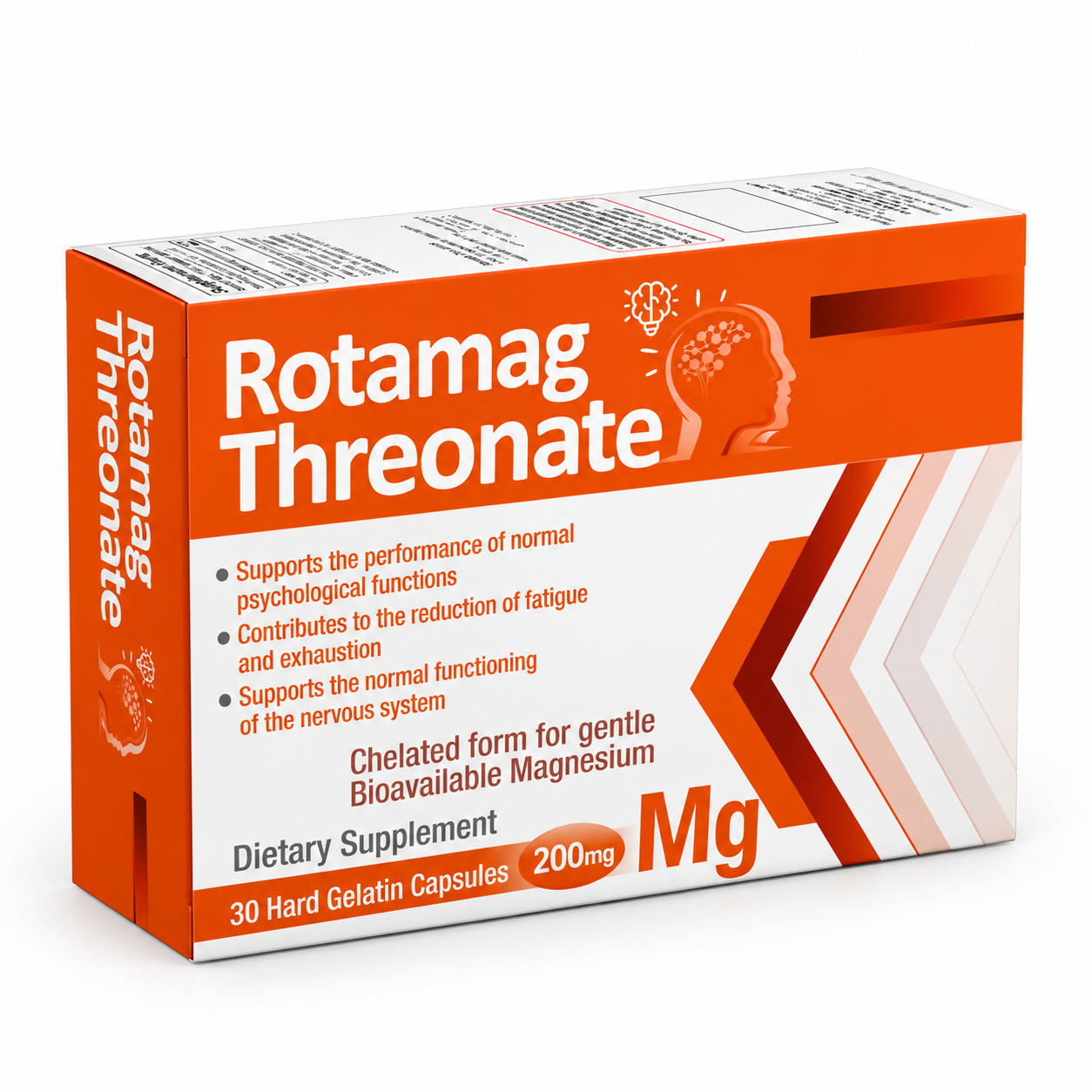
Rotamag Threonate – 30 capsules
The form marketed for memory and focus
EGP 290
EGP 9.7 per capsule · 30 capsules
- 200 mg magnesium L-threonate, per the product page
- For memory, focus and nerve health, per the brand
- EGP 290 for 30 capsules
Heads-up: Cleveland Clinic notes that threonate labels may overstate the actual elemental magnesium
Comparison table: sorted by price per tablet or capsule
| Product | Form | Count | Price | Per unit | Best for |
|---|---|---|---|---|---|
| Magblend Advance 5-in-1 – 30 tablets | Glycinate blend | 30 | EGP 250 | 8.3 | Sleep, relaxation |
| Rotamag Bisglycinate – 30 capsules | Bisglycinate | 30 | EGP 270 | 9.0 | Sleep, relaxation |
| Rotamag Citrate – 30 capsules | Citrate | 30 | EGP 270 | 9.0 | Constipation |
| Rotamag Taurate – 30 capsules | Taurate | 30 | EGP 270 | 9.0 | Nerves |
| Rotamag Malate – 30 capsules | Malate | 30 | EGP 290 | 9.7 | Muscles, fatigue |
| Rotamag Threonate – 30 capsules | L-threonate | 30 | EGP 290 | 9.7 | Focus |
| Natrol Magnesium Glycinate – 60 tablets | Glycinate | 60 | EGP 1,690 | 28.2 | Sleep, relaxation |
| Rotamag COMP 6×1 – 250 mg | 6 forms | — | EGP 290 | — | General use |
How to take magnesium properly
- For sleep: about 30 minutes before bed (per Cleveland Clinic).
- Start low: 100 to 200 mg, increasing gradually if needed, without passing the safe limit.
- Count every source: if you take a multivitamin or a calcium supplement with magnesium, add it all up.
- If you get diarrhoea: lower the dose or switch from citrate to glycinate.
If you are considering a multivitamin instead, see our multivitamin guide.
Common mistakes
- Citrate for sleep: its laxative effect can wake you up instead of settling you.
- Two magnesium supplements at once: you can pass the safe limit without noticing.
- Reading the compound weight as the real magnesium: look for “elemental magnesium” on the label.
- Magnesium instead of a diagnosis: cramps, insomnia and fatigue have many causes that need a doctor.
Important safety notes
- If you have kidney problems, do not take magnesium unless your doctor agrees, because the kidneys clear the excess and it can build up to dangerous levels (per Cleveland Clinic).
- Magnesium can interact with some antibiotics, osteoporosis medicines and diuretics; if you take medicines, ask a doctor or pharmacist first.
- Very high amounts can cause muscle weakness, low blood pressure and a slow heart rate; if this happens, stop and call a doctor.
- Pregnancy, breastfeeding and children: a doctor should set the dose.
Not sure which one?
Beseha pharmacists answer on WhatsApp. Tap the “Ask a pharmacist” button, tell them your goal and the medicines you take, and they will suggest the right form and dose.
FAQ
What is the best type of magnesium for sleep?
Magnesium glycinate or bisglycinate, because it is easy to absorb and gentle on the stomach, per Cleveland Clinic. In Egypt: Magblend Advance (EGP 250), Rotamag Bisglycinate (EGP 270) and Natrol Glycinate (EGP 1,690). Evidence for sleep is still thin.
What is the difference between magnesium glycinate and citrate?
Glycinate is used more for sleep and relaxation and is gentle on the stomach; citrate has a laxative effect and is mostly used for constipation. That is why citrate is not a good pick if your goal is sleep.
What is the best magnesium for muscles and cramps?
Brands market malate for muscles and fatigue, such as Rotamag Malate (EGP 290), or a blend such as Rotamag COMP (EGP 290). Evidence for muscle cramps is limited; if cramps keep coming back, see a doctor.
What is the maximum daily magnesium dose?
Cleveland Clinic and Harvard Health say under 350 mg a day from supplements for adults; the NHS says 400 mg or less is unlikely to cause harm. This does not count magnesium from food.
When should I take magnesium?
For sleep, about 30 minutes before bed (per Cleveland Clinic). Otherwise, at a time you can stick to every day, with food if your stomach is sensitive.
Who should not take magnesium supplements?
People with kidney disease unless a doctor agrees; people taking certain antibiotics, osteoporosis medicines or diuretics should ask a doctor or pharmacist first.
Does magnesium threonate improve memory?
Threonate is marketed for memory and focus and is studied mostly for brain function, but Cleveland Clinic notes its label may overstate the actual elemental magnesium. Treat it as something to try, not a treatment.
The bottom line
Sleep and relaxation: glycinate (Magblend or Rotamag Bisglycinate). Constipation: citrate. Muscles and fatigue: malate or a blend. Focus: threonate. Stay under 350 mg a day from supplements, and ask a doctor if you have kidney problems or take medicines.
Shop magnesium and minerals at Beseha →
Sources
- NHS: Vitamins and minerals – others (magnesium)
- Cleveland Clinic: Magnesium for sleep – does it really work?
- Harvard Health: What can magnesium do for you and how much do you need?
This content is for information and is not a substitute for advice from a doctor or pharmacist. Prices and availability may change; the final price is on the product page.


