
- Your cart is empty
- Continue shopping
-
Waleed Mohamed
- Posted on
- Categories:Beauty & Skin Health, Body and Skin Care, Energy & Focus, General Health
- 0 comments
Multivitamin in Egypt: Benefits & How to Choose | beseha
A complete guide to choosing a multivitamin in Egypt, including benefits, dosage, timing, side effects, iron, and formulas for men and women.
Multivitamin
A multivitamin is a dietary supplement that combines several vitamins and minerals in one product. It is commonly used to help fill nutritional gaps when a person’s daily diet does not provide enough essential nutrients. However, a multivitamin is not a substitute for a balanced diet, and not everyone needs the same formula. In this comprehensive guide from beseha, you will learn about multivitamin benefits, how to choose the right product, the best time to take it, and when you should consult a doctor or pharmacist.
Direct answer: A multivitamin may be helpful for people who do not receive enough essential nutrients from food, provided that they select a formula suitable for their age, sex, health condition, and nutritional needs without exceeding the recommended dosage.
What Is a Multivitamin?
A multivitamin, sometimes called a multivitamin and mineral supplement, is a dietary product that usually contains three or more vitamins, minerals, or a combination of both. Its formula may include vitamins A, C, D, E, and several B vitamins, as well as minerals such as iron, zinc, selenium, magnesium, and iodine.
There is no universal formula that every multivitamin must contain. Manufacturers select the ingredients and quantities according to the intended users. As a result, you may find general daily multivitamins alongside formulas designed specifically for men, women, older adults, pregnant women, or children.
The NIH Office of Dietary Supplements explains that the ingredients and nutrient amounts in multivitamin products can vary considerably. Therefore, consumers should read the supplement label carefully instead of relying only on the product name or marketing claims. You can review more information through the NIH multivitamin and mineral supplement fact sheet.
It is also important to distinguish a basic multivitamin from products containing herbs, stimulants, performance ingredients, or sports supplements. A longer ingredient list does not automatically make a product safer, more effective, or more suitable for your needs.
What Are the Benefits of a Multivitamin?
The main benefit of a multivitamin is helping a person meet nutritional requirements when food alone does not provide enough essential vitamins and minerals. It may be particularly useful for people with limited diets, irregular meals, reduced appetite, or specific nutritional needs identified by a healthcare professional.
Helping Fill Nutritional Gaps
Some people may not receive adequate amounts of vitamin D, vitamin B12, iron, zinc, folic acid, or other nutrients because of their eating habits, limited food variety, medical conditions, or the exclusion of entire food groups.
In these situations, an appropriately selected multivitamin may provide practical nutritional support. However, the product should match the person’s actual needs rather than providing unnecessarily high amounts of every nutrient.
Supporting Normal Body Functions
Vitamins and minerals are involved in many essential biological processes. They contribute to red blood cell formation, bone health, immune system function, nerve activity, muscle function, and the conversion of food into usable energy.
However, a multivitamin does not provide instant energy in the same way as caffeine or other stimulants. A person may notice an improvement in energy or concentration if the supplement corrects an existing nutrient deficiency. Someone who already receives adequate nutrition may not notice the same effect.
Supporting Different Life Stages
Nutritional requirements differ according to age, sex, pregnancy, breastfeeding, and general health. Multivitamins for older adults may contain different amounts of vitamin D and vitamin B12 and may include little or no iron.
Prenatal supplements commonly include nutrients such as folic acid, iron, iodine, and vitamin D in amounts intended to support the mother and developing baby. These products should be selected under medical supervision. The NIH provides further information on nutritional requirements during pregnancy.
Can a Multivitamin Prevent Disease?
A multivitamin should not be considered a guaranteed way to prevent heart disease, cancer, or other chronic medical conditions. Research results vary depending on the ingredients, dosages, study design, and health status of the participants.
Most studies have not demonstrated a large or consistent preventive effect from general multivitamin use among healthy adults. A supplement may help correct a nutritional gap, but it should not replace medical care, health screenings, physical activity, or a balanced diet. More information is available in the NIH health professional fact sheet.
Does Everyone Need a Multivitamin?
No. Many people who regularly eat a varied and balanced diet may already receive the vitamins and minerals they need from food. Whole foods also provide fiber, protein, healthy fats, and beneficial plant compounds that cannot be fully replaced by a supplement tablet or capsule.
The World Health Organization recommends consuming a varied diet that includes vegetables, fruits, whole grains, legumes, nuts, and suitable protein sources. This dietary variety helps people meet their nutritional requirements while supporting overall health. Further guidance is available in the WHO healthy diet fact sheet.
Using a multivitamin may be worth discussing with a healthcare professional in the following situations:
- Following a low-calorie diet for an extended period.
- Having a poor appetite or frequently skipping meals.
- Avoiding an entire food group because of allergies or dietary preferences.
- Following a strict vegan diet that requires attention to vitamin B12, iron, iodine, and other nutrients.
- Having laboratory results that confirm a specific nutritional deficiency.
- Being pregnant or planning a pregnancy under medical supervision.
- Having a medical condition that affects nutrient digestion or absorption.
- Experiencing reduced food intake or absorption challenges during older age.
Symptoms such as tiredness, hair loss, dizziness, weakness, or difficulty concentrating do not automatically confirm a vitamin deficiency. These symptoms may have many possible causes. Therefore, taking several supplements without evaluating the symptoms, diet, medications, and relevant laboratory tests may delay the correct diagnosis.
Why Choosing the Right Multivitamin Matters in Egypt
Many Egyptian consumers search for the best multivitamin in Egypt by comparing prices, imported brands, local brands, product reviews, or the number of ingredients. However, the quality of the decision should depend mainly on the formula, dosage, source, authenticity, and suitability for the individual.
Dietary supplements are available through pharmacies, healthcare retailers, and online stores across Egypt. Both local and imported products may be available, but two apparently similar products can contain significantly different amounts of iron, vitamin A, vitamin D, zinc, or other nutrients.
Consumers should check the manufacturer’s information, ingredient list, recommended dosage, batch number, expiry date, packaging condition, and source of purchase.
Buying from a reliable pharmacy or authorized retailer is especially important. The Egyptian Drug Authority has previously reported enforcement actions against unlicensed facilities and warehouses handling medicines and dietary supplements of unknown origin. This makes checking the packaging, purchase receipt, source, and product information essential whether you live in Cairo, Giza, Alexandria, or another Egyptian governorate. More information can be found through the Egyptian Drug Authority.
The price of a multivitamin in Egypt may vary according to the number of tablets, country of manufacture, ingredient concentrations, brand, dosage frequency, and whether the product is locally manufactured or imported.
Instead of comparing package prices alone, calculate the cost per daily serving. A cheaper bottle may require several tablets per day, while another product may provide the daily serving in one tablet.
How to Choose the Best Multivitamin
The best multivitamin is not necessarily the product with the highest concentrations or the longest ingredient list. It is the product that matches your nutritional needs without providing excessive or unnecessary doses.
Follow these steps before purchasing a multivitamin:
- Identify why you want to use it: Are you looking for general nutritional support because your diet lacks variety, or do you have a confirmed deficiency that requires a specific supplement?
- Choose a product suitable for your age and sex: Nutritional requirements differ between children, adults, older adults, men, and women.
- Read the complete supplement facts label: Check the amount of each vitamin and mineral and its percentage of the daily value. Do not rely only on phrases such as “complete formula.”
- Avoid unnecessarily high doses: A product providing 500% or 1,000% of the daily value is not automatically better than one offering moderate amounts.
- Review all supplements you already take: You may receive the same nutrient from a multivitamin, a separate supplement, fortified food, protein powder, or nutritional drink.
- Check whether the product contains iron: Not everyone needs a multivitamin with iron. An iron-free formula may be more suitable for some men and older adults.
- Consider your medications and health conditions: Additional caution may be required for people using blood-thinning medication or those with thyroid, liver, kidney, or digestive conditions.
- Purchase from a trusted source: Examine the safety seal, packaging, barcode, manufacturer information, batch number, and expiry date.
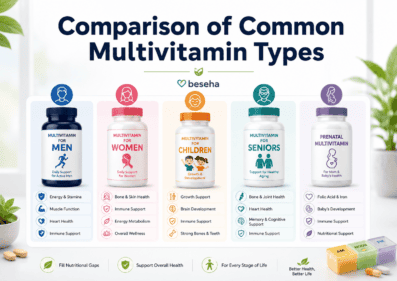
Comparison of Common Multivitamin Types
| Multivitamin Type | Common Features | Important Considerations |
|---|---|---|
| General daily multivitamin | Contains a basic combination of vitamins and minerals for daily nutritional support | Look for moderate amounts close to daily requirements rather than excessive doses |
| Multivitamin for men | May contain little or no iron and nutrients commonly marketed for male health | A men’s label does not guarantee that the formula is suitable for every man |
| Multivitamin for women | May include iron, folic acid, calcium, vitamin D, and nutrients related to blood and bone health | Requirements may differ before and after menopause |
| Multivitamin for older adults | May contain adjusted amounts of vitamin D and vitamin B12 and lower amounts of iron | Medication interactions and kidney or liver function should be considered |
| Prenatal multivitamin | Usually includes nutrients such as folic acid, iron, iodine, and vitamin D | It should be selected under medical supervision, and excessive preformed vitamin A should be avoided |
| Multivitamin for children | Provides age-appropriate doses and may be available in chewable or liquid forms | It must be stored out of children’s reach, particularly if it looks or tastes like candy |
Should You Choose a Multivitamin With or Without Iron?
The decision depends on age, sex, diet, health condition, menstrual status, and laboratory results. Some women of reproductive age may require more iron than many adult men or postmenopausal women, but this does not mean that everyone should automatically choose a multivitamin with iron.
Excess iron can cause nausea, constipation, stomach pain, and other digestive symptoms. High doses may be dangerous, particularly for children. Symptoms such as tiredness or pale skin are not enough to diagnose iron deficiency.
A doctor may request tests such as a complete blood count and serum ferritin before recommending a therapeutic iron dose.
If you already take a separate iron supplement, check how much iron is included in your multivitamin. Combining multiple iron-containing products may cause you to exceed the intended dose.
The NIH Office of Dietary Supplements explains that excessive iron intake may cause nausea, vomiting, stomach pain, and serious organ damage in severe cases. More guidance is available in the NIH guide to dietary supplements.
What Is the Best Time to Take a Multivitamin?
For many people, the best time to take a multivitamin is with a main meal at a consistent time each day. Taking it with food may reduce nausea and stomach irritation. A meal containing a moderate amount of dietary fat may also support the absorption of fat-soluble vitamins such as vitamins A, D, E, and K.
The following practical guidelines may help:
- Take the multivitamin after breakfast or lunch if it causes nausea on an empty stomach.
- Follow the recommended dosage on the label.
- Do not double the dose if you forget to take it one day.
- Drink an adequate amount of water with the supplement.
- Avoid taking an iron-containing multivitamin immediately with tea or coffee because they may reduce iron absorption.
- Separate the multivitamin from certain medications when advised by a doctor or pharmacist.
- Avoid taking it close to bedtime if the B vitamins appear to make you feel more alert.
There is no single hour that works for everyone. The most suitable time depends on the formula, your meals, your medications, and how your stomach responds to the product. see also.
Can You Take a Multivitamin Every Day?
Some basic multivitamin formulas can be taken daily when used according to the recommended dosage. However, daily use is not necessary for everyone, and taking more than the stated dose will not produce faster or better results.
Combining supplements with fortified foods and drinks may result in a high intake of iron, vitamin A, vitamin D, zinc, niacin, folic acid, or other nutrients.
The risk of side effects increases when people take high-dose products or use several supplements containing the same ingredients. The NIH provides additional guidance on safe multivitamin use in its consumer fact sheet.
Multivitamin Side Effects and Potential Risks
Multivitamin side effects depend on the ingredients, dosages, and the person’s health condition. Possible side effects may include nausea, stomach discomfort, constipation, diarrhea, or changes in urine color.
Some B vitamins may cause urine to become bright yellow. This is a common effect and does not necessarily indicate a medical problem.
Stop using the product and seek medical advice if you experience serious symptoms such as a widespread rash, breathing difficulty, repeated vomiting, severe abdominal pain, facial swelling, or other signs of an allergic reaction.
Medication Interactions
People using warfarin or other anticoagulant medication should be particularly careful. Vitamin K in some multivitamin products may affect the action of warfarin.
This does not always mean that vitamin K must be completely avoided. The important point is to maintain a consistent intake and consult the treating doctor before making significant dietary or supplement changes. More information is available in the NIH vitamin K fact sheet.
You should also tell your doctor about all supplements before surgery, during cancer treatment, and when taking thyroid medication or certain antibiotics. Minerals such as calcium, iron, magnesium, and zinc can affect the absorption of some medications.
Pregnancy and Breastfeeding
Pregnant women should not use a general adult multivitamin as a replacement for a medically recommended prenatal supplement. Prenatal formulas are designed around the nutritional requirements of pregnancy.
High amounts of preformed vitamin A, such as retinol, may harm a developing baby. Therefore, the form and quantity of vitamin A should be reviewed with a healthcare professional. Additional information is available in the NIH vitamin A fact sheet.
Common Mistakes When Buying or Taking a Multivitamin
- Choosing a product only because it contains a large number of ingredients.
- Assuming that higher doses always produce better results.
- Buying a men’s or women’s formula without checking the actual ingredients.
- Taking iron without laboratory testing or professional advice.
- Combining several products containing vitamin D, zinc, iron, or vitamin A.
- Purchasing a very cheap product from an unknown or unauthorized source.
- Using a multivitamin to treat persistent tiredness without investigating the cause.
- Treating supplements as a replacement for vegetables, fruits, protein, and whole grains.
- Giving adult multivitamins to children.
- Continuing to use a product despite repeated or serious side effects.
Why Start Your Multivitamin Search With beseha?
Choosing the right supplement does not begin with the brand name on the front of the bottle. It begins with understanding the ingredients, dosage, daily value, purpose, and suitability of the formula.
beseha helps consumers approach dietary supplements more carefully by focusing on practical information, ingredient comparisons, and the differences between formulas designed for men, women, children, pregnant women, and older adults.
When comparing multivitamin options through beseha, review the full ingredient list, daily serving, iron content, dosage format, number of servings, and potential medication interactions.
If you have a chronic medical condition, take prescription medication, are pregnant or breastfeeding, or have a deficiency confirmed by laboratory tests, make consultation with a doctor or pharmacist part of your purchasing decision.
Tips Before Buying a Multivitamin
- Review your daily diet and identify which nutrients may regularly be missing.
- Do not purchase a product solely because an advertisement promises immediate energy or exceptionally strong immunity.
- Choose a simple formula unless there is a clear reason for additional ingredients.
- Check the daily serving because some products require more than one tablet.
- Compare prices based on the number of daily servings, not only the number of tablets.
- Ask a pharmacist about possible interactions with your medication.
- Store the product away from heat, humidity, and direct sunlight.
- Keep all supplements out of the reach of children.
- Reassess whether you still need the supplement instead of taking it indefinitely without a clear purpose.
Conclusion
A multivitamin can be a useful way to fill certain nutritional gaps, but it is not a substitute for a balanced diet and should not be treated as a universal solution for tiredness, poor concentration, hair loss, or weak immunity.
The best multivitamin depends on your age, sex, diet, health status, medications, and actual nutritional needs. It should not be selected only because of brand popularity, high concentrations, or an unusually long ingredient list.
Read the supplement label carefully, avoid excessive doses, compare formulas, and buy from a reliable source in Egypt. Consult a doctor or pharmacist before use if you are pregnant, breastfeeding, living with a chronic condition, or taking regular medication.
Explore multivitamin information and available formulas through beseha, compare the options carefully, and choose a product based on your real nutritional needs rather than marketing claims alone.
Frequently Asked Questions About Multivitamins
1. What is a multivitamin?
A multivitamin is a dietary supplement that combines several vitamins and minerals in one product to help support nutritional intake.
2. Are multivitamins beneficial?
They may be beneficial when a person does not receive enough nutrients from food, but they may provide little additional benefit to someone with a complete and balanced diet.
3. Can I take a multivitamin every day?
Some multivitamin formulas can be taken daily according to the label instructions, provided that their ingredients are suitable and are not duplicated in other supplements.
4. What is the best time to take a multivitamin?
It is usually best to take a multivitamin with breakfast or lunch to reduce stomach discomfort and support the absorption of certain vitamins.
5. Can a multivitamin cause weight gain?
A standard multivitamin does not usually contain enough calories to cause weight gain and should not be used as a treatment for being underweight.
6. Can a multivitamin cause constipation?
Multivitamins containing iron may cause constipation or stomach discomfort in some people.
7. Is a multivitamin with iron suitable for men?
Not every man needs additional iron. Iron-containing products should be selected according to dietary needs, laboratory results, or professional medical advice.
8. Can a pregnant woman take a regular multivitamin?
A prenatal supplement recommended by a doctor is usually more appropriate because general adult formulas may contain unsuitable nutrient amounts.
9. Do children need multivitamins?
Not every child needs one. A pediatric formula may be considered when a child has a limited diet, poor nutritional intake, or a deficiency identified by a healthcare professional.
10. How do I choose the best multivitamin in Egypt?
Choose a product from a reliable source with clear ingredients, moderate doses, and a formula suitable for your age, sex, diet, health condition, and medications.
