
- Your cart is empty
- Continue shopping
-
Waleed Mohamed
- Posted on
- Categories:Energy & Focus, Sports Nutrition, Sports Supplements
- 0 comments
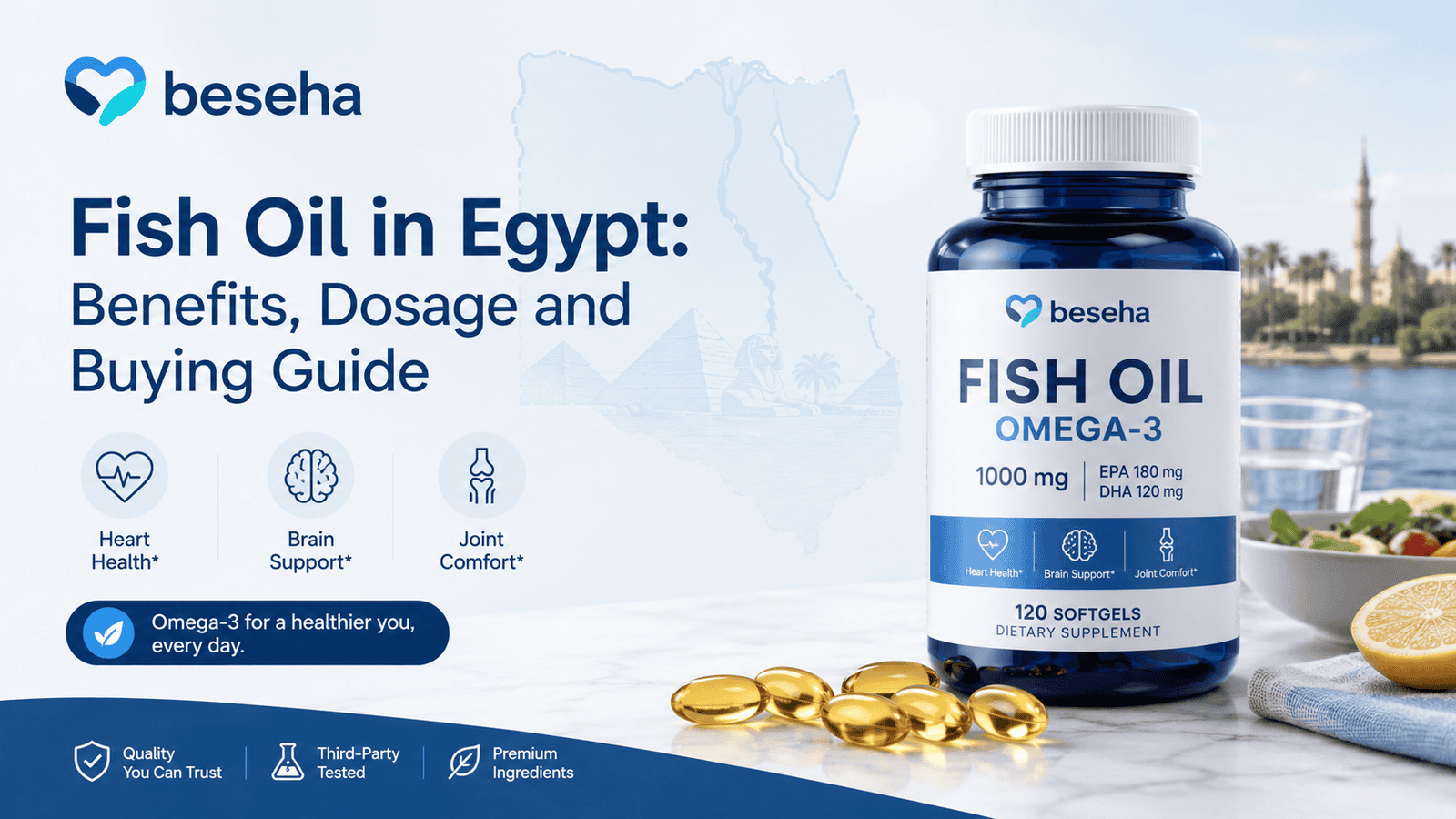
Fish Oil in Egypt: Benefits, Dosage and Buying Guide
Discover fish oil benefits, EPA and DHA dosage, side effects, and how to choose the right omega-3 supplement in Egypt with beseha.

Fish Oil: Benefits, Dosage, Side Effects and Buying Guide in Egypt
Fish oil is a dietary supplement that usually provides two important types of omega-3 fatty acids: EPA and DHA. Its most clearly established benefit is its ability to help lower triglyceride levels. However, fish oil should not be considered a universal treatment or a guaranteed way to prevent heart disease in every person. When choosing a supplement, you should focus on the actual amount of EPA and DHA rather than relying only on a large “1,000 mg fish oil” statement on the front of the package.
This guide from beseha explains the potential benefits of fish oil, who may need it, how to read supplement labels, and how to choose a suitable product in Egypt without being misled by exaggerated marketing claims.
Direct answer: Fish oil may be beneficial for people who do not regularly eat fatty fish or for those who have been prescribed a specific dose to manage high triglycerides. High doses should not be used without medical supervision, particularly by people who take blood-thinning medications or have heart rhythm conditions.
What Is Fish Oil?
Fish oil is generally extracted from the tissues of fatty fish. It contains long-chain omega-3 fatty acids, particularly EPA and DHA. These fatty acids form part of cell membranes, while DHA is especially concentrated in the retina and brain tissue.
Omega-3 fatty acids are also found in plant-based foods such as flaxseeds, chia seeds, and walnuts. However, the primary type found in these foods is ALA. The body can convert a small amount of ALA into EPA and then DHA, but the conversion rate is relatively low. Fish, seafood, and omega-3 supplements therefore remain more direct sources of EPA and DHA.
Is Fish Oil the Same as Omega-3?
Not exactly. Omega-3 refers to a family of fatty acids, while fish oil is one of the sources that provides certain types of omega-3. Omega-3 fatty acids may also come from algae oil, krill oil, and several plant-based foods.
- EPA: Primarily associated with cardiovascular function and the body’s inflammatory responses.
- DHA: An important structural component of the brain, retina, and cell membranes.
- ALA: Mainly found in plant oils, seeds, and nuts. The body converts only a limited amount of it into EPA and DHA.
What Are the Scientifically Supported Benefits of Fish Oil?
The strength of the scientific evidence varies from one benefit to another. Some uses are supported by strong evidence, while others are still being studied and should not be presented as confirmed medical facts.
Helping to Lower Triglycerides
Lowering triglycerides is the most clearly established benefit of fish oil. EPA and DHA can help reduce blood triglyceride levels, and their effect is often more noticeable in people whose triglyceride levels are already high.
However, severe hypertriglyceridemia should not be treated with randomly selected over-the-counter capsules. Doctors may prescribe high-dose, pharmaceutical-grade omega-3 products and monitor blood test results, medications, and possible side effects. Prescription doses used for lowering triglycerides are different from the amounts found in many standard dietary supplements.
Supporting Heart Health as Part of a Healthy Lifestyle
Eating fish and seafood as part of a balanced diet may support cardiovascular health, particularly when fish replaces processed meat or foods high in saturated fat.
However, this does not mean that taking one fish oil capsule every day will automatically prevent heart attacks, strokes, or cardiovascular disease. Evidence regarding the use of fish oil supplements for general cardiovascular prevention remains mixed, and medical organizations do not recommend these supplements for every healthy adult solely for preventive purposes.
The American Heart Association recommends eating two servings of fish per week, with an emphasis on fatty fish. It also explains that omega-3 supplements may be used in certain cases under the guidance of a healthcare professional, but they are not an automatic substitute for a healthy diet.
Providing EPA and DHA
Fish oil may be a practical option for people who do not regularly eat sardines, mackerel, salmon, or other fatty fish. In this case, its role is to help fill a potential nutritional gap rather than compensate for an unhealthy or unbalanced diet.
Supporting the Structure of the Brain and Retina
DHA is an important component of brain cell membranes and the retina. However, its presence in these tissues does not mean that fish oil supplements will improve memory or eyesight in every person.
Research suggests that eating fish as part of a healthy dietary pattern may be associated with certain cognitive benefits. Nevertheless, studies on omega-3 supplements for improving memory or preventing dementia have not produced sufficiently consistent evidence to support their use as a treatment.
Omega-3 During Pregnancy
Pregnant women need healthy fats, and DHA plays a role in the development of the fetal brain, nervous system, and eyes. However, fish sources should be selected carefully because mercury and contaminant levels differ between fish species. see also.
Pregnant women should not start taking fish oil or cod liver oil without professional advice. Product formulations and dosages vary, and cod liver oil may contain vitamins A and D in amounts that require careful consideration. A gynecologist, physician, or pharmacist should be consulted before use.
Why Are Consumers in Egypt Interested in Fish Oil?
Egyptian consumers have access to several dietary sources of omega-3 fatty acids, including sardines, mackerel, certain types of tuna, and salmon. However, some people do not eat fish regularly because of personal preferences, busy work schedules, cost considerations, or difficulties preparing fish-based meals.
In these situations, fish oil capsules may provide a convenient option, provided that the product has a clear ingredient label and is not treated as a replacement for a healthy diet or prescribed medical treatment.
The wide variety of omega-3 supplements available in Egyptian pharmacies and online stores can also make the selection process confusing. Products differ significantly in EPA and DHA concentration, the number of capsules per serving, the source of the oil, capsule material, package size, and price. Consumers should therefore compare the actual nutritional value of each serving rather than focusing only on the size of the bottle.
Who May Benefit from a Fish Oil Supplement?
Fish oil may be appropriate for some people after their diet, health conditions, and treatment goals have been assessed. Individuals who may consider discussing fish oil with a doctor or pharmacist include:
- People who do not regularly eat fatty fish.
- Individuals whose blood tests show elevated triglyceride levels.
- People who have been advised by a doctor to consume a specific amount of EPA and DHA.
- Individuals with a limited or poorly varied diet.
- People looking for a direct source of omega-3 fatty acids when fish-based foods are unsuitable for them.
A person who already eats fatty fish regularly and follows a balanced diet may not need a daily supplement. The decision should be based on the purpose of supplementation rather than the popularity of the product or advertising claims.
What Is the Recommended Fish Oil Dosage?
There is no single fish oil dosage that is suitable for everyone. The appropriate amount depends on age, diet, health status, EPA and DHA concentration, medication use, and the reason for taking the supplement.
There is no universally established daily intake recommendation for EPA and DHA that applies to every healthy adult. For this reason, consumers should not copy another person’s dosage or rely on a generic instruction such as “one capsule daily” without checking the amount of active omega-3 ingredients.
A doctor may prescribe high-dose omega-3 products to people with severely elevated triglycerides. These therapeutic doses differ from ordinary nutritional supplementation and require medical monitoring.
Important warning: A regulatory upper limit should not be interpreted as a recommended daily dose. Consuming several grams of EPA and DHA per day should be done only under medical supervision, especially for people with chronic diseases, heart conditions, or regular medications.
How to Read a Fish Oil Supplement Label Correctly
One of the most common mistakes when buying fish oil is focusing on the total amount of fish oil instead of the actual amount of EPA and DHA. A product may state “Fish Oil 1,000 mg” on the front, but this does not necessarily mean that it contains 1,000 mg of omega-3 fatty acids.
Illustrative Example
A hypothetical capsule may contain:
- Fish oil: 1,000 mg.
- EPA: 180 mg.
- DHA: 120 mg.
- Total EPA and DHA: only 300 mg.
This example is provided only to explain how supplement labels should be read. It does not describe any specific product. Always check the actual product label and determine whether the listed amounts apply to one capsule or to a serving containing two or more capsules.
What to Check Before Buying
- EPA amount: Check the number of milligrams per serving.
- DHA amount: Do not rely only on the total omega-3 figure.
- Serving size: A serving may consist of one capsule or several capsules.
- Number of servings: Do not confuse the number of capsules with the number of daily servings.
- Additional ingredients: Check for gelatin, flavorings, vitamins, or other added substances.
- Expiration date: Oils can be more sensitive to heat, air, and oxidation than many other supplements.
- Storage instructions: Follow the label carefully, especially during the hot summer months in Egypt.
- Independent quality testing: Look for third-party testing information when available.
Comparison of Different Omega-3 Sources
| Type | Source | Main Components | Who May Prefer It? | Important Notes |
|---|---|---|---|---|
| Fish Oil | Tissues of fatty fish | EPA and DHA | People who do not eat fish regularly | Compare the actual EPA and DHA concentration |
| Cod Liver Oil | Liver of certain fish species | Omega-3, often with vitamins A and D | Specific cases after professional advice | It is not identical to standard fish oil |
| Algae Oil | Microalgae | DHA and sometimes EPA | Vegetarians and people avoiding fish-derived products | Concentrations vary between products |
| Krill Oil | Small marine crustaceans | EPA and DHA | People who prefer a different marine source | Check concentration and cost per serving |
| Plant-Based ALA | Flaxseeds, chia seeds, and walnuts | ALA | People seeking plant-based dietary sources | Conversion into EPA and DHA is limited |
What Is the Best Time to Take Fish Oil?
Fish oil can generally be taken at any time that makes it easier to use consistently. However, many people prefer taking it with a main meal. Taking fish oil with food may help reduce fishy burps, nausea, or digestive discomfort.
If the recommended serving contains more than one capsule, do not divide the dose or change the schedule unless this is consistent with the product instructions or your healthcare provider’s advice. Capsules should be swallowed according to the directions on the label and should not be opened or chewed unless the product is specifically designed for that purpose.
Potential Side Effects of Fish Oil
Fish oil side effects are usually mild, but they may become more significant at high doses or when the supplement is combined with certain medications. Possible side effects include:
- An unpleasant taste or fishy burps.
- Unpleasant breath odor.
- Heartburn or acid reflux.
- Nausea or stomach discomfort.
- Loose stools or diarrhea.
- Headaches in some individuals.
Omega-3 supplements may interact with certain medications. High doses may also increase bleeding concerns when used with warfarin or other anticoagulant and antiplatelet medications.
Some clinical trials have found that taking several grams of omega-3 fatty acids daily for extended periods may be associated with a small increase in the risk of atrial fibrillation among certain people with cardiovascular disease or a high risk of developing it. High therapeutic doses should therefore not be used without medical supervision.
Who Should Consult a Doctor Before Taking Fish Oil?
- People taking warfarin, aspirin, anticoagulants, or antiplatelet medications.
- Individuals with a bleeding or clotting disorder.
- People preparing for surgery or a medical procedure.
- Individuals with heart rhythm disorders, especially atrial fibrillation.
- Pregnant or breastfeeding women.
- Children and adolescents.
- People with fish or seafood allergies.
- Individuals taking several medications or living with chronic health conditions.
- People planning to take high doses to manage elevated triglycerides.
Do not stop a prescribed medication or replace it with fish oil without consulting your doctor, even if the supplement is marketed as natural.
Common Mistakes When Buying or Using Fish Oil
Assuming 1,000 mg of Fish Oil Equals 1,000 mg of Omega-3
These figures are not necessarily the same. The correct comparison should be based on the actual amount of EPA and DHA in each serving.
Choosing a Product Based Only on Price
A cheaper bottle may contain a lower concentration, requiring more capsules to obtain the same amount of EPA and DHA. Compare the price per serving and the amount of active omega-3 ingredients rather than the bottle price alone.
Using a Therapeutic Dose Without a Blood Test or Medical Advice
Doses used to treat high triglycerides differ from ordinary nutritional doses and may affect medications, blood clotting, or heart rhythm.
Believing That a Supplement Can Completely Replace Food
Fish oil does not provide the protein, minerals, and other nutrients found in a serving of fish. A balanced diet should remain the foundation of good nutrition.
Ignoring Storage Instructions
Do not leave fish oil supplements in a hot car, in direct sunlight, or near a heat source. Close the bottle tightly and follow the manufacturer’s storage instructions.
Expecting Unrealistic Results
Fish oil is not a miracle product for weight loss, muscle building, memory improvement, or immediate health transformation. Its use should be connected to a realistic and clearly defined nutritional or medical goal.
How to Choose Fish Oil from beseha
beseha provides consumers in Egypt with access to a selection of fish oil and omega-3 products, allowing them to review different options and compare product information before making a purchase.
When browsing supplements, do not begin with the brand name or bottle size alone. Start by identifying your purpose, then review the following:
- The amount of EPA and DHA in the daily serving.
- The number of capsules required to obtain that amount.
- Whether vitamins or other ingredients have been added.
- The source of the oil and the capsule material.
- The actual number of servings in the package.
- Storage and usage instructions.
- Whether the product is compatible with your health condition and medications.
If you are uncertain about the differences between several products, show the ingredient labels to a doctor or pharmacist, especially if the supplement will be used during pregnancy or to help manage high triglyceride levels.
Tips Before Buying a Fish Oil Supplement
- Identify your reason for using the supplement.
- Review how often you eat fish during the week.
- Check the EPA and DHA amounts instead of looking only at total fish oil.
- Confirm the number of capsules in each serving.
- Do not use another person’s dosage.
- Review all medications that you take regularly.
- Choose a product with a clear label and a suitable expiration date.
- Do not buy a damaged or poorly stored package.
- Stop using the product and seek medical help if symptoms of an allergic reaction appear.
- Reassess whether you still need the supplement instead of taking it for years without a clear reason.
Conclusion: Is Fish Oil Right for You?
Fish oil can be a practical source of EPA and DHA. Its most established benefits include helping to lower triglycerides and supporting the intake of omega-3 fatty acids among people who do not regularly eat fatty fish. However, it is not a universal treatment for heart disease, memory problems, joint pain, or other health concerns, and high doses should not be used without medical supervision.
Choosing the right product begins with checking the amounts of EPA and DHA, understanding the serving size, reviewing additional ingredients, and considering your medications and health condition. Whenever possible, fish-based meals and a balanced diet should remain the primary nutritional sources.
Explore the available fish oil and omega-3 products through beseha, compare the concentrations and ingredients carefully, and choose an option that matches your nutritional needs and the advice of your doctor or pharmacist.
Frequently Asked Questions About Fish Oil
1. What is fish oil?
Fish oil is an oil extracted from fish that usually provides the omega-3 fatty acids EPA and DHA.
2. What is the most established benefit of fish oil?
Its most clearly established benefit is helping to lower triglyceride levels, especially when an appropriate dose is used under medical supervision.
3. Can fish oil be taken every day?
Some people can take fish oil daily, but the appropriate dosage and need depend on diet, health status, medications, and product concentration.
4. What is the difference between fish oil and omega-3?
Omega-3 refers to a group of fatty acids, while fish oil is one source that provides EPA and DHA.
5. Does a 1,000 mg fish oil capsule contain 1,000 mg of omega-3?
Not necessarily. Check the amounts of EPA and DHA on the supplement label to determine the actual omega-3 content.
6. Does fish oil cause weight gain?
Fish oil does not automatically cause weight gain, but it contains fat and calories like other oils and should not be considered a weight-loss supplement.
7. Can fish oil be taken with blood-thinning medications?
A doctor should be consulted first because high doses may increase bleeding concerns when combined with some anticoagulant or antiplatelet medications.
8. Is fish oil suitable during pregnancy?
DHA may be important during pregnancy, but the product and dosage should be selected with a doctor, particularly when considering cod liver oil.
9. What is the best time to take fish oil?
It can be taken with a main meal according to the product instructions, which may help reduce stomach discomfort and fishy burps.
10. How can I choose the best fish oil in Egypt?
Compare the amounts of EPA and DHA, the number of capsules per serving, additional ingredients, expiration date, storage instructions, and compatibility with your health condition.


